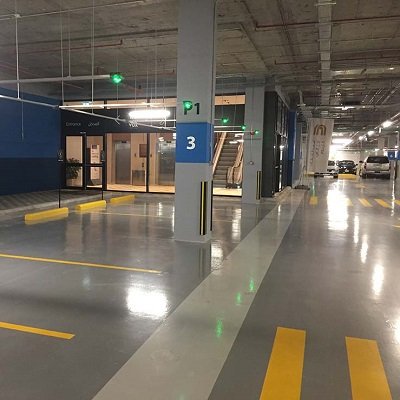
Riyadh is experiencing rapid urban growth, with new commercial developments, shopping destinations, office buildings, residential communities, and entertainment venues attracting more visitors every day. As the number of vehicles increases, businesses are facing greater challenges in managing parking spaces efficiently. Long queues, limited parking availability, traffic congestion, and frustrating customer experiences are becoming common concerns. To address these challenges, many businesses are adopting Smart Parking Solutions Riyadh to improve parking operations, make better use of available space, and provide a smoother experience for visitors.
Traditional parking methods often rely on manual supervision, paper tickets, basic barriers, and security personnel to manage vehicles. While these methods may work in smaller facilities, they can become difficult to maintain in busy commercial environments. Smart parking technology offers a modern alternative by combining digital systems, automation, sensors, and real-time information to make parking more organized, convenient, and efficient.
1. Growing Parking Challenges Across Riyadh
As Riyadh continues to develop, parking demand is increasing around commercial buildings, shopping malls, offices, hotels, and public destinations. Businesses often experience a significant difference between quiet periods and peak hours, making parking management more complicated.
During busy periods, drivers may spend several minutes searching for available spaces. Vehicles waiting at entrances can create unnecessary queues, while poorly organized parking areas may lead to confusion and inefficient space utilization.
These challenges can affect both customers and business operations. Visitors who struggle to find parking may arrive late, feel frustrated, or decide to visit another location. Employees and delivery drivers may also experience delays that affect productivity.
Smart parking systems help businesses respond to these challenges by providing better visibility into parking availability, controlling vehicle movement, and reducing the need for unnecessary manual intervention. Instead of relying entirely on staff to monitor every vehicle, businesses can use technology to support more consistent parking operations.
2. Faster Entry and Exit for Drivers
One of the main reasons businesses are switching to smart parking is the ability to reduce delays at parking entrances and exits.
Traditional parking facilities may depend on attendants checking tickets, collecting payments, opening barriers, or directing vehicles manually. When several cars arrive simultaneously, these processes can create long queues, particularly during office rush hours, weekends, special events, and shopping seasons.
Smart parking technology can introduce automated access control, digital ticketing, license plate recognition, and electronic payment options. These features help streamline the movement of vehicles through parking facilities.
For example, a commercial building can use automated entry systems to recognize authorized vehicles and allow them to enter without requiring manual ticket checks. Visitors can receive digital parking information, while payment procedures can be handled through integrated systems.
Faster vehicle processing benefits businesses in several ways:
- Reduces congestion at parking entrances.
- Improves vehicle movement during peak hours.
- Minimizes unnecessary waiting.
- Makes parking more convenient for customers and employees.
- Reduces the workload of parking attendants.
By making entry and exit procedures smoother, businesses can create a more professional and welcoming experience from the moment visitors arrive.
3. Better Use of Available Parking Spaces
Limited parking capacity is a major concern for businesses operating in crowded commercial areas. However, the problem is not always a shortage of physical spaces. In many facilities, available parking spots remain difficult to identify because drivers do not have accurate information about occupancy.
Smart parking systems help businesses monitor parking availability through sensors, cameras, digital displays, and centralized management software. This information can help drivers identify vacant spaces more quickly instead of driving around searching for them.
Parking operators can also use occupancy information to understand how their facilities are being used throughout the day. They may discover that certain sections remain underutilized while other areas experience excessive demand.
This information supports better planning and more efficient allocation of spaces. Businesses can organize parking areas according to visitor requirements, employee needs, reserved spaces, accessible parking, and other operational priorities.
Improving space utilization can make an existing parking facility more effective without immediately requiring physical expansion. For businesses dealing with limited land availability, this can be a valuable advantage.
4. Improved Customer Experience and Business Reputation
Parking is often the first interaction customers have with a business. A confusing entrance, long queue, unavailable parking information, or difficult payment process can create a negative impression before visitors even reach their destination.
Smart parking solutions help make the arrival experience more convenient. Digital guidance systems can direct drivers toward available spaces, automated access systems can reduce delays, and modern payment options can simplify the overall process.
For shopping malls, restaurants, hotels, office buildings, and entertainment venues, a smoother parking experience can encourage visitors to spend more time at the property.
Businesses can also benefit from a more organized parking environment. Clearly managed spaces, reliable access procedures, and better traffic flow can make facilities feel more accessible and professional.
Customer satisfaction is especially important in competitive commercial environments. When visitors know that parking is convenient and predictable, they may be more willing to return and recommend the location to others.
5. Enhanced Security and Greater Operational Control
Parking facilities are responsible for managing vehicles, monitoring access, and maintaining an organized environment. Traditional systems may depend heavily on manual checks, which can make it difficult to monitor large facilities consistently.
Smart parking technology can strengthen parking security through automated barriers, surveillance integration, vehicle identification, access permissions, and digital records.
These systems can help operators monitor vehicle entry and exit, identify unauthorized access, and maintain better visibility over parking activities. Businesses may also assign specific parking permissions to employees, tenants, visitors, and service providers.
Digital records can make it easier to review parking activity when questions or incidents arise. Access control can also help reduce misuse of reserved spaces and improve the overall organization of parking facilities.
Although technology cannot eliminate every security risk, it can support more reliable monitoring and help parking operators respond to issues more efficiently.
6. Reduced Operational Workload and Smarter Decision-Making
Managing a busy parking facility requires staff, coordination, monitoring, maintenance, and customer assistance. Manual operations can consume considerable time, particularly when parking demand fluctuates throughout the day.
Smart parking systems automate several repetitive tasks, allowing staff to focus on customer support, facility maintenance, security, and other responsibilities.
Management dashboards can provide useful information about parking occupancy, vehicle movement, peak periods, access activity, and operational performance. This information helps businesses understand how their parking facilities function in real-world conditions.
For example, parking managers may use occupancy reports to identify busy periods, evaluate traffic patterns, and adjust staff schedules. They may also identify areas where signage, space allocation, or traffic circulation needs improvement.
Data-driven decision-making allows businesses to plan more effectively instead of relying only on assumptions or occasional observations.
As Riyadh’s commercial environment continues to evolve, this ability to adapt parking operations according to real demand can become increasingly valuable.
7. Why Smart Parking Is Becoming a Long-Term Business Investment
Businesses are increasingly viewing parking technology as an investment in operational efficiency rather than simply an additional facility expense.
A well-designed smart parking system can help reduce unnecessary delays, improve customer satisfaction, support better space utilization, strengthen access control, and simplify daily management.
The long-term value depends on several factors, including facility size, traffic volume, technology requirements, maintenance needs, and the quality of system integration. Businesses should evaluate their parking challenges before selecting a solution.
The most effective systems are those that address specific operational needs rather than introducing technology without a clear purpose. A small office building may require automated access and digital permits, while a large shopping mall may benefit from occupancy sensors, parking guidance, payment integration, and centralized monitoring.
As businesses modernize their facilities, smart parking can also support broader digital transformation goals. Connected parking infrastructure can contribute to more organized commercial environments and align with the growing focus on smart urban development throughout Saudi Arabia.
Conclusion
Businesses in Riyadh are switching to smart parking because traditional parking methods are becoming less effective in managing increasing vehicle demand, customer expectations, and operational complexity. Automated access, real-time parking information, digital payments, security monitoring, and data-driven management offer practical ways to improve parking performance.
Smart parking technology helps businesses make better use of existing spaces, reduce congestion, improve customer experiences, and manage facilities more efficiently. As Riyadh continues to expand, modern parking solutions are becoming an important part of creating convenient, organized, and future-ready commercial environments.
For businesses seeking to improve their parking operations, adopting the right smart parking technology can provide a practical foundation for long-term efficiency and better service.
Frequently Asked Questions (FAQs)
1. Why are businesses in Riyadh adopting smart parking solutions?
Businesses are adopting smart parking to reduce congestion, improve parking availability, simplify vehicle entry and exit, enhance security, and create a better experience for customers and employees.
2. How do smart parking systems reduce traffic congestion?
They use automated access control, real-time occupancy information, and parking guidance to help drivers find available spaces faster and reduce unnecessary vehicle movement.
3. Can smart parking improve customer satisfaction?
Yes. Faster entry, easier space identification, convenient payment options, and reduced waiting times can make visiting commercial properties more comfortable.
4. Are smart parking systems suitable for small businesses?
Yes. Small office buildings, retail properties, and private facilities can benefit from solutions such as automated barriers, digital permits, and access management systems, depending on their requirements.
5. How does smart parking improve security?
Smart parking systems can support security through vehicle identification, access restrictions, automated barriers, surveillance integration, and digital records of vehicle activity.
6. What should businesses consider before installing a smart parking system?
Businesses should assess parking capacity, traffic volume, visitor requirements, access points, security needs, existing infrastructure, technology compatibility, and future expansion plans before choosing a system.