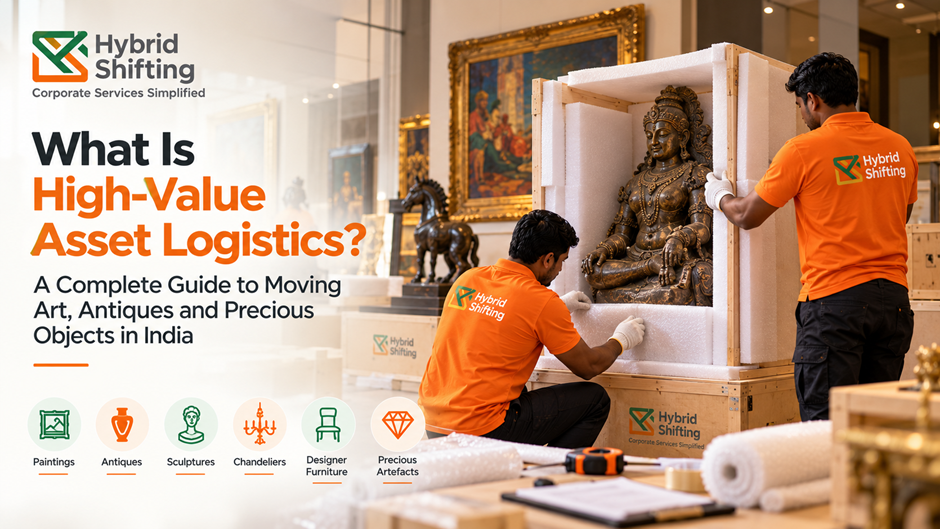
High-value asset logistics is the specialized, white-glove movement of art, antiques, sculptures, chandeliers, designer furniture and precious artefacts. Unlike regular cargo, each piece is assessed individually, condition-reported, custom-packed and crated, moved under controlled handling, then installed and signed off at the destination, with a documented chain of custody throughout.
Some objects cannot be replaced if damaged. A framed canvas, a bronze sculpture, a crystal chandelier or a centuries-old artefact carries financial, artistic and sentimental value that no insurance payout restores. That is why moving them calls for a different process from ordinary packers and movers, and why the handling plan is designed around the piece, not the other way around.
This guide explains what high-value asset logistics covers, how the process works from origin to destination, and what to check before you hire a provider.
What Counts as a High-Value Asset?
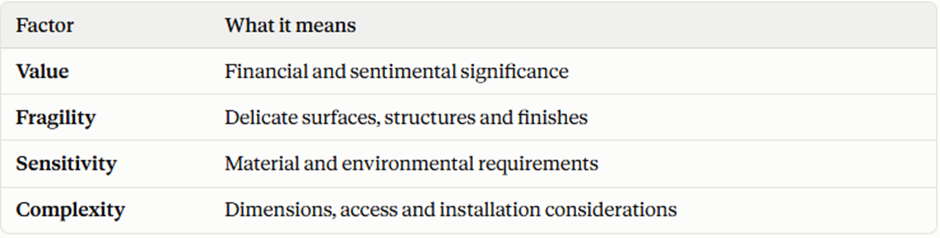
A high-value asset is any object whose value, fragility, sensitivity or complexity goes beyond conventional handling. Four factors decide this:
What Types of Objects Need Specialized Handling?
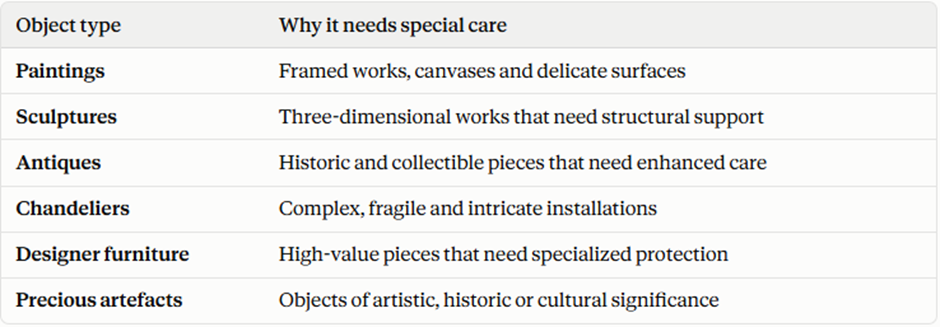
Collectible accessories also fall in this category. Every piece is assessed individually and handled according to its characteristics, value and journey.
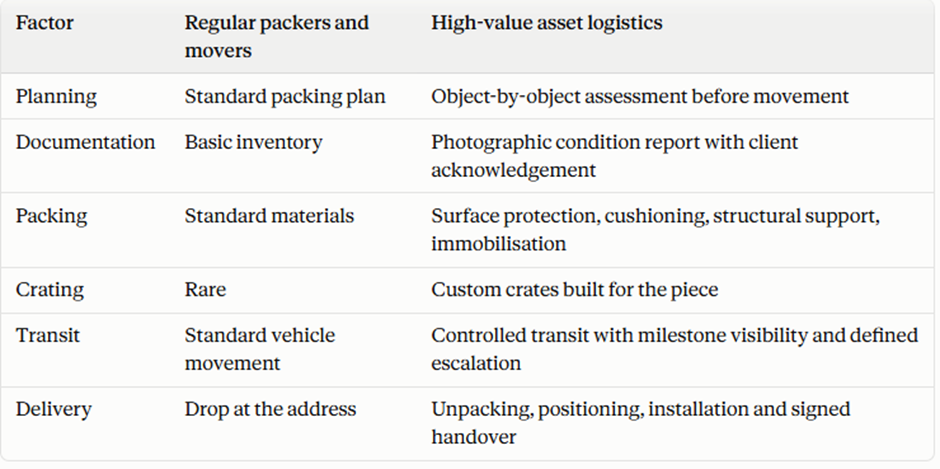
How Is High-Value Asset Logistics Different from Regular Packers and Movers?
How Are Art and Antiques Moved? The 10-Step Journey
Hybrid Shifting manages a high-value move as one integrated lifecycle, from origin to destination:
- Assess. Survey the site, access routes and the objects.
- Document. Record each piece’s condition in a photographic report.
- De-install. Carefully remove the piece from its current position, whether wall, plinth or ceiling.
- Pack. Protect with specialized, layered packing.
- Crate. Build a custom crate suited to the piece.
- Move. Transport under controlled handling.
- Clear. Complete customs and documentation clearance where the move crosses borders.
- Receive. Unload and receive at the destination with crate and seal checks.
- Install. Position and install the piece where required.
- Verify. Confirm condition against the original report and obtain sign-off.
Storage, customs clearance, international freight, destination handling and final handover are available as part of this journey. ATA Carnet and insurance coordination are available where relevant.
Why Is a Condition Report Important?
A condition report is a photographic record of a piece’s state before it moves. It is the reference point for the entire journey. Before movement begins, the team typically completes:
- Site and access assessment
- Artwork identification and inventory
- Photographic condition reporting
- Recording of existing damage and sensitive areas
- Assessment of material, structure, dimensions and handling risks
- A packing, crating and movement plan
- Client or representative acknowledgement
Because existing damage is recorded upfront, condition can be verified at destination without dispute.
How Are High-Value Objects Packed and Crated?
Protection is built in layers, and there is no one-size-fits-all approach:
- Surface protection safeguards delicate finishes and exposed surfaces.
- Cushioning manages vibration, movement and impact.
- Structural support supports frames, projections, joints and vulnerable areas.
- Immobilisation prevents movement within the packing system.
- Custom crating creates a secure outer protective environment suited to the piece.
How Is a High-Value Shipment Kept Safe in Transit?
Controlled handling rests on security, visibility and accountability. The movement controls include:
- Vehicle readiness and a clean cargo environment
- Appropriate handling equipment and a trained crew
- Secure loading, orientation and bracing
- Controlled transit and milestone visibility
- Dedicated movement where shipment requirements demand it
- Defined escalation for delay, damage, breakdown, access or security incidents
- Tracking solutions for real-time visibility and proactive exception management
Can Art and Antiques Be Shipped Internationally?
Yes. International movements are managed as one integrated shipment lifecycle, from origin planning through destination delivery:
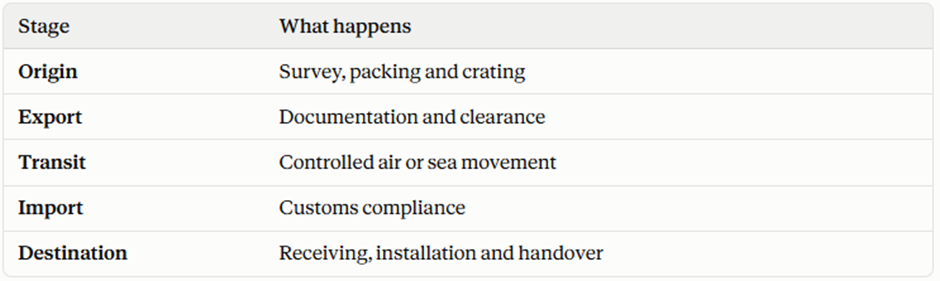
The service includes documentation, customs coordination, international freight and insurance coordination, with ATA Carnet coordination where relevant.
What Happens at Destination?
Delivery is more than reaching the address. A proper destination process includes:
- Site readiness and access confirmation
- Controlled unloading
- Crate and seal inspection before opening
- Destination condition verification
- Careful unpacking
- Positioning and installation, where required
- Final photography and client sign-off
What Is Chain of Custody in Art Logistics?
Chain of custody is the documented record of who handled an object, in what condition, at every transfer point. It follows six steps:
- Identify: know exactly what is being moved
- Document: record condition, details and requirements
- Protect: create the appropriate protection system
- Control: manage critical handling and transfer points
- Verify: confirm condition at destination
- Handover: complete with documented acknowledgement
From first inspection to final placement, every critical stage is treated as a controlled event.
Who Needs High-Value Asset Logistics?
- HNI and private clients
- Art collectors
- Artists
- Galleries
- Interior designers and architects
- Luxury residences
- Corporates, including companies relocating offices that hold art or designer pieces. Their corporate relocation services partner can handle these alongside the wider move.
- Museums and institutions
Discretion, precision and accountability matter in every movement.
Real-World Example: Delivering Returned Antiquities to the Archaeological Survey of India
In September 2024, the United States returned 297 cultural artefacts to India, including terracotta works, sculptures and vases made from stone, copper and other materials, dating from approximately 2000 BCE to 1900 CE. An ASI certificate records Hybrid Shifting Solution India Private Limited (Pikkol) as the service provider for the delivery of priceless retrieved antiquities from the USA from 26 to 30 December 2024, and describes the overall services as commendable.
The scope ran from origin assessment, specialized packing, custom crating and origin customs clearance, through air freight and shipment tracking, to destination customs clearance, delivery, unpacking, installation and final handover. Read the full ASI case study.
How Do You Choose a High-Value Asset Logistics Provider?
Whether you compare corporate movers, corporate moving companies or specialist art handlers, check for:
- Object-specific assessment, not a generic quote
- Photographic condition reporting with acknowledgement
- Custom crating capability
- Documented chain of custody from pickup to handover
- Customs and insurance coordination for international moves
- Destination installation, not just delivery
- Relevant track record with collectors, designers or institutions
- Infrastructure behind the specialist team, such as vehicles, warehousing and offices
Why Choose Hybrid Shifting for High-Value Asset Logistics?
Hybrid Shifting is India’s Corporate Services Solutions company, and its High-Value Asset Logistics service is backed by a broader ecosystem of commercial moving, asset management and relocation capability.
- 180+ countries serviced
- 200+ containerised vehicles
- 1M+ cu. ft. of warehousing
- 15+ offices and 15,000+ PIN codes covered
- Claim ratio below 2%
- Selected clients include design studios, designers, an artist and printmaker, a design brand and the Archaeological Survey of India
Planning to move art, antiques or precious artefacts? Talk to Hybrid Shifting for a survey and handling plan.
FAQs
What is high-value asset logistics?
High-value asset logistics is the specialized movement of art, antiques, sculptures, chandeliers, designer furniture and precious artefacts. It includes assessment, condition reporting, custom packing and crating, controlled transport, and installation and sign-off at destination.
How do you transport paintings and sculptures safely?
Each piece is assessed and photographed first. It is then protected with surface protection, cushioning, structural support and immobilisation, placed in a custom crate, and moved under controlled handling with tracking.
What is a condition report and why does it matter?
A condition report is a photographic record of a piece’s state and any existing damage before movement. It becomes the reference point for verifying condition at destination.
Can antiques and artworks be shipped internationally?
Yes. International moves are managed as one lifecycle covering origin crating, export documentation, controlled air or sea transit, import customs compliance and destination installation. ATA Carnet and insurance coordination are available where relevant.
What is chain of custody in art logistics?
It is the documented record of who handled an object, in what condition, at each handover. The six steps are identify, document, protect, control, verify and handover.
Is installation included, or only delivery?
Installation is part of the journey where required. After unloading, crate and seal inspection and unpacking, the piece is positioned and installed, followed by final photography and client sign-off.
Who uses high-value asset logistics services?
Collectors, artists, galleries, designers and architects, luxury residences, corporates, museums and institutions, and private clients all use these services.