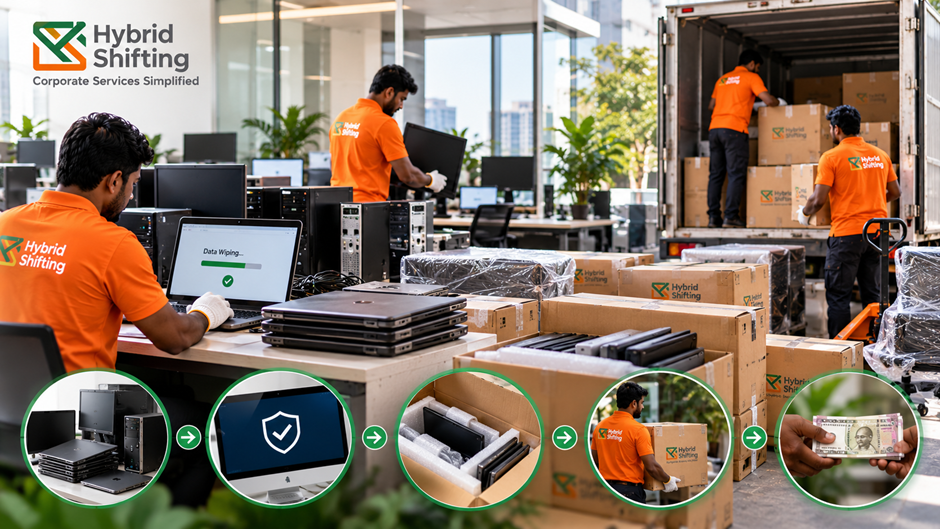
IT asset buyback is when a company sells surplus or decommissioned IT equipment to a provider instead of writing it off. It typically runs in three stages: valuation, where assets are assessed and an offer is made; pickup, where equipment is removed securely with chain-of-custody records; and settlement, where collected items are reconciled, the agreed value is paid and compliance records are issued.
Every company ends up with IT assets it no longer needs: laptops after a refresh, servers after a data centre decommission, desktops and peripherals after an office closes. Most write them off, store them or dispose of them informally. Each of those options costs money or creates risk. A structured buyback can turn depreciated assets into recovered value and give your finance and IT teams a documented exit.
This guide explains how corporate IT asset buyback works in India, step by step, and what to check before you sign with a provider.
What Is IT Asset Buyback?
IT asset buyback is the independent valuation and structured purchase of decommissioned IT equipment by a service provider. The provider then resells, refurbishes or responsibly recycles the assets. The company recovers value instead of absorbing the cost of disposal.
Assets commonly in scope include:
- Laptops and desktops
- Servers and networking equipment
- Monitors, printers and peripherals
- Related office furniture and fixtures, when part of a wider office exit
When Do Companies Use IT Asset Buyback?
Buyback is most useful at four points:
- Technology refreshes, when a batch of devices reaches end of life
- Data centre decommissions, when racks and servers are retired
- Office closures and downsizing, when assets are left behind
- Office relocations, when the new office needs fewer or different assets
It is often part of a larger corporate relocation. If you are moving offices, see our guide on how to shift an office in India and our guide to asset buyback and office reinstatement.
How Does IT Asset Buyback Work? (6 Steps)
Hybrid Shifting’s buyback process follows six steps:
1. Assessment and valuation
The team surveys the site and carries out an independent valuation of the assets in scope.
2. Buyback agreement
Pricing is transparent and a signed agreement is in place before work begins.
3. Secure removal
Assets, IT systems and fixtures are removed in a controlled way. Data-bearing IT assets follow chain-of-custody handling ahead of disposition.
4. Sort, resell and recycle
Assets are routed to resale, refurbishment or responsible recycling.
5. Space restoration (where needed)
If the buyback is part of an office exit, the space is cleaned, repaired and reinstated to landlord-ready condition.
6. Certification and handover
You receive compliance documentation and a final sign-off.
How Is the Value of IT Assets Calculated?
Valuation depends on what the equipment is worth in the resale or refurbishment market today. Providers typically look at:
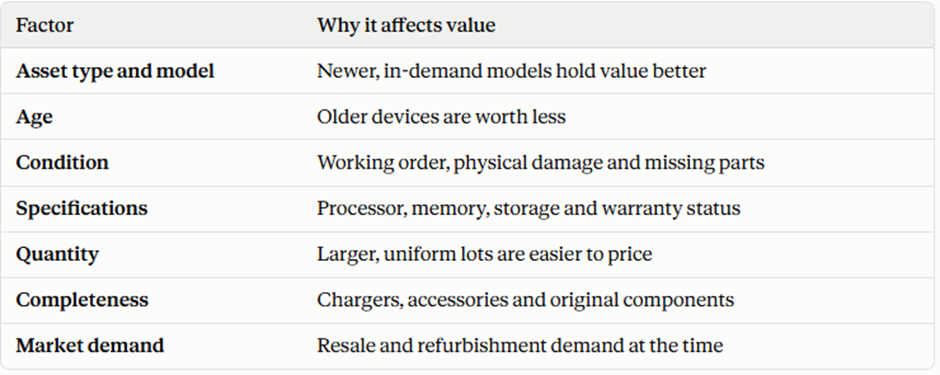
Valuation methods vary by provider, so ask how it is done and who does it. Hybrid Shifting performs fair market valuation of surplus assets, and the valuation is independent of the buyer’s own sale interest. A good provider will explain the basis of each figure in writing.
How Does the Pickup Work?
Pickup is the stage with the most risk, because data-bearing equipment leaves your premises. A structured pickup should include:
- A pre-agreed asset list based on the valuation survey
- Scheduled removal that fits building access rules, such as goods-lift timings
- Tagging and counting at the point of removal
- Chain-of-custody records that track each device from your site onward
- Trained crews with safety gear and on-site supervision
- Transparent reporting on progress and compliance status
Multi-city programmes need a provider with a network that can execute across locations. For a nationwide rollout, check how many locations the provider actually covers.
How Does Settlement Work?
Settlement is where the money and the paperwork close out. The sequence usually looks like this:
- Reconciliation. Items collected are checked against the agreed asset list.
- Final valuation. Any differences in count or condition from the original assessment are resolved under the agreement.
- Payment. The agreed value is paid under the contract terms.
- Documentation. You receive records for your finance and audit teams.
Payment timelines, adjustment rules and payment mode are set in the buyback agreement, so confirm them before work begins. Ask your finance team to check the accounting and tax treatment of the sale and write-off.
What Documents Should You Receive?
Insist on a complete record. At minimum:
- Signed buyback agreement with pricing
- Asset list and reconciliation report
- Chain-of-custody records
- Disposal certificates
- Audit trail
- Completion report and formal handover sign-off
These documents are what auditors and compliance teams ask for later.
How Is Data Protected When You Sell Old IT Assets?
Data on old devices is the biggest risk in any IT disposal. Protect it by:
- Controlling custody. Track every device from your premises onward.
- Asking how data is destroyed. Ask which method and standard the provider follows, such as NIST SP 800-88 media sanitisation guidelines, and what proof they provide.
- Getting it in writing. Request a certificate or record for each batch.
- Cleaning up before pickup. Remove or back up what you need, and follow your internal data policy.
Leaving IT assets and records to be handled informally is one of the biggest compliance risks in an office closure.
What Happens to Assets That Cannot Be Resold?
Assets that have no resale or refurbishment value should be recycled responsibly rather than dumped. Under a structured process, assets are routed to resale, refurbishment or responsible recycling ahead of disposal, with a zero-landfill approach on eligible waste streams and ESG-ready reporting for sustainability disclosures. In India, e-waste handling is governed by the E-Waste (Management) Rules, 2022, so ask your provider how non-resalable equipment is routed and documented.
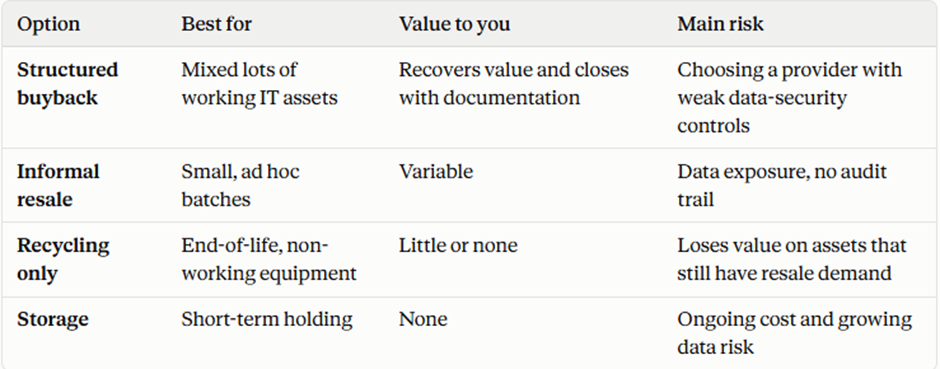
IT Asset Buyback vs Resale vs Recycling
What Mistakes Should You Avoid?
- Selling without a complete, tagged asset register
- Accepting an offer with no written valuation basis
- Skipping chain-of-custody records
- Not asking how data is destroyed
- Releasing assets before the agreement is signed
- Forgetting the accounting and audit trail
- Handling buyback and office reinstatement through different vendors
How Do You Choose an IT Asset Buyback Partner?
Whether you compare specialists or corporate moving companies with asset services, ask:
- How is each asset valued, and who values it?
- What is the process from assessment to payment, and what are the timelines?
- How is chain of custody maintained during pickup and transit?
- How is data destroyed, and what proof do you provide?
- What documents do we receive at the end?
- Can you cover all our locations?
- Can you also handle removal, relocation or reinstatement, so we use one partner?
Why Choose Hybrid Shifting for IT Asset Buyback?
Hybrid Shifting is India’s Corporate Services Solutions company, offering asset management, asset buyback and reinstatement, commercial moving, digitization and relocation services through one integrated partner.
- One contract, one point of contact: buyback, removal and handover under single-partner accountability
- Independent valuation and signed agreement before work begins
- Chain-of-custody handling for IT assets ahead of disposition
- Compliance documentation: audit trail, disposal certificates and formal handover sign-off
- Integrated ecosystem: asset tagging and reconciliation, IT asset management and asset audit sit alongside buyback
- Scale and reach: 1M+ assets tagged, 2M+ sq. ft. of space reinstated and 15,000+ PIN codes covered
Whether you need corporate movers for an office shift or a clean exit from a site you are closing, Hybrid Shifting’s corporate relocation services can run the move, the asset recovery and the handover as one project.
Refreshing IT equipment or closing an office? Talk to Hybrid Shifting for a site survey and valuation.
FAQs
What is IT asset buyback?
IT asset buyback is when a provider buys a company’s surplus or decommissioned IT equipment after valuing it. The provider then resells, refurbishes or recycles the assets, so the company recovers value instead of writing them off.
How is the value of used IT equipment decided?
Value depends on asset type, model, age, condition, specifications, quantity and current market demand. Ask your provider to explain the basis of each valuation in writing before you sign.
How long does a corporate IT asset buyback take?
Timelines depend on the number of assets, locations and building access rules. Ask for a project schedule covering survey, pickup and settlement in the agreement.
How does settlement work in an IT asset buyback?
Collected items are reconciled against the agreed asset list, any differences are resolved under the agreement, and payment is made under the contract terms. You also receive documentation for finance and audit.
Is my company data safe during an IT asset buyback?
It can be, if the provider uses chain-of-custody handling and documents how data is destroyed. Ask which method and standard is followed and what proof you will receive.
What documents do I get after the buyback?
You should receive the signed agreement, asset reconciliation report, chain-of-custody records, disposal certificates, an audit trail and a formal handover sign-off.
Can IT asset buyback be combined with office reinstatement?
Yes. Doing both under one contract means fewer hand-offs and clearer ownership, and the asset recovery and space handback run in parallel.