
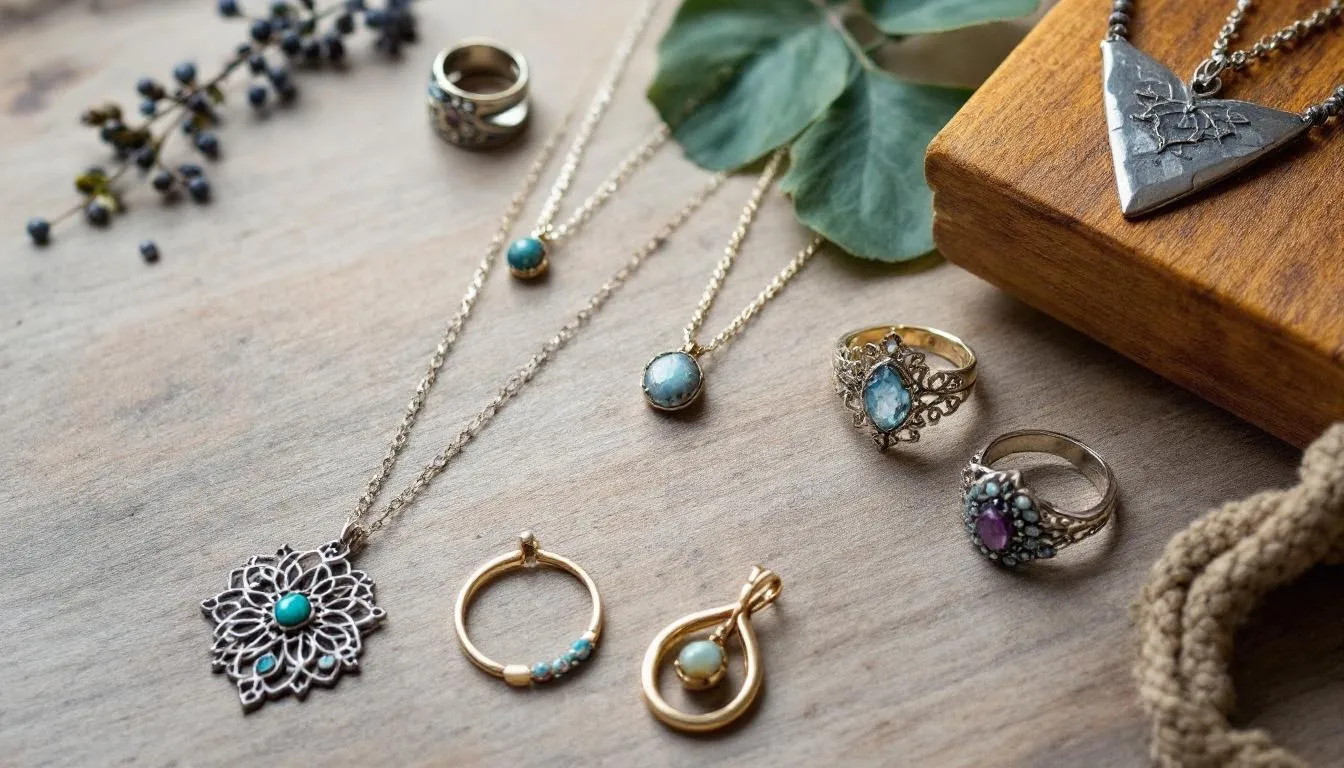
You pick up a ring and notice a faint hammer mark on the band, a slight asymmetry in the setting. Is that a flaw or the point? Handcrafted Artisan Jewelry is made by skilled makers who shape metal and stones largely by hand, in small batches, and that is exactly why it feels different from mall-counter fashion pieces. This guide explains what the term means, how it differs from fashion jewelry, and how to buy wisely.
What Artisan Jewelry Actually Means
Artisan jewelry is made by an individual maker or a small studio that controls the design and most of the production. The jeweler sketches the idea, selects the materials, and performs key steps personally, such as cutting, shaping, soldering, setting stones, and finishing. The person who designed the piece is usually the person who made it.
There is no single legal definition of the term in the United States, so it works more like a description of how a piece is made than a certified label. Two sellers may use the same word to describe very different products. That is why understanding the process matters more than trusting a tag.
Production scale is another marker. A studio jeweler might make a dozen pieces from one design, or a single one-of-a-kind piece. Because every item passes through human hands, small variations are normal. Those variations are part of what buyers are paying for.
Techniques You Will Hear About
Several hand techniques appear again and again in artisan studios. Knowing them helps you read a product description with more confidence.
Hand fabrication means building a piece from sheet and wire. The maker saws, files, bends, and joins metal with a torch and solder. A bezel, the thin metal rim that holds a stone, is often formed this way.
Forging shapes metal by striking it with hammers, which can compress and harden it while leaving a visible texture. Lost-wax casting starts with a wax model that is carved by hand, then replaced with molten metal in a mold. Many studios use it for organic shapes, and the wax master is often still hand-carved.
Other common methods include stone setting, enameling, granulation, chain weaving, and bead stringing. A single piece may combine several of them.
How Fashion Jewelry Is Made
Fashion jewelry, sometimes called costume jewelry, is designed to follow trends and sell at accessible prices. A brand creates a design, then manufactures it in large quantities. Metal is often cast or stamped from a mold, and the surface is usually coated with a thin layer of gold, silver, or rhodium-look plating.
The base metals underneath are typically alloys such as brass, zinc, or steel. Stones are often glass, acrylic, or lab-made imitations. Assembly may involve some hand work, but the design is built for repetition, so every unit looks nearly identical.
That model has real strengths. Fashion pieces are affordable, widely available, and easy to coordinate with a changing wardrobe. If you want a bold statement necklace for a single event, it makes sense to spend little. The trade-off is that the materials and finishing are rarely meant to last for decades.
Artisan Jewelry vs. Fashion Jewelry: A Side-by-Side Comparison
The table below summarizes the typical differences. These are general patterns, not rules. Some fashion brands use quality materials, and some handmade items are poorly made, so always judge the individual piece.
| Factor | Artisan Jewelry | Fashion Jewelry |
|---|---|---|
| Who makes it | Individual maker or small studio | Factory or large production team |
| Production volume | One-of-a-kind or small runs | Thousands of identical units |
| Typical materials | Sterling silver, gold, gold-filled, copper, natural stones, pearls | Brass, zinc, steel, glass, acrylic, plated finishes |
| Surface finish | Polished, hammered, oxidized, or textured by hand | Thin plating or coating applied in bulk |
| Design driver | Maker’s vision, craft tradition | Current trends and seasonal collections |
| Price range | Moderate to high, reflecting labor and materials | Low to moderate |
| Repair options | Often resizable and repairable by the maker | Usually difficult or not worth repairing |
| Expected lifespan | Years to generations with care | Months to a few years, depending on wear |
| Resale or heirloom value | Possible, especially with precious metals or a known maker | Rarely holds value |
The biggest differences sit in the middle rows: materials, finish, and repair. Those three factors determine how a piece looks after two years of daily wear, which is where the real gap shows up.
Why the Differences Matter in Daily Life
The contrast is not only about appearance on the first day. It shows up in comfort, durability, and what happens when something goes wrong.
Materials and Skin Comfort
Sterling silver is 92.5% silver, usually mixed with copper for strength. Karat gold varies: 14K gold is about 58% pure gold, and 18K is about 75%. Gold-filled items have a thick layer of gold bonded to a base metal, which holds up much better than light plating.
Plated fashion pieces can wear through where they touch skin or rub against clothing. Once the coating thins, the base metal shows. Some people react to nickel, which appears in certain base alloys, so anyone with sensitive skin should check the materials list before buying.
Artisan makers often state their metals openly and may offer hypoallergenic options. That said, “artisan” does not automatically mean safe for every wearer. A copper or brass handmade piece can also tarnish or leave a green mark on skin, so ask what the piece is made of.
Repair, Resizing, and Longevity
Because a studio jeweler knows how a piece was built, repairs are usually simple. A cracked prong can be retipped, a ring can often be resized, and a clasp can be replaced. Many makers will service their own work for a fee.
A mass-produced plated ring, by contrast, may not survive resizing, since heat and filing can damage the coating or the cheap solder inside. In practice, many people replace broken fashion pieces rather than fix them.
This is also where cost-per-wear changes the math. A $40 fashion necklace that lasts one season costs more over time than a $180 sterling piece worn weekly for ten years.
Does “Handmade” Always Mean Better?
Not necessarily. Craft is a skill, and skill varies. A beginner’s hand-soldered joint can be weak, and a rushed finish can look unrefined. Handmade only guarantees that a person was involved, not that the person was experienced.
There are other honest limitations to keep in mind:
- Higher price: Labor, small-batch material purchasing, and studio costs all add up, so artisan work rarely competes on price with mass production.
- Slight irregularities: Rings may sit a little differently, and pairs of earrings may not match perfectly. Some buyers love this, others do not.
- Longer lead times: Made-to-order work may take weeks, and a popular maker may have a waitlist.
- Marketing language: Some mass-market brands describe products as “artisan-inspired” or “handcrafted-look.” These phrases can suggest a craft process that did not take place.
So the better question is not whether a piece is handmade, but whether it is well made, honestly described, and right for how you will wear it.
How to Spot Genuine Artisan Work
You do not need a jeweler’s loupe to evaluate a piece. A few practical checks will tell you a lot.
Start with the maker’s story. A real studio can usually explain its process, show work in progress, and name where its materials come from. Look for a maker’s profile, workshop photos, or a clear “about” page. If a seller cannot say who made the item, treat that as a warning sign.
Next, check the details of construction. Look at the back of a pendant or the inside of a ring. Clean solder joints, smooth edges, and secure stone settings suggest care. Metal stamps such as “925” for sterling silver or “14K” for gold indicate the metal content, though a stamp alone does not prove authenticity.
Finally, ask direct questions before you buy:
- What metals and stones are used, and are the stones natural, lab-created, or imitation?
- Is this piece made by you, or by someone else to your design?
- Can it be resized or repaired, and does that cost extra?
- What is your return and care policy?
A maker who answers these plainly and without hesitation is usually proud of the work.
Where to Find Authentic Makers in the United States
The best way to meet a maker is in person. Juried craft fairs, regional art festivals, and open studio weekends let you handle pieces, try them on, and talk to the person who made them. “Juried” means a panel reviewed the work before accepting the exhibitor, which adds a layer of quality control.
Small boutiques and museum gift shops often carry local makers, and many studios take commissions directly. Online marketplaces and maker websites also work well, provided you read the shop profile, review the materials listing, and check photos of the actual item rather than stock images.
If you want something personal, such as a wedding band or an anniversary gift, a commission is worth considering. You will have a say in the metal, finish, and proportions, and the piece will have a story attached to it.
Caring for Your Pieces
Good care extends the life of any jewelry, and handmade work often needs a little attention because of its texture and natural materials.
Store pieces separately in soft pouches so metal does not scratch other items. Remove rings and bracelets before swimming, cleaning, or heavy exercise. Apply perfume and lotion first, then put jewelry on afterward.
For sterling silver, a soft polishing cloth removes light tarnish. Pearls, opals, and other softer stones should be wiped gently with a damp cloth rather than soaked or cleaned with harsh chemicals. If a piece has an oxidized or darkened finish on purpose, avoid aggressive polishing, since it can remove the intended effect.
When in doubt, ask the maker. Most are happy to share care instructions for their own work.
Conclusion
Artisan jewelry and fashion jewelry serve different needs. Fashion pieces offer low-cost style that follows trends, while artisan work offers better materials, visible craftsmanship, and a connection to the person who made it. Neither is wrong, but they are not interchangeable. Before you buy, look at the metal, the construction, and the maker’s explanation, and weigh the price against how often you will wear the piece. If you decide to invest, meet a maker at a local fair or studio and ask questions. A piece you understand is one you will enjoy for years.
Frequently Asked Questions
1. Is artisan jewelry the same as handmade jewelry?
The terms overlap, but they are not identical. Handmade means a person made the piece by hand. Artisan usually adds the idea of skill, original design, and small-scale production by the maker or studio.
2. Why is artisan jewelry more expensive than fashion jewelry?
The price reflects labor, higher-quality materials, and small production runs. A maker may spend hours on one piece, and precious metals and natural stones cost more than base metals and glass.
3. Is artisan jewelry good for sensitive skin?
It can be, particularly when made from sterling silver, gold, or other metals the maker names clearly. However, some handmade pieces use copper, brass, or alloys that cause reactions in certain people, so confirm the materials first.
4. Can I resize or repair artisan jewelry?
Often yes. Pieces made from solid metals are usually easier to repair than plated items. Check with the maker before buying, as designs with bezel-set stones, patterned bands, or mixed materials can limit resizing.
5. How can I tell if a seller is being honest about “handcrafted” claims?
Look for a named maker, a clear materials list, photos of the actual piece, and details about the process. Be cautious if the listing uses vague phrases, shows only stock images, or cannot answer basic questions about who made the item.