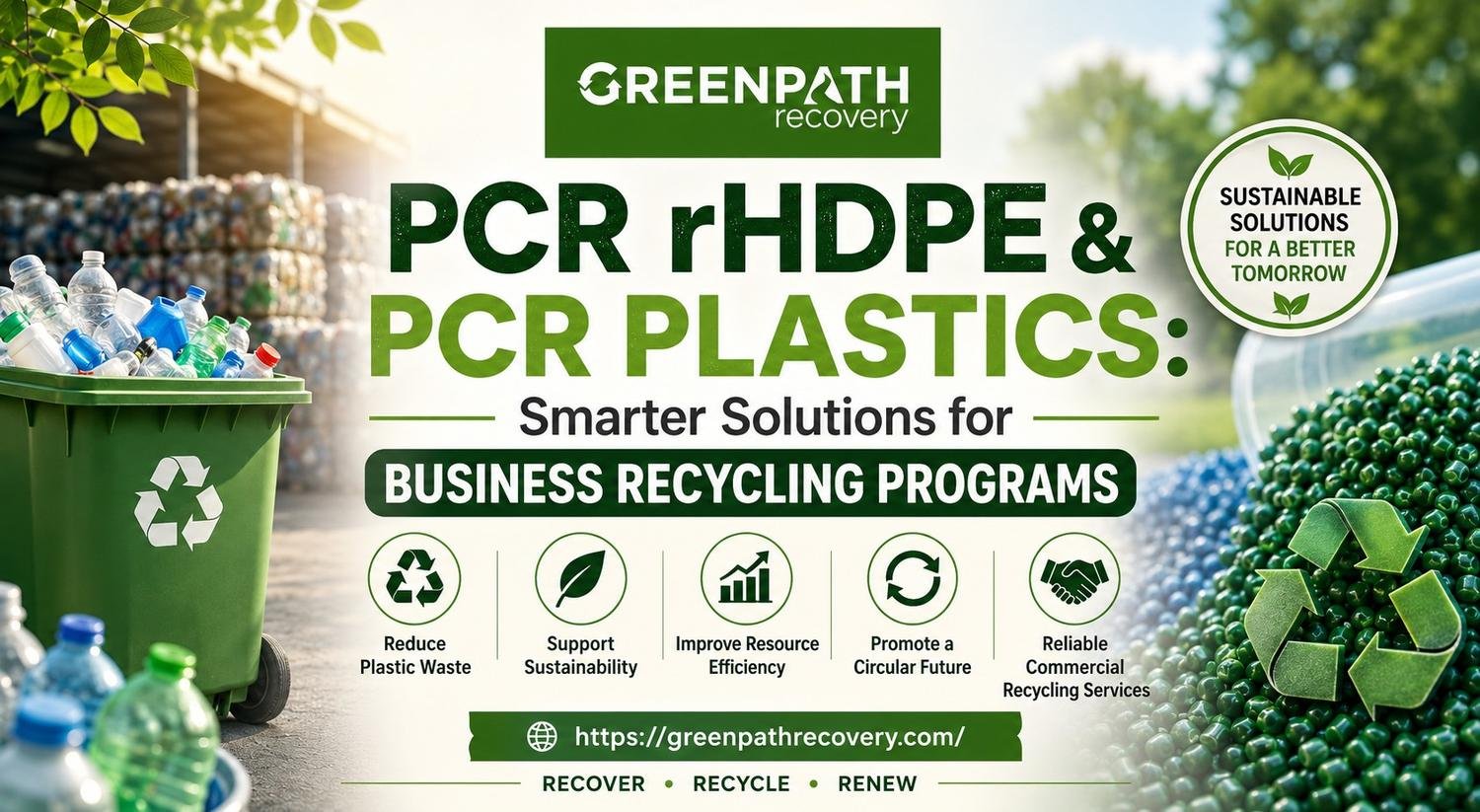
Businesses today are under increasing pressure to reduce waste, improve sustainability, and make better use of recyclable materials. Plastic waste is an important part of this conversation, particularly for companies that generate large volumes of bottles, containers, packaging, and other plastic materials.
One practical approach is to incorporate post-consumer recycled materials into broader recycling strategies. PCR rHDPE is one example that has gained attention because it combines recycled content with the performance characteristics businesses often need from high-density polyethylene. Alongside other PCR Plastics, it can support more efficient material recovery and help businesses move toward more responsible resource management.
For organizations developing or improving a business recycling program, understanding how these materials work can make it easier to identify opportunities for waste reduction and recycling.
What Is PCR rHDPE?
PCR rHDPE stands for post-consumer recycled high-density polyethylene. HDPE is a durable plastic commonly used for products such as milk and detergent bottles, personal-care containers, household packaging, and industrial containers.
The “post-consumer recycled” component means the material has been recovered after consumers have used and discarded products. Instead of sending suitable plastic to landfill, recovered HDPE can be processed and converted into recycled material that may be used in the manufacturing of new products.
This creates an opportunity to keep valuable plastic resources in circulation for longer. For businesses, understanding the difference between recyclable plastic waste and recovered recycled material is an important part of building an effective recycling strategy.
Why Does PCR rHDPE Matter for Businesses?
Plastic waste can become a significant operational challenge when companies generate it consistently. Manufacturing facilities, retailers, warehouses, distribution centers, offices, and other commercial operations may handle substantial quantities of plastic packaging.
Using PCR rHDPE within a broader recycling strategy can help businesses focus on material recovery rather than simply disposal. Recovered HDPE can become a useful secondary raw material, reducing the need to rely exclusively on virgin plastic feedstocks.
There are also broader sustainability considerations. Businesses increasingly track waste diversion, recycled content, resource efficiency, and environmental performance. A well-designed recycling program can help organizations address these priorities while creating a more systematic approach to managing recyclable materials.
Understanding PCR Plastics
PCR Plastics include plastic materials recovered from post-consumer waste streams and processed for use in new manufacturing applications. Depending on the original product and polymer type, recycled materials can include HDPE, polypropylene, PET, and other plastics.
The value of PCR Plastics comes from their ability to give previously used materials another purpose. Rather than treating plastic as a single-use resource, recycling creates a pathway for suitable materials to return to the manufacturing cycle.
However, not all plastic waste is the same. Contamination, mixed materials, labels, food residue, and incorrect sorting can affect the quality and usability of recovered plastics. This is why proper collection and sorting are essential components of successful commercial recycling.
How Commercial Recycling Programs Can Support Plastic Recovery
Effective Commercial Recycling Services go beyond placing recycling containers throughout a workplace. A successful program begins by understanding what types of recyclable materials a business generates and how those materials can be collected, sorted, transported, and processed.
For plastic recycling, businesses may need designated collection systems for bottles, containers, packaging, film, or other suitable materials. Clear signage and employee education can also reduce contamination by helping people understand which materials belong in each recycling stream.
Professional Commercial Recycling Services can help businesses establish collection processes that fit their operations. Depending on the facility, this may involve scheduled pickups, dedicated containers, material sorting, or customized recycling solutions.
The goal is to create a system that is practical enough for employees and efficient enough to handle the company’s actual waste volume.
From Used Plastic to Recycled Material
The journey from discarded plastic to recycled material involves several stages. First, recyclable materials are collected from commercial or residential waste streams. They are then transported to appropriate recycling facilities, where they can be sorted according to polymer type and other characteristics.
Suitable HDPE materials can be cleaned, processed, and prepared for recycling applications. The resulting material can then become PCR rHDPE, which manufacturers may use in products where recycled HDPE is appropriate.
The process demonstrates why source separation matters. Cleaner, properly sorted materials generally provide a better starting point for recycling. Businesses can contribute to this process by preventing unnecessary contamination at the point where waste is generated.
Benefits of Using Recycled Plastic Materials
There are several reasons businesses and manufacturers are paying greater attention to recycled plastic.
Resource conservation: Recycling allows existing plastic materials to remain in circulation instead of relying entirely on newly produced resources.
Waste reduction: Diverting suitable plastic from disposal can reduce the amount of material entering landfills.
Circular economy support: Recycled materials help connect collection and recovery activities with new manufacturing applications.
Sustainability goals: Businesses can incorporate recycled-material strategies into broader environmental initiatives and waste-reduction objectives.
Material value recovery: Properly managed recyclable plastics can have value beyond their initial use.
For companies exploring PCR Plastics, these benefits demonstrate why recycling should be considered as part of a broader resource-management strategy rather than simply a disposal alternative.
Building a More Effective Business Recycling Program
A strong recycling program should be designed around the company’s actual operations. Start by identifying the largest sources of plastic waste and determining which materials are consistently recyclable.
Next, establish clearly labeled collection points in locations where employees naturally generate waste. Training and signage can help prevent contamination and improve participation.
Businesses should also monitor the program over time. Tracking recycling volumes, contamination issues, collection frequency, and material types can reveal opportunities for improvement.
Working with experienced Commercial Recycling Services can make this process easier by providing guidance on collection and material recovery. A customized approach is particularly valuable for businesses with multiple facilities or high-volume waste streams.
PCR rHDPE and the Future of Plastic Recycling
The growing interest in PCR rHDPE reflects a broader shift toward recovering materials and using resources more efficiently. As businesses look for practical ways to improve their environmental performance, recycled plastics can become an important part of long-term waste-management planning.
At the same time, recycling is most effective when businesses understand that material recovery starts before the waste reaches a recycling facility. Better purchasing decisions, appropriate collection systems, employee participation, and contamination control can all contribute to better outcomes.
For organizations evaluating PCR Plastics, the most important consideration is not simply whether plastic can technically be recycled. It is whether the business has a consistent, well-managed system that keeps suitable materials in the recycling stream.
A Smarter Approach to Commercial Plastic Recycling
Businesses do not have to approach plastic waste as an unavoidable cost of doing business. With the right systems, suitable plastic materials can be recovered and redirected toward productive uses.
PCR rHDPE provides one example of how recovered plastic can support a more circular approach to material management. Combined with other PCR Plastics and a properly structured recycling strategy, it can help businesses make better use of recyclable resources.
For companies looking to improve their environmental practices, professional Commercial Recycling Services can provide the infrastructure and expertise needed to make recycling more consistent and efficient. The result is a practical approach that supports waste reduction, resource recovery, and more sustainable business operations.
A well-planned recycling program is ultimately about more than managing today’s waste. It is about creating a system where valuable materials have a better chance of remaining in use—and where businesses can make measurable progress toward more responsible resource management.