Commercial buildings are significant investments that require regular maintenance and careful evaluation. Whether a property is being purchased, leased, or maintained for long-term use, understanding its overall condition is essential. A commercial inspection helps identify potential problems, evaluate building systems, and highlight maintenance concerns that could affect safety, functionality, and operating costs.
Unlike residential properties, commercial buildings often have more complex structures, larger mechanical systems, and specialized facilities. Therefore, an inspection typically covers several important areas to provide property owners, buyers, and investors with a clearer understanding of the building’s condition.
Why Is a Commercial Property Inspection Important?
A commercial property inspection is a detailed assessment of a building’s visible components and major systems. It helps identify existing defects, signs of deterioration, and potential maintenance requirements.
For property buyers, an inspection can reveal issues that may influence purchasing decisions or future repair budgets. For existing owners, it provides an opportunity to address maintenance concerns before they develop into more expensive problems.
Regular inspections can also support building safety, improve maintenance planning, and help property managers make informed decisions about repairs and upgrades.
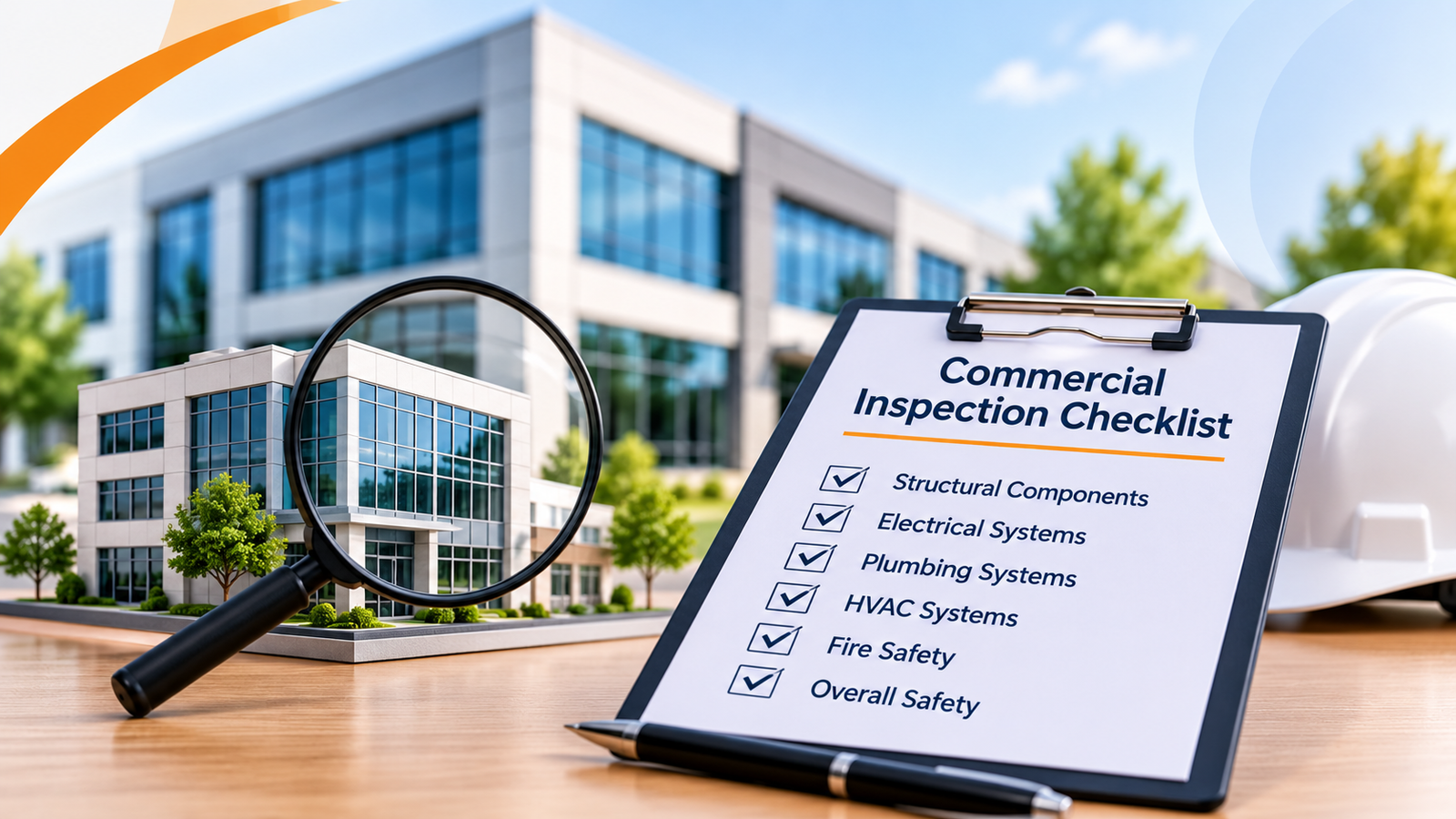
8 Important Areas Checked During a Commercial Inspection
A comprehensive commercial inspection examines different parts of a building to evaluate its condition and identify potential concerns. The following areas are commonly included in the process.
1. Structural Components and Foundation
The foundation and structural framework provide stability and support to the entire building. Any deterioration in these components can affect the property’s long-term condition.
Inspectors generally examine:
- Foundation walls for visible cracks or movement.
- Structural beams and columns for signs of damage.
- Concrete surfaces for deterioration or settlement.
- Floors and ceilings for unusual sagging or unevenness.
- Load-bearing walls for visible structural concerns.
Identifying structural issues early can help property owners arrange further professional evaluation and prevent additional deterioration.
2. Roofing and Drainage Systems
The roof protects the building from rain, wind, sunlight, and other environmental conditions. Damage to roofing materials or drainage components can lead to water intrusion and interior deterioration.
During an inspection, professionals may evaluate:
- Roofing materials for cracks, deterioration, or missing sections.
- Flashing around vents, skylights, and roof openings.
- Gutters and downspouts for blockages or damage.
- Signs of standing water or poor drainage.
- Visible evidence of leaks or moisture penetration.
Proper roof maintenance helps protect the building’s interior and reduces the likelihood of expensive water-related repairs.
3. Electrical Systems
Electrical systems are essential for commercial operations, supporting lighting, equipment, machinery, and everyday business activities. Electrical defects can create operational disruptions and potential safety hazards.
An inspection may include a review of:
- Electrical panels and accessible components.
- Visible wiring and connections.
- Switches, outlets, and lighting fixtures.
- Signs of overheating or damaged electrical equipment.
- General condition of accessible electrical installations.
Inspectors may recommend further evaluation by a licensed electrician if they identify concerns requiring specialized assessment.
4. Plumbing and Water Supply
Plumbing problems can affect building functionality, create water damage, and increase maintenance expenses. Commercial properties may also have more extensive plumbing networks because of their size and occupancy requirements.
Common inspection points include:
- Visible water supply and drainage pipes.
- Faucets, sinks, and restroom fixtures.
- Water heaters and accessible connections.
- Signs of leaks, corrosion, or moisture damage.
- Drainage performance and visible blockages.
Evaluating plumbing components helps identify potential problems that could interrupt daily business operations.
5. Heating, Ventilation, and Air Conditioning (HVAC)
HVAC systems help maintain comfortable indoor temperatures and support proper ventilation throughout commercial spaces. Their condition can influence energy consumption, indoor air quality, and occupant comfort.
Inspectors typically review:
- Heating and cooling equipment.
- Accessible ductwork and ventilation components.
- Thermostats and basic system controls.
- Air filters and visible signs of restricted airflow.
- Unusual noises, leaks, or visible equipment deterioration.
Regular HVAC maintenance can improve system efficiency and reduce the likelihood of unexpected equipment failures.
6. Fire Safety and Life Safety Features
Fire safety is an important consideration in commercial buildings because of the number of occupants, employees, customers, and visitors who may use the property.
Depending on the inspection scope, professionals may examine visible safety features such as:
- Fire extinguishers and their accessibility.
- Smoke detectors and alarm components.
- Sprinkler system components.
- Emergency exits and exit signage.
- Accessible fire doors and escape routes.
A general property inspection does not replace specialized fire protection testing or code compliance evaluations. Additional assessments may be necessary to verify that these systems meet applicable requirements.
7. Interior Spaces and Finishes
Interior conditions can reveal signs of water intrusion, poor maintenance, and material deterioration. These issues may affect both the appearance and functionality of commercial spaces.
Inspectors commonly assess:
- Walls and ceilings for cracks, stains, or damage.
- Flooring materials for wear and uneven surfaces.
- Doors, windows, and accessible hardware.
- Interior stairways and handrails.
- Signs of moisture, mold-like growth, or previous repairs.
Evaluating interior spaces helps property owners understand the building’s maintenance needs and identify areas requiring attention.
8. Parking Areas and Exterior Grounds
The exterior environment also plays an important role in the overall condition and usability of a commercial property. Parking lots, walkways, and surrounding grounds require proper maintenance to support accessibility and reduce potential hazards.
An exterior assessment may include:
- Parking lot surfaces for cracks and deterioration.
- Sidewalks and pedestrian pathways.
- Exterior walls and building finishes.
- Site drainage and visible water accumulation.
- Fencing, gates, and other accessible exterior features.
These areas are particularly important for commercial properties that receive regular customer, employee, or visitor traffic.
What Should Property Owners Do After a Commercial Inspection?
Once the inspection is complete, property owners or prospective buyers should carefully review the findings and identify which issues require immediate attention.
A practical approach includes:
Prioritize Safety Concerns: Address issues involving structural stability, electrical hazards, fire safety, and other conditions that may pose immediate risks.
Plan Necessary Repairs: Create a list of recommended repairs and obtain professional estimates for major work.
Evaluate Maintenance Requirements: Identify systems that require routine servicing, replacement, or additional monitoring.
Request Specialized Assessments: Consult qualified professionals for concerns involving structural engineering, electrical systems, roofing, HVAC, or other specialized areas.
Maintain Inspection Records: Keep reports and repair documentation to support future maintenance planning and property management decisions.
Commercial vs. Residential Property Inspections
Although both inspection types evaluate building conditions, their scope and complexity can differ.
A residential inspection generally focuses on features commonly found in houses, including living spaces, kitchens, bathrooms, roofing, plumbing, and electrical systems.
Commercial inspections may involve larger structural systems, specialized equipment, extensive HVAC installations, parking facilities, and additional safety considerations.
For example, someone arranging a home inspection Los Angeles service may primarily need an evaluation of a residential property’s major components. A commercial property assessment, however, may require a broader inspection scope based on the building’s size, intended use, and operational requirements.
Understanding these differences helps property owners select an inspection service that matches their specific needs.
A commercial inspection provides valuable insight into the condition of a building and its major components. From foundations and roofing to electrical systems, HVAC equipment, and exterior grounds, each area contributes to the property’s overall safety and functionality.
Whether you are purchasing a commercial building, managing an existing facility, or preparing a property for future use, a professional inspection can help uncover maintenance concerns and support better financial decisions.
By identifying potential problems early and following appropriate maintenance recommendations, property owners can protect their investments, reduce unexpected repair expenses, and maintain more reliable commercial spaces.