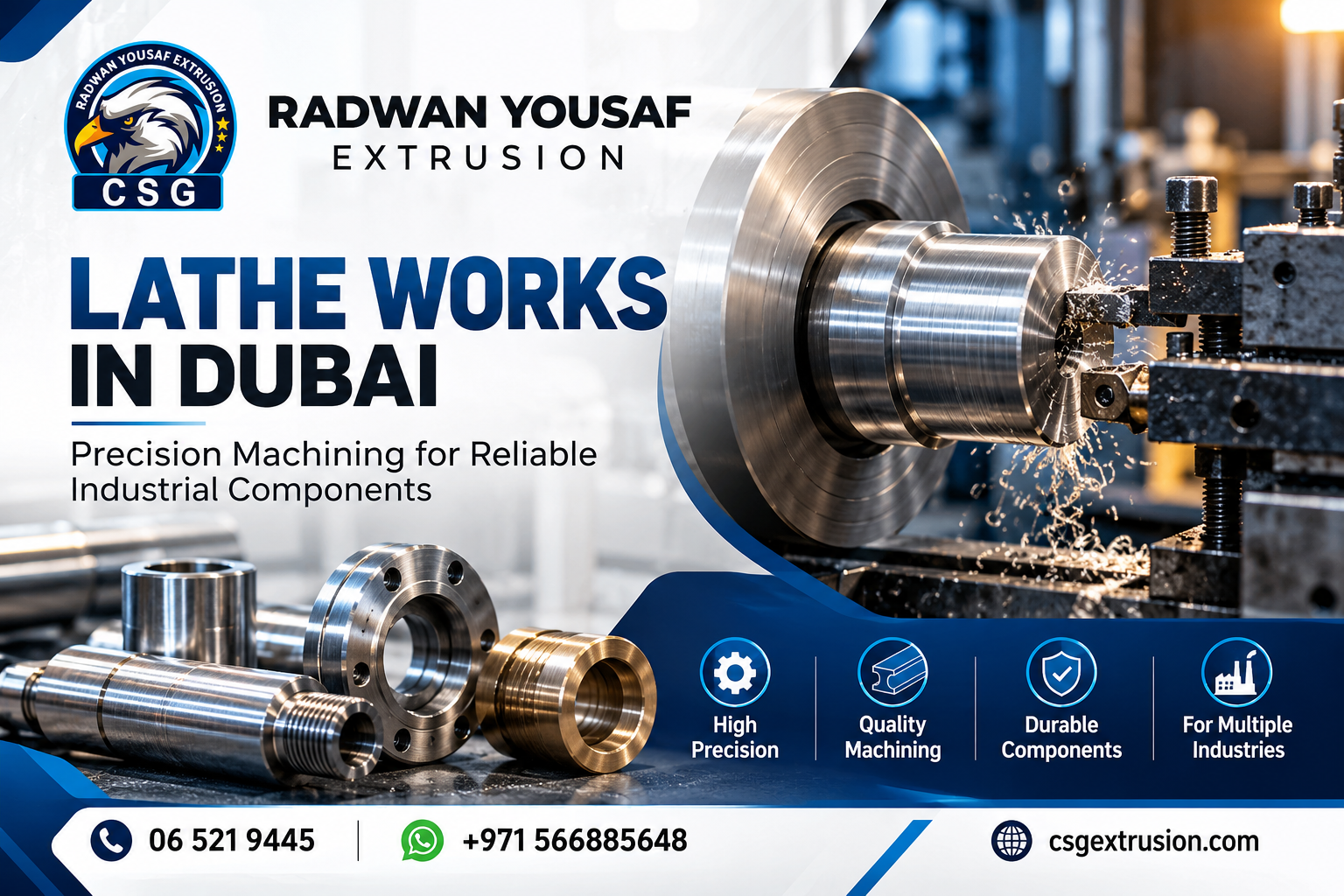
In modern manufacturing, precision and durability are essential for producing reliable metal components. Industries such as construction, automotive, marine, oil and gas, and general engineering depend on accurately machined parts to keep their equipment operating efficiently. Professional Lathe Works in Dubai help businesses manufacture, repair, and finish metal components according to specific dimensions and project requirements.
Lathe machining is a practical process that shapes metal by rotating a workpiece against a cutting tool. It allows manufacturers to create cylindrical components, shafts, threaded parts, and other precision-engineered products for a wide range of industrial applications.
What Are Lathe Works?
Lathe works involve shaping and finishing metal components to achieve the required dimensions, surface quality, and design. Depending on the project, the process may include cylindrical turning, facing, boring, thread cutting, taper turning, knurling, and grooving.
These operations help ensure that components fit correctly and perform reliably within larger machines and mechanical systems. Accurate machining also reduces unnecessary material waste and helps minimize fitting problems during assembly.
Why Precision Machining Matters
Precision is important when manufacturing components that must fit together and operate under demanding conditions. Even small dimensional errors can affect performance, increase friction, or lead to premature wear.
Professional Precision Machining Services help businesses achieve consistent dimensions and suitable surface finishes. Skilled machinists select appropriate cutting tools and machining methods based on the material, component design, and required tolerances.
Accurate machining can also reduce rework, improve assembly efficiency, and support dependable equipment performance over time.
Materials Used in Lathe Machining
Different industrial applications require different metal properties. Common materials used for lathe machining include cast iron, aluminium, brass, bronze, stainless steel, and mild steel.
Each material has its own characteristics, including hardness, strength, machinability, and resistance to corrosion. Choosing the correct machining approach helps achieve the desired finish while maintaining the component’s functional properties.
For example, cast iron is frequently used in machine housings and heavy-duty components, while aluminium is useful when lightweight construction is important. Brass and bronze are selected for applications where their particular mechanical and corrosion-resistant properties are beneficial.
The Connection Between Metal Casting and Lathe Works
Many industrial components begin as cast metal parts. Casting creates the basic shape, while machining refines selected surfaces and dimensions to meet the final specifications.
Reliable Metal Casting and machining capabilities can therefore complement one another during component manufacturing. Depending on the design, a cast component may require turning, drilling, boring, or finishing before it is ready for installation.
This combination is useful for producing components such as machine housings, sleeves, flanges, pulleys, and other industrial parts. Proper inspection at each stage helps ensure that the finished component meets the intended requirements.
Industries That Depend on Lathe Machining
Lathe machining supports a wide range of industries across Dubai and the UAE. Construction companies use machined components in equipment and machinery. Automotive businesses require accurately shaped mechanical parts, while marine operators depend on reliable components for demanding working environments.
Oil and gas operations, power generation facilities, and general fabrication businesses may also require custom-machined parts for maintenance, repairs, and new installations.
Whether a project involves a single replacement component or a larger production order, the right machining process helps achieve the required dimensions and finish.
Choosing a Reliable Lathe Works Provider in Dubai
When selecting a machining provider, businesses should consider technical experience, equipment capabilities, material handling, dimensional inspection, turnaround times, and the ability to work from drawings or specifications.
Clear communication is equally important. Sharing the component dimensions, material type, quantity, operating conditions, and required tolerances helps the machining team understand the project and recommend a suitable approach.
CSG Extrusion provides lathe works and industrial machining solutions for different component requirements. Businesses can explore the company’s services to learn more about its machining and metalworking capabilities.
Conclusion
Lathe machining plays an important role in modern industrial manufacturing by helping produce accurate, durable, and properly finished metal components. From cylindrical turning and thread cutting to finishing cast parts, these operations support reliable equipment performance across multiple industries.
Businesses looking for Contact CSG Extrusion should prioritize precision, material suitability, quality inspection, and dependable service. By choosing an appropriate machining solution, companies can improve component fit, reduce rework, and support the long-term performance of their industrial equipment.