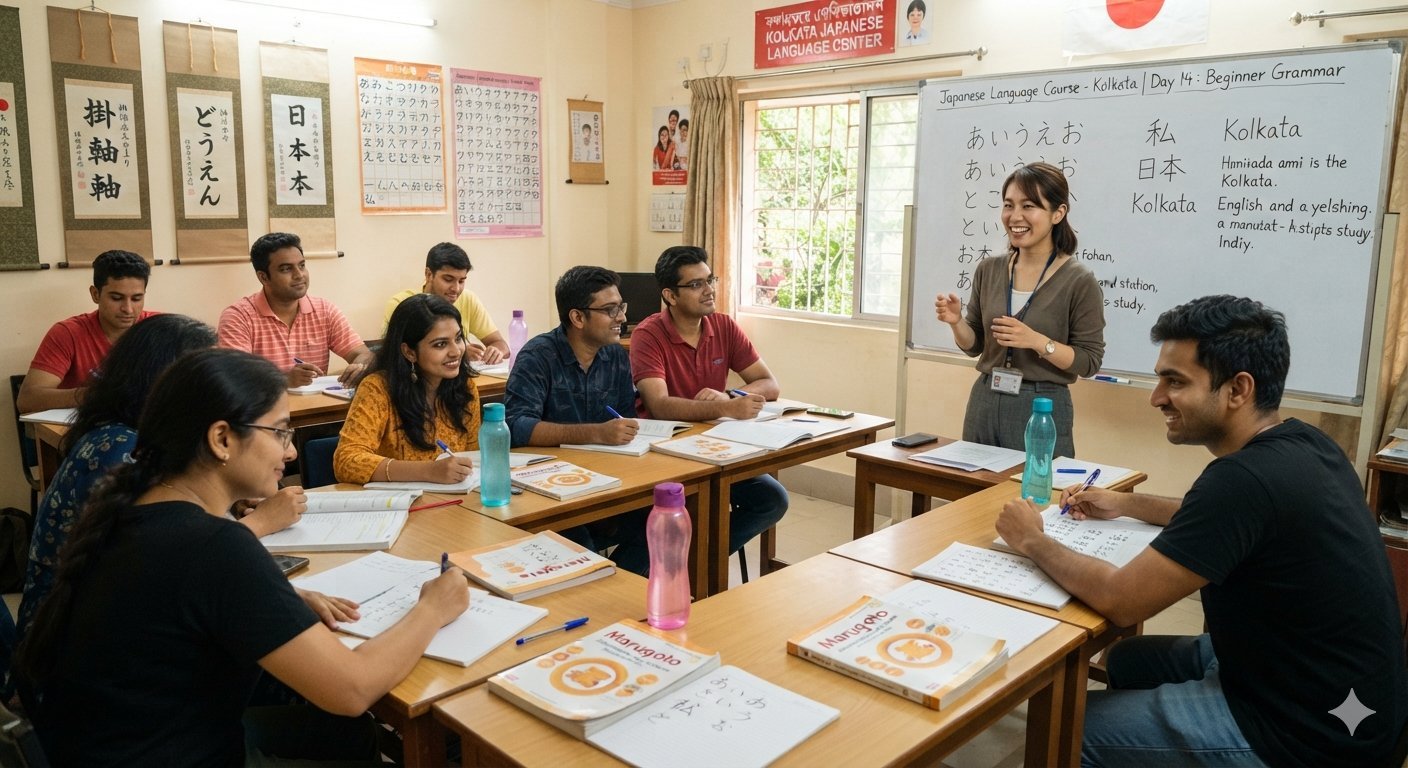
Planning to join a Japanese language course in Kolkata? Follow this step-by-step guide to JLPT levels, choosing an institute, and a beginner plan. What are you really looking for? Most people searching for Japanese language classes near me in Kolkata are in one of four situations:
To join a Japanese language course in Kolkata, first define your goal (JLPT, a job, or study in Japan). Then compare institutes on syllabus, trainer experience, batch size, and mock tests; attend a demo class; and start with JLPT N5. Shortlist options such as Overview Japanese Language Institute and check them against the criteria below.
- A student or graduate planning a job or study path in Japan
- A working professional targeting roles that need Japanese (IT, manufacturing, hospitality, translation)
- An anime, manga, or culture enthusiast who wants a structured start
- A parent looking for a course for a school-age child
Each needs a slightly different course. This roadmap helps you pick the right one and avoid wasted months.
Step 1: Define your goal
Your goal decides your level, pace, and exam.
| Goal | Typical target | Common exam |
|---|---|---|
| Hobby or travel | Basic conversation | None required |
| Jobs in India with Japanese companies | N4 to N3 | JLPT |
| Study in Japan | N3 to N2, depending on the university | JLPT, EJU (for some programmes) |
| Skilled-worker pathways (e.g., care work, hospitality) | Basic everyday Japanese | JFT-Basic and sector tests |
| Translator or interpreter | N2 to N1 | JLPT |
Requirements change, so always confirm them with the employer, university, or the official exam body.
Step 2: Understand the JLPT levels
The Japanese-Language Proficiency Test (JLPT) has five levels, N5 (beginner) to N1 (advanced). The kanji and vocabulary figures below are widely used approximations, not official counts.
| Level | What you can do | Approx. kanji |
|---|---|---|
| N5 | Read hiragana, katakana, and simple kanji; handle basic phrases | ~100 |
| N4 | Hold simple everyday conversations | ~300 |
| N3 | Understand everyday Japanese in moderately complex situations | ~650 |
| N2 | Handle most work and academic settings | ~1,000 |
| N1 | Understand complex, abstract material | ~2,000 |
A beginner should plan for N5 first. Skipping levels rarely works, because Japanese grammar builds layer by layer.
Step 3: Choose the right institute
Whether you pick a well-known name like Overview Japanese Language Institute or another provider, judge it on substance rather than advertising.
A checklist for comparing Japanese language institutes in Kolkata
- Syllabus clarity: Is there a written level-wise plan (N5 to N1) with textbooks named, such as Minna no Nihongo or Genki?
- Trainer background: Ask about qualifications, JLPT results, and teaching experience. Native speakers are a plus, but a good Indian trainer who has passed N2 or N1 can be equally effective, especially for explaining grammar.
- Batch size: Smaller batches mean more speaking practice and corrections.
- Four skills covered: Reading, writing, listening, and speaking, not just grammar.
- Mock tests: Regular JLPT-pattern practice with feedback.
- Schedule flexibility: Weekday, weekend, and evening batches suit students and working people.
- Transparent fees: Ask what is included (books, tests, certificates) before paying.
- Honest outcomes: Be wary of any “guaranteed pass” claim. Results depend largely on your own practice.
Online or offline?
Classroom learning in Kolkata gives you routine, peers, and face-to-face correction. Online batches save travel time, which matters in a city with long commutes. Pronunciation and listening can be learnt well either way, as long as the class has live interaction and not just recorded videos.
Step 4: Attend a demo class before you commit
A demo class tells you more than any brochure. Observe:
- Does the teacher explain why a grammar rule works, not just what it is?
- Japanese language classes near me Demo
- Are students speaking, or only listening?
- Is Japanese introduced gradually, with proper support for beginners?
- Do you get a clear picture of the full course path and time?
Ask for the batch start date, class timings, duration of the N5 course, and what happens if you miss a class.
Step 5: Follow a realistic beginner plan
Individual pace varies, but a well-structured start often looks like this.
Weeks 1-4: Sounds and scripts
- Learn hiragana, then katakana
- Practise greetings, self-introduction, and numbers
- Example: “Hajimemashite. Watashi wa Ananya desu.” (Nice to meet you. I am Ananya.)
Weeks 5-12: Core grammar
- Particles (は, が, を, に, で), basic verb forms, simple sentences
- Start your first 100 or so kanji with common vocabulary
- Example: “Watashi wa mainichi gakkō ni ikimasu.” (I go to school every day.)
Months 4-6: Building toward N5
- Time, directions, shopping, and daily-life conversation
- Full-length N5 mock tests
- Listening practice with slow, clear audio
If you study consistently, many learners are ready for N5 within roughly six months, and N4 can take a similar additional period. These are general expectations, not guarantees.
Step 6: Build habits outside class
Class time alone is rarely enough. Short daily habits help more than weekend marathons:
- 20 to 30 minutes of vocabulary and kanji review daily
- Writing 3 to 5 sentences in Japanese each day
- Listening to beginner podcasts or graded readers
- Finding a speaking partner in your batch
- Keeping a mistake notebook for particles and verb forms
Step 7: Plan your exam
The JLPT is held in July and December in many locations. Check the official JLPT site for the current registration process, deadlines and the test centres available to Indian candidates, since these can change. If your goal is a skilled-worker pathway, look up the JFT-Basic test and the requirements for your specific sector.
Common mistakes to avoid
- Picking an institute only because it is the closest
- Starting kanji before learning kana properly
- Relying only on romaji (English letters) for Japanese
- Joining a very large batch with no speaking time
- Expecting fluency in three months
- Ignoring listening practice until the last month
FAQ’s
1. Is Japanese hard for Indian learners?
It has a new script system, but Japanese grammar uses a subject-object-verb order similar to many Indian languages, which Bengali speakers often find familiar.
2. How long does it take to learn Japanese?
Basic conversation can take several months. Reaching N5 often takes about six months, and N2 usually takes a few years of steady study.
3. Can I learn Japanese online while living in Kolkata?
Yes. Choose live, interactive classes with speaking practice and doubt-clearing, not only recorded lessons.
4. Do I need to know any Japanese before joining?
No. A proper beginner course starts from hiragana and katakana.
5. What is the best age to start?
There is no ideal age. Teenagers, graduates and working adults all learn successfully.
6. Is JLPT mandatory for jobs?
Not always, but many employers and universities use it as proof of ability. Confirm the requirement with the specific organisation.
7. Which JLPT level is good for jobs?
N3 and above is commonly preferred for professional roles, and N2 improves options further. Requirements vary by employer.
8. How do I choose between two institutes?
Compare their syllabus, trainers, batch size and mock-test support, and attend a demo at both.
9. Should I learn Japanese or another foreign language?
Choose based on your career or study goal. Japanese suits those aiming at Japan-linked companies, education or culture.
10. Does Overview Japanese Language Institute offer demo classes?
Contact the institute directly to confirm current batches, fees, trainers and demo availability, as details can change.
Conclusion
Joining a Japanese language course in Kolkata works best when you move step by step: set a goal, understand the JLPT levels, compare institutes carefully, attend a demo, and commit to daily practice. Shortlist two or three options, including Overview Japanese Language Institute if it fits your needs, and choose the one where the teaching style and schedule suit you. Start with N5, stay consistent, and treat each level as a milestone.
Author Bio:-
Kazumi School Japanese & Culture School offers Japanese language courses from N5 to N1, JLPT/NAT exam preparation, Business Japanese, Career Japanese, workplace Japanese, and Japanese cultural training through expert-led online learning.