Investing in the stock market can sometimes feel like navigating through a maze. It becomes even trickier when you have to choose between various trading strategies. Two of the most prevalent options available are intraday vs delivery trading. As exciting as stock trading may sound, understanding the differences between these two approaches can dramatically change the way you invest. So, grab a cup of chai and let’s dive into the essentials you need to make the right choice on your investing journey.
What is Intraday Trading?
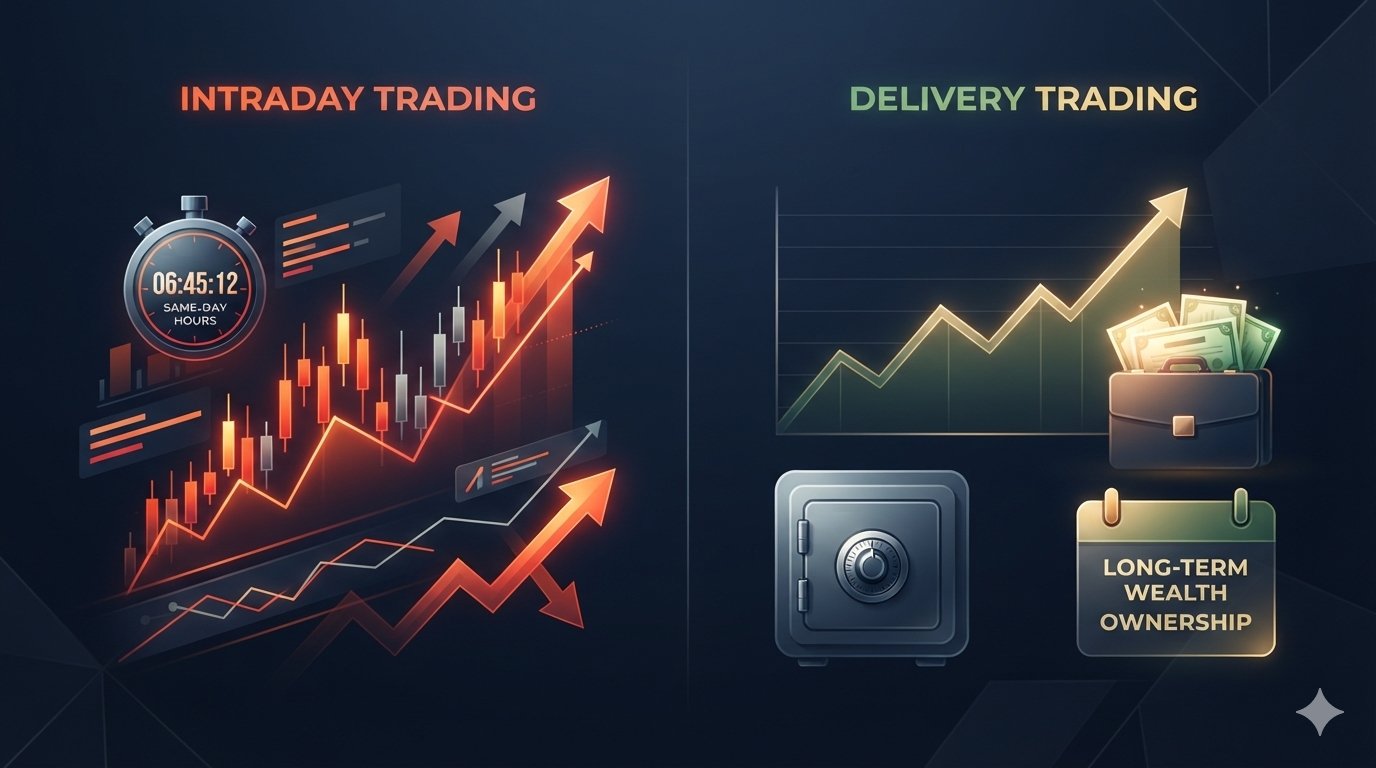
Let’s start with the basics: intraday trading. This approach involves buying and selling shares within the same trading day. The goal? To capitalize on small price fluctuations during the day. If you’re someone who enjoys quick decisions and fast-paced action, intraday vs delivery trading might appeal to you. Picture this: You buy shares in the morning as soon as the market opens, and before you know it, you’ve sold them by lunch, hopefully at a profit!
Pros of Intraday Trading
The thrills of intraday trading come with their own set of advantages:
1. Quick Profits: If your strategy works, you could see profits in just a few hours! Imagine going from having breakfast to having enough money for a nice dinner, all in one day.
2. No Overnight Risks: One of the biggest drawbacks of holding stocks overnight is the unpredictability that comes with it. With intraday, you avoid this because you’re out of your positions before the market closes.
3. Utilization of Margin: Most brokers offer margin trading for intraday positions, allowing you to buy more stocks than you could otherwise afford, amplifying your profit potential.
Cons of Intraday Trading
But, remember: the quick profit doesn’t come without its risks:
1. High Stress: The fast pace can be quite stressful. If you can’t handle rapid decisions, your trade might turn from profitable to disastrous in seconds.
2. Requires Constant Monitoring: You need to keep your eyes glued to the screen and monitor market trends continuously, which might not be feasible for everyone.
3. Transaction Costs: Frequent buying and selling can accumulate transaction fees. Sometimes, these costs can eat into your profits.
What is Delivery Trading?
Now, let’s talk about delivery trading. Unlike intraday trading, delivery trading involves buying shares and holding them for an extended period. You’re making an investment, betting on the stock’s potential for growth over weeks, months, or even years.
Pros of Delivery Trading
1. Less Stressful: You don’t have to constantly monitor your stocks. This might appeal to a more relaxed investor who believes in long-term gain over quick fixes.
2. Opportunity for Research: Since you’re not in a rush, you have more time to research and analyze stocks before making an investment decision.
3. Potential for Dividend Income: If you invest in companies that pay dividends, you could get regular income, which is a nice bonus while you wait.
Cons of Delivery Trading
1. Slower Returns: You may have to wait for weeks, months, or even years to see significant returns. Sometimes, patience can be painfully slow.
2. Exposure to Overnight Risks: Prices can change drastically overnight due to unforeseen news, impacting your investment.
3. Higher Capital Requirement: While you don’t need to be glued to your trading screen, delivery trading does require you to have enough capital to buy shares outright.
Intraday vs Delivery: Risk Factors Considered
When you boil it down, intraday vs delivery ultimately comes down to how much risk you’re willing to take. Intraday trading comes with the thrill but also the high stakes. In contrast, delivery focuses on patience and long-term strategies.
Market Volatility
Intraday trading thrives in a volatile market. Price fluctuations are your best friends. However, in a stable market, you might find it tough to make quick profits. On the other hand, delivery traders prefer a stable market to allow their investments to grow over time.
Time Commitment
Intraday trading is a full-time job. If you’re working a 9 to 5 and also want to dabble in stock trading India, it’s essential to choose wisely. Delivery trading offers flexibility, allowing you to manage your portfolio without being tethered to your screen all day.
Technical Analysis vs Fundamental Analysis
Another line of distinction comes from the type of analysis you’ll rely on as an intraday vs delivery trader.
Intraday traders usually lean towards technical analysis—chart patterns, price movements, and market psychology. If you enjoy data crunching and quick reflexes, this might be your thing.
In contrast, delivery traders often rely on fundamental analysis. They look at a company’s financial health, earnings, and long-term growth potential. If you enjoy diving deep into balance sheets and business models, delivery trading may be a more suitable path for you.
Trading Strategies for Intraday vs Delivery
When you decide to embark on your investment journey, having a clear strategy is essential, whether you choose intraday or delivery trading.
Strategies for Intraday Trading
1. Scalping: This involves making small profits on minute price changes. Think of it as grabbing the crumbs rather than the entire loaf.
2. Momentum Trading: Here, you capitalize on stocks that are trending in a particular direction. It’s like riding the wave!
Strategies for Delivery Trading
1. Buy and Hold: This classic strategy involves purchasing stocks and holding them for years. Think of it as selecting the finest wine and letting it age.
2. Dollar-Cost Averaging: Instead of investing a lump sum, you invest small amounts consistently. This reduces the impact of market volatility on your portfolio.
Final Thoughts: Making the Right Choice
As you navigate the waters of intraday vs delivery trading, remember there’s no one-size-fits-all approach in the stock market. Evaluate your risk tolerance, time commitment, and investment goals before making a decision. Whether you consider stock trading India through the lenses of intraday or delivery trading, just keep your eyes on your financial goals. Adapt, learn, and grow.
In the end, the right approach will not only help you maximize your returns but also keep the stress levels in check. So, choose wisely, and let your investment journey be one filled with learning and growth. Happy trading!