Oily skin and sunscreen cream have always had a complicated relationship. You know you need it. Every dermatologist, every skincare account, and every marketing campaign has told you that much. But even if you actually try it, your face is mostly a grease pan by 10 am, and you’re back to skipping it entirely within a week.
That’s not a sunscreen problem. That’s a wrong-sunscreen problem. And there’s a real difference.
People with oily or acne-prone skin don’t need to avoid sunscreen for face; they just need to stop using formulas built for someone with completely different skin. Here’s how to actually find the right one.
First, Know What Your Skin Is Actually Up Against
Oily skin produces more sebum than it needs. That sebum sits on the surface and mixes with whatever serum or sunscreen you’ve applied on top, and by noon, whatever was there in the morning is either sliding off or sitting in a thick, greasy, congested layer you didn’t sign up for.
Acne-prone skin is reactive. The wrong ingredient in a product, an emollient that’s too heavy, a comedogenic oil buried in the formula; and your face has a breakout within days that takes weeks to clear. Combination skin is dealing with both of these in different zones simultaneously, which means controlling oil in one area without stripping another is the constant balancing act.
A sunscreen cream designed for dry or normal skin has no business going near any of that. It’s not that it’s a bad product; it’s that it was made for a completely different set of problems. Starting here is where most people go wrong and then blame sunscreen as a category for what was really just a mismatch.
The format is the first decision, not the Last
Most people pick sunscreen by SPF number. That’s not the wrong thing to check, but for oily skin it’s probably the fourth or fifth thing to check; format comes first.
Sunscreen cream formulas carry emollients and occlusive ingredients designed to keep moisture locked into dry skin. Useful for that skin type. For oily skin, they add surface heaviness, mix with existing sebum, and slowly contribute to the kind of congestion that turns into breakouts over time.
Gel format solves this. Water-based, absorbs rather than sits, no residue after it’s in. The texture goes on cool and dries to a finish that looks like nothing, which is exactly the standard oily skin needs from something it’s wearing every single day.
The best sunscreen for face for oily or acne-prone skin almost always comes in gel or fluid form. If a formula requires real blending effort or leaves any kind of dewy finish, it wasn’t made for your skin type, regardless of how well it protects.
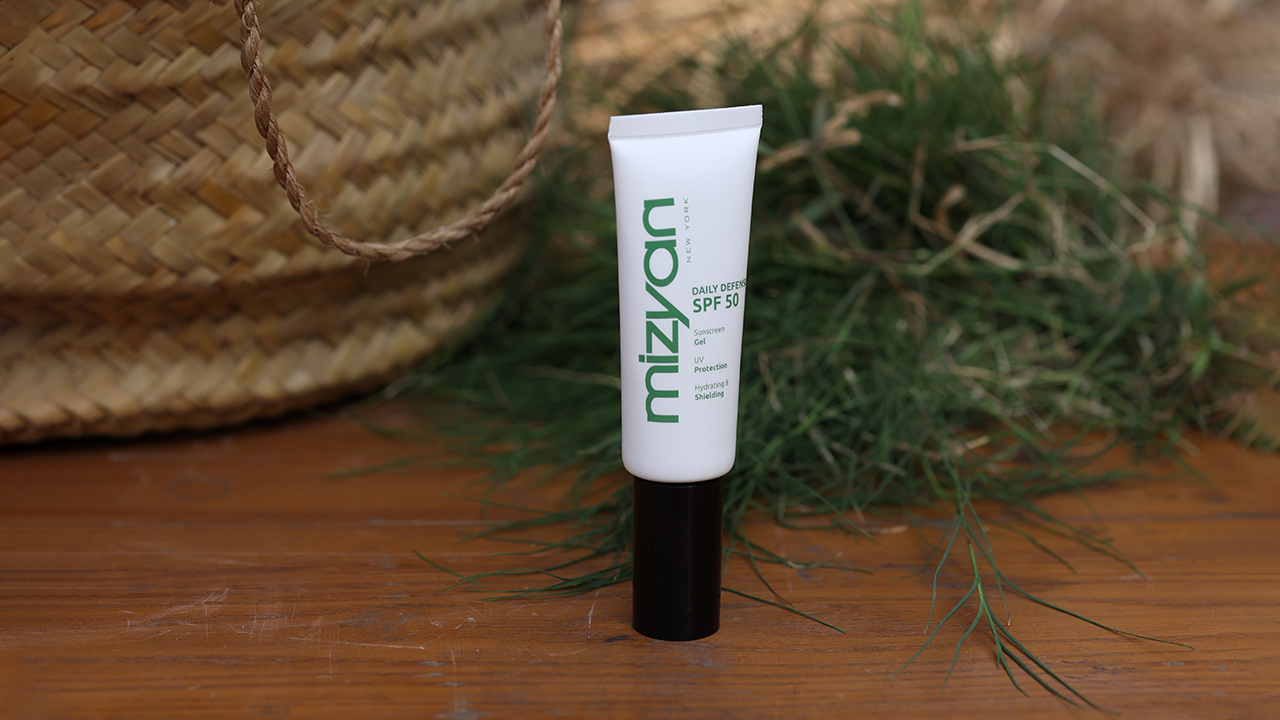
Mizyan offers one of the best gel-based daily defense sunscreens that is soothing on skin, prevents breakouts, and offers the best sun protection.
Chemical Filters Over Physical Ones: Here’s Why
Physical sunscreens use zinc oxide and titanium dioxide sitting on the surface of the skin and reflecting UV. They work fine. They’re also the main reason oily-skin people have a white cast problem and gave up on SPF in the first place. However, it is best recommended for sensitive and acne-prone skin.
Chemical and hybrid filters work differently; they absorb UV and convert it before it reaches the skin. They blend invisibly. They don’t sit on the surface mixing with sebum all day. The best sunscreen gel formulas almost always use chemical filters for exactly this reason.
On a label, look for names like “Phenylbenzimidazole Sulfonic Acid” or “Terephthalylidene Dicamphor Sulfonic Acid.” Those are chemical filters; signs you’re looking at a lightweight, invisible-wear formula. SPF 50 face coverage through chemical filters is just as effective as through physical blockers, without the texture trade-off that made you stop wearing sunscreen last time.
Ingredients That Help, Ingredients That Don’t
Beyond the UV filters, what else is in the formula matters a lot for reactive, oily, or acne-prone skin.
Worth looking for hyaluronic acid, which hydrates without adding any surface oil or weight. Niacinamide, which regulates sebum and calms redness over time. Centella Asiatica, which soothes irritation and supports the barrier without clogging anything. Aloe Vera, which calms and adds a light moisture that doesn’t sit.
Sunscreen for combination skin needs the same lightweight base but with enough hydration that drier zones don’t feel tight after application. Hyaluronic acid in a gel base handles both sides of that: moisture where it’s needed, no added weight anywhere.
SPF Level: What Number to Actually Go For
Sunscreen SPF 50 is the daily minimum that makes sense for Pakistani skin in Pakistan’s climate. SPF 30 blocks around 97% of UVB rays. SPF 50 gets to 98%. That gap sounds small until you’re wearing this every single day in a country where the UV index is extreme for a good portion of the year.
The best sunscreen for daily use isn’t the highest SPF on the shelf. It’s the highest SPF you’ll actually put on every morning without dreading it. SPF 100 that you skip because it makes your face unbearable does less than SPF 50 that you wear consistently without thinking about it.
For sunscreen for men: this still needs saying. A lot of men in Pakistan are outdoors more, wearing less on their face, and collecting UV damage daily without paying much attention to it. Gel sunscreen is the format most likely to actually get used by someone who doesn’t want a four-step morning routine: pea-sized amount, rub in, thirty seconds, done.
You can try Mizyan’s Daily Defense Gel-Based Sunscreen for both men and women.
Mizyan Daily Defense: What Makes It Right for This Skin Type
Mizyan’s Daily Defense Sunscreen Gel is built for exactly what oily and acne-prone skin needs. Broad-spectrum Sunscreen SPF 50, chemical filters, gel texture, zero white cast, absorbs fast with no greasy finish. Aloe Vera Extract calms, Hyaluronic Acid hydrates without adding weight; Antioxidant Complex handles environmental stress beyond just UV damage.
As a gel sunscreen for oily skin, it absorbs cleanly and stays put through the day. As a best face cream with SPF alternative for anyone who doesn’t want separate moisturizer and sunscreen steps, it handles both without the heaviness that a cream formula brings with it.
The SPF face cream conversation for oily skin keeps coming back to gel format. This is the one worth trying if texture has been the reason you’ve quit before.
Mizyan Daily Defence is available now on the official Mizyan NY website. Wear it every morning without skipping. The version of your skin five years from now will have a lot fewer complaints.