
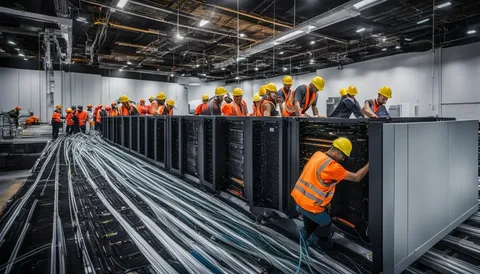
Data centres are among the most demanding facilities when it comes to temperature control. Servers, networking equipment, storage systems and power infrastructure generate substantial heat during operation, making dependable cooling essential for maintaining stable performance.
In Abu Dhabi and across the UAE, cooling requirements can be particularly demanding because of high ambient temperatures for much of the year. A carefully designed cooling strategy can help data centres maintain appropriate operating conditions, protect critical equipment and support continuous digital services.
Why Is Cooling Important for Data Centres?
Data centre equipment produces heat whenever it operates. If that heat is not removed effectively, temperatures can rise and affect the performance and reliability of IT equipment.
A reliable cooling system helps to:
- Maintain suitable equipment temperatures
- Reduce the risk of overheating
- Support consistent server performance
- Protect sensitive electronic components
- Improve equipment reliability
- Maintain appropriate humidity conditions
- Support continuous facility operation
Cooling therefore needs to be considered alongside electrical power, rack layouts, airflow management and the overall data centre design.
How Does Cooling Affect Data Centre Performance?
Temperature has a direct relationship with equipment operating conditions. Excessive heat can place additional stress on electronic components and may contribute to equipment instability or unexpected shutdowns.
An effective cooling strategy helps maintain controlled conditions around IT equipment.
Key performance considerations include:
| Cooling consideration | Importance |
| Temperature control | Helps keep IT equipment within suitable operating conditions |
| Airflow management | Delivers cooled air where it is needed |
| Humidity control | Helps maintain an appropriate environment for equipment |
| Cooling capacity | Ensures sufficient heat-removal capability |
| Redundancy | Helps maintain cooling if a component or system becomes unavailable |
| Monitoring | Allows operators to identify abnormal conditions |
| Efficiency | Helps control the energy required for cooling |
The cooling design should reflect the data centre’s equipment density, power consumption, facility layout and operational objectives.
What Cooling Systems Are Used in Data Centres?
Different data centres use different cooling technologies depending on their size, design and IT load.
Common approaches include:
Computer Room Air Conditioning
CRAC systems are designed specifically for controlled environments such as server rooms and data centres. They can provide temperature and humidity management while operating for extended periods.
Computer Room Air Handling Units
CRAH systems use chilled water and air-handling equipment to provide cooling for data centre environments. They can be incorporated into larger chilled-water systems.
Chilled-Water Cooling
Large facilities may use central chilled-water systems to remove heat from IT spaces. These systems can provide significant cooling capacity when appropriately designed.
In-Row Cooling
In-row systems position cooling equipment close to server racks, allowing cooling capacity to be targeted towards high-density areas.
Liquid Cooling
High-performance computing and increasingly dense server environments can require liquid-based cooling technologies. The appropriate solution depends on the IT equipment and facility design.
How Does Abu Dhabi’s Climate Affect Data Centre Cooling?
Abu Dhabi’s hot climate places additional demands on cooling infrastructure. Outdoor conditions can significantly affect the performance and energy requirements of cooling equipment.
Data centre designers therefore need to consider:
- High outdoor temperatures
- Equipment heat loads
- Cooling plant capacity
- Outdoor-unit performance
- Airflow requirements
- Humidity control
- Backup cooling capacity
- Maintenance access
The cooling system should be designed around both the IT load and the environmental conditions expected at the facility.
What Role Does a Data Centre Construction Company Play in Cooling Design?
A Data Center Construction Company Abu Dhabi can contribute to the integration of cooling infrastructure during the development of a data centre. Cooling cannot be treated as an isolated system because it needs to coordinate with electrical distribution, building structure, fire protection, controls and IT equipment layouts.
During construction and engineering, teams may need to coordinate:
- Cooling equipment locations
- Chilled-water pipework
- Air distribution
- Electrical supplies
- Control systems
- Equipment access
- Plant-room requirements
- Redundant cooling arrangements
- Monitoring and alarms
Early coordination can help prevent clashes and ensure that cooling infrastructure is properly incorporated into the wider facility design.
How Do MEP Contractors Support Data Centre Cooling?
MEP contractors Abu Dhabi can play an important role in delivering the mechanical, electrical and plumbing systems that support data centre operations.
Cooling systems depend on electrical power, mechanical equipment, controls and supporting infrastructure. MEP coordination can therefore involve:
- HVAC installation
- Chilled-water systems
- Pumps and pipework
- Electrical connections
- Control systems
- Equipment commissioning
- Testing and balancing
- Preventive maintenance
- Monitoring-system integration
The precise scope depends on the project structure and responsibilities assigned to each contractor.
Why Is Cooling Redundancy Important?
Data centres often support critical digital services, so the failure of a cooling system can have serious operational consequences. Redundancy helps reduce the impact of individual equipment or system failures.
Depending on the facility design, redundancy may involve:
- Multiple cooling units
- Standby chillers
- Redundant pumps
- Independent cooling circuits
- Backup power for cooling equipment
- Additional cooling capacity
- Separate control arrangements
The appropriate redundancy strategy depends on the facility’s availability objectives and design requirements.
How Does Airflow Management Improve Data Centre Cooling?
Simply installing high-capacity cooling equipment does not guarantee effective temperature control. Airflow needs to be properly managed so that cooled air reaches IT equipment and hot air is effectively removed.
Common airflow strategies include:
- Hot-aisle containment
- Cold-aisle containment
- Proper rack orientation
- Sealing unnecessary openings
- Managing raised-floor airflow where applicable
- Maintaining clear air paths
- Monitoring temperature at critical locations
Effective airflow management can improve cooling efficiency and reduce the amount of cooling capacity required to maintain suitable operating conditions.
What Is the Role of Temperature and Humidity Monitoring?
Continuous environmental monitoring gives data centre operators greater visibility into conditions within critical areas.
Sensors can monitor:
- Temperature
- Humidity
- Airflow
- Differential pressure
- Cooling equipment status
- Water-system conditions
- Equipment alarms
When monitoring systems identify conditions outside predefined parameters, facility teams can investigate and take corrective action.
How Can Cooling Systems Improve Energy Efficiency?
Cooling can represent a substantial portion of a data centre’s energy consumption. Efficient cooling design can therefore have a significant effect on overall facility performance.
Energy-efficiency strategies may include:
- Variable-speed drives
- Efficient chillers
- Free cooling where suitable
- Intelligent temperature controls
- Airflow optimisation
- Hot- and cold-aisle containment
- Efficient pumps and fans
- Continuous performance monitoring
- Load-based cooling control
The most appropriate combination depends on the data centre’s location, design, IT load and operating conditions.
How Does Preventive Cooling Maintenance Protect Data Centres?
Cooling equipment needs regular maintenance to remain dependable. A minor fault in a fan, pump, filter, control system or refrigeration component can affect cooling performance if it is not addressed.
Preventive maintenance may include:
- Cleaning filters and coils
- Inspecting fans and motors
- Checking pumps
- Reviewing control-system performance
- Inspecting pipework
- Checking refrigerant-related components where applicable
- Testing alarms
- Reviewing temperature trends
- Inspecting electrical connections
- Checking standby equipment
Maintenance schedules should take account of equipment manufacturer guidance, operational criticality and site conditions.
What Happens When Data Centre Cooling Fails?
Cooling failure can cause temperatures within IT spaces to increase rapidly, particularly when equipment is operating at high loads.
Potential consequences include:
- Reduced equipment performance
- Thermal alarms
- Automatic equipment shutdown
- Hardware damage
- Service interruption
- Increased operational risk
- Potential data availability concerns
The consequences depend on the facility’s design, equipment protection and the duration of the cooling interruption. This is why cooling resilience and monitoring are important elements of data centre planning.
How Should Cooling Capacity Be Planned for Future Growth?
Data centres can experience changing IT loads as additional servers and equipment are introduced. A cooling system designed only for the initial load may become inadequate as the facility expands.
Future planning can consider:
- Additional rack capacity
- Higher rack power densities
- Modular cooling systems
- Spare cooling capacity
- Expandable chilled-water infrastructure
- Additional pumps or cooling units
- Flexible airflow arrangements
Designing for future requirements can reduce the need for major modifications as the facility develops.
What Should Businesses Consider When Selecting Data Centre Cooling Systems?
There is no single cooling solution that is suitable for every data centre. The choice should reflect the facility’s technical requirements and operational objectives.
Important considerations include:
- IT load
- Rack density
- Facility size
- Availability requirements
- Local climate
- Energy efficiency
- Redundancy requirements
- Maintenance strategy
- Available plant-room space
- Future expansion
- Monitoring capabilities
- Capital and operating costs
A professional engineering assessment can help identify an appropriate cooling strategy.
How Can Cooling Systems Support Long-Term Data Centre Reliability?
Cooling infrastructure should be treated as a critical part of the overall data centre environment rather than simply an HVAC installation.
Long-term reliability can be supported through:
- Appropriate cooling-system design.
- Adequate capacity for current requirements.
- Planned redundancy.
- Effective airflow management.
- Continuous environmental monitoring.
- Preventive maintenance.
- Regular testing and commissioning.
- Capacity planning for future IT growth.
Combining these measures can help data centre operators maintain controlled environmental conditions while managing operational and energy requirements.
Why Is Professional Cooling Engineering Important in Abu Dhabi?
Data centres in Abu Dhabi need cooling systems capable of operating reliably under local environmental conditions while supporting demanding IT loads. Professional engineering can help integrate cooling equipment with electrical infrastructure, controls, monitoring and the wider building-services strategy.
A properly coordinated approach can contribute to:
- Stable operating temperatures
- Better cooling efficiency
- Improved equipment protection
- Greater operational resilience
- Easier maintenance
- Better capacity planning
- Reduced risk of avoidable cooling failures
For critical facilities, cooling design should be considered from the earliest stages of engineering and construction.
Conclusion
Cooling systems are essential to data centre performance because they control the heat generated by servers and other critical equipment. In Abu Dhabi’s demanding climate, appropriate cooling capacity, airflow management, redundancy, monitoring and preventive maintenance can help support reliable facility operation.
A carefully integrated cooling strategy can also improve energy management and prepare data centres for changing IT requirements.Laith Electro Mechanical to a data centre project can provide professional electromechanical expertise to support dependable cooling and building-services infrastructure across Abu Dhabi and the UAE.