Introduction
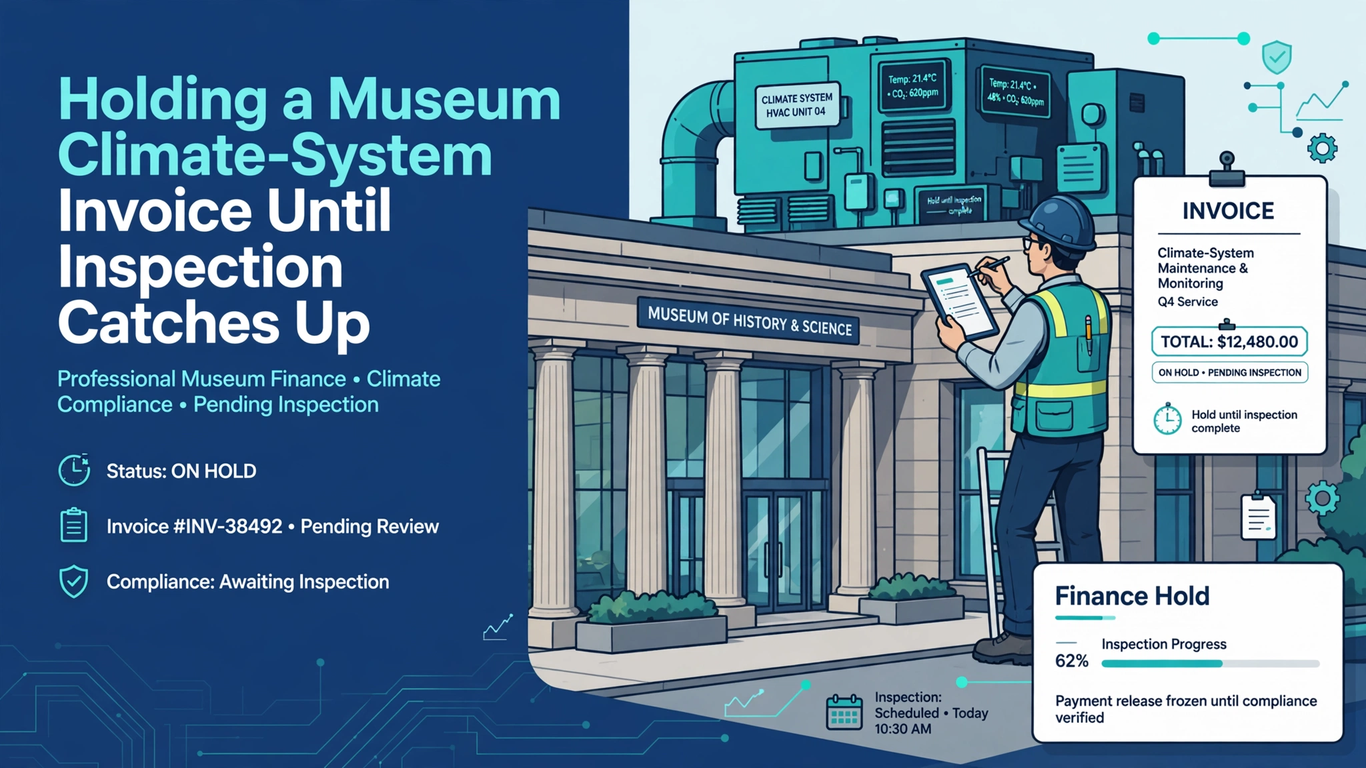
A museum orders eight climate-control units, but the conservation engineer accepts only seven. Soft Online Training uses this real-world case to show how payables teams handle such gaps in Oracle Fusion Financials Training in Chennai. The eighth unit stays sealed because its sensor package arrived with incomplete test documentation.
The supplier still expects payment, yet the analyst cannot pay for an unaccepted unit or create a receipt that never happened. Her file links the purchase order, receipt, inspection result, invoice line, variance, hold, and payment status, so every decision stays traceable and clearly separates invoice validation from inspection.
Separate Receipt From Acceptance in Oracle Fusion Financials Training in Chennai
The dock may hold eight crates, but if the museum records acceptance only after inspection, the receiving record shows seven units. That is by design, not a mistake. The buyer confirms quantity and price, the receiver records what was entered, the engineer explains the unaccepted unit, and payables logs the invoice without changing any operational fact. This stops a false receipt from becoming an accounting shortcut.
Before validating, the analyst expects eight billed, seven accepted, and one unit of variance, subject to tolerance. The approver never judges the equipment, and the engineer never releases a hold. Clear authority keeps reconciliation possible.
What Invoice Validation Actually Does
Oracle’s documentation says an invoice must be validated before it can be paid or accounted for. You can run the Validate invoice action on a single invoice or submit the Validate Payables Invoices process for many. Validation calculates tax, checks whether matching variances fall within tolerance, and places holds when something is off. It also generates distributions, compares ordered, received, and invoiced quantities, checks period status and conversion rates, and applies budgetary control where relevant .
For the museum, that supports a careful expectation, not a blanket promise. If the one-unit quantity variance goes beyond the applicable tolerance, validation can raise a matching exception and place a hold. If it sits inside tolerance, the result may be different. Supplier-level quantity and amount tolerance templates apply when they exist. Otherwise the process falls back to the templates on the Manage Invoice Options page. So the analyst records the setup that actually applies, instead of assuming every eight-versus-seven comparison must end in a hold.
Choose the Validation Scope Deliberately
Batch parameters decide what gets reviewed again, and this is where teams trip up. The All option revisits invoices that are not yet validated and those still carrying unreleased holds. The New option processes only distributions entered since the last validation and skips anything already on hold. So once the eighth unit passes inspection, a routine New run may never touch the held invoice. The analyst picks a path that includes it and saves the parameters with the case file.
The team can keep the invoice on hold or agree to an authorised correction with the supplier. It cannot invent a receipt, widen tolerance, or manually release an ineligible hold. Oracle Fusion Financials Training in Chennai helps learners practise exactly this scope decision.
Test the Exception Before the Deadline
A focused negative test belongs in a test environment, using a copy of the scenario. With eight billed and seven received, testers confirm the variance and the hold under the museum’s tolerance setup. Then they record the eighth valid receipt, resubmit validation, and check that the exception clears. Oracle’s own quantity example follows the same pattern: billed exceeds received, the remaining goods are received, and validation is run again to release the hold. The museum’s inspection step is a local control layered on top of that documented behaviour.
Other tests go after the shortcuts people reach for under pressure:
- Duplicate the seventh receipt and confirm reconciliation exposes the overstatement.
- Enter the eighth receipt against the wrong purchase order line and confirm matching does not pass just because total quantities agree.
- Change the invoice price while holding quantity steady, to separate price exceptions from quantity exceptions.
- Run New against an already held distribution and watch it get skipped.
- Reverse the eighth receipt after a successful revalidation and see how the invoice returns to review.
Reconcile the Hold to the Payment Outcome in Oracle Fusion Financials Training in Chennai
Seeing “Validated” on screen does not finish the job. Payables tie purchase order quantity to recorded receipts, receipts to inspection evidence, invoice quantity and amount to the supplier’s document, and any remaining hold to its unresolved cause. The payment schedule gets checked too, so no unsupported amount slips out.
A simple reconciliation table does the heavy lifting: eight ordered, seven accepted and recorded, eight invoiced, one pending inspection, and the amount eligible for payment under the configured result. Once the last unit passes, the same table should gain the eighth inspection reference, the receipt update, the validation run, the hold disposition, and the payment status. If the supplier issues a corrected invoice instead, the analyst links it to the original and verifies the revised amount.
Ownership stays clean throughout. The engineer signs off on technical evidence, the receiver owns receipt accuracy, payables owns invoice processing, and the approver reviews the payment decision.
Keep Configuration Changes Out of the Exception Queue
If reviewers decide the tolerances are wrong, that deserves its own conversation about policy and the invoices it would affect, separate from one supplier’s deadline. A tolerance change touches many invoices, so it should be approved, tested, and dated as configuration, not tucked inside a single exception response.
Scheduled validation deserves the same care. Oracle offers an AutoIncrement option for recurring runs that moves date parameters forward, but teams should still confirm the moving dates and pick up the intended invoices. Monitoring should also separate invoices waiting on business evidence from failures caused by scope, setup, or process errors.
Conclusion
The right answer here is neither automatic rejection nor hurried payment. It is a traceable decision where ordered, received, inspected, invoiced, held, validated, and paid quantities all reconcile. Oracle’s validation behaviour explains how variances, tolerances, process scope, and holds interact, while the museum remains responsible for its inspection rule and approval evidence.
A good session in Oracle Fusion Financials Training in Chennai should leave learners able to predict the eight-versus-seven outcome, test what happens after the final receipt, and reject false fixes. Most importantly, they should be able to prove that any released payment rests on a unit that was truly accepted.