Introduction
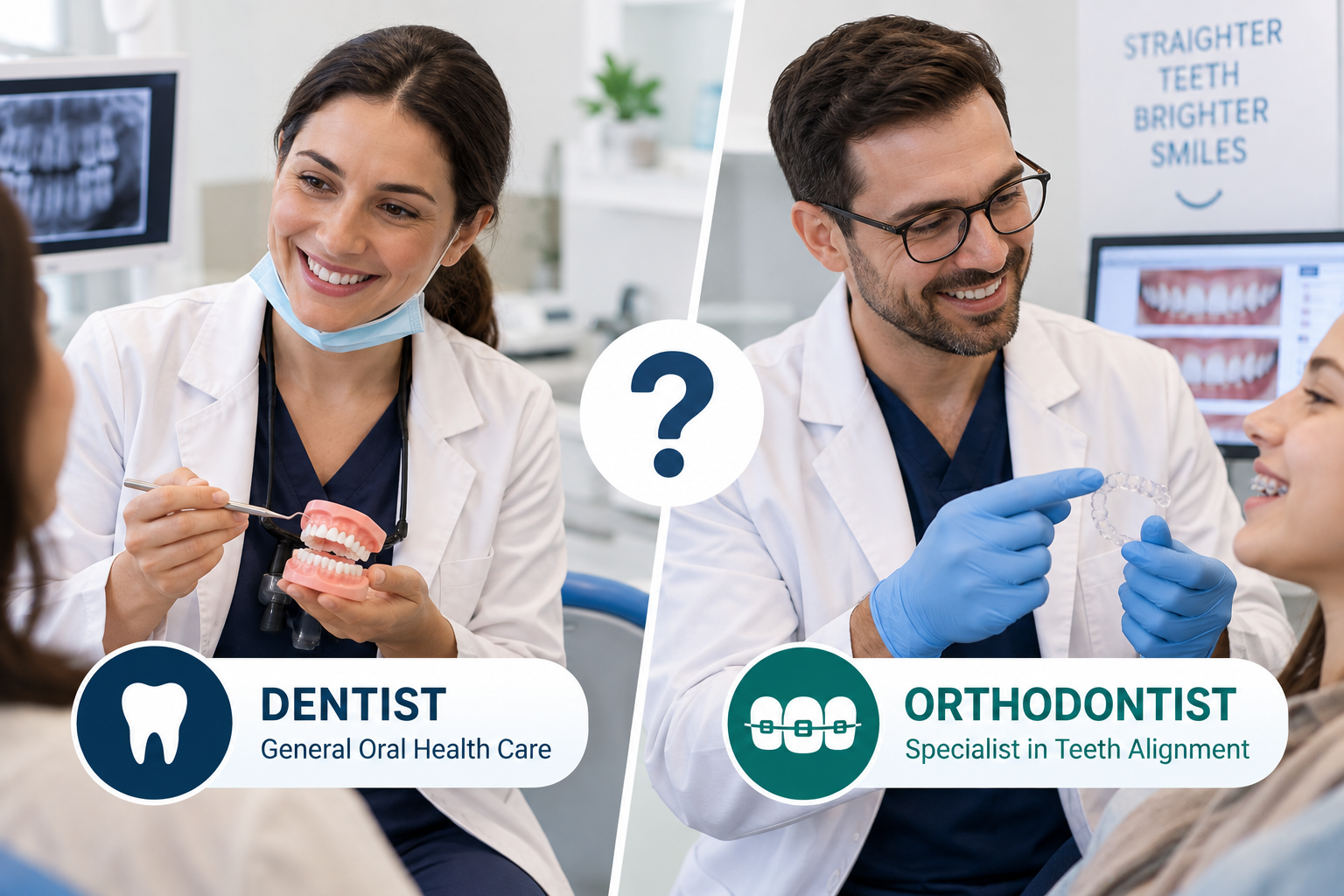
If you’ve ever searched for help with a dental problem, you’ve probably come across both dentists and orthodontists. While they both play important roles in maintaining your oral health, they don’t provide the same services.
This often leaves patients wondering which professional they should book an appointment with.
Should you visit a dentist for crooked teeth? Can an orthodontist treat a toothache? What if you need braces but also have a cavity?
Understanding the difference between these two dental professionals can help you receive the right treatment sooner and avoid unnecessary appointments.
If you’re looking for a trusted dentist in Holly Springs, this guide explains what dentists and orthodontists do, when you should see each one, and how they often work together to keep your smile healthy.
What Does a Dentist Do?
A general dentist is your primary dental healthcare provider. They focus on maintaining your overall oral health by preventing, diagnosing, and treating a wide range of dental conditions affecting your teeth, gums, and mouth.
Most people visit their dentist every six months for routine examinations and professional cleanings, but dentists also provide many restorative and cosmetic treatments.
Common services include:
- Comprehensive dental examinations
- Professional teeth cleanings
- Fillings for cavities
- Crowns and bridges
- Root canal treatment
- Tooth extractions
- Dental implants
- Teeth whitening
- Veneers
- Gum disease treatment
- Emergency dental care
Your general dentist is often the first professional to identify dental concerns and recommend further treatment if necessary.

What Does an Orthodontist Do?
An orthodontist is a dental specialist who completes additional years of advanced education after dental school. Their primary focus is diagnosing, preventing, and correcting problems related to tooth alignment and jaw positioning.
Orthodontic treatment improves both the appearance and function of your bite.
Orthodontists commonly provide:
- Traditional braces
- Clear aligners
- Retainers
- Bite correction
- Jaw alignment treatment
- Space maintenance for children
- Early orthodontic intervention
While orthodontists specialize in straightening teeth, they do not generally provide routine dental care such as fillings, cleanings, or treatment for tooth decay.
The Biggest Difference Between a Dentist and an Orthodontist
Although both professionals care for your oral health, their responsibilities are quite different.
- Dentists Focus on Overall Oral Health
A dentist in Holly Springs diagnoses and treats a broad range of oral health concerns, including tooth decay, gum disease, broken teeth, infections, missing teeth, and cosmetic concerns.
Their goal is to keep your teeth, gums, and mouth healthy throughout your life.
- Orthodontists Focus on Tooth Alignment
Orthodontists specialize in correcting crooked teeth, overcrowding, bite problems, and jaw alignment using braces, clear aligners, and other orthodontic appliances.
Their expertise lies in improving how your teeth fit together and function.
When Should You Visit a Dentist?
For most people, the dentist is the first point of contact for any dental concern.
You should schedule an appointment if you have:
- Tooth Pain
Persistent toothaches may indicate decay, infection, fractures, or other conditions requiring prompt treatment.
- Cavities
Early treatment prevents small cavities from becoming larger problems that require more complex procedures.
- Bleeding or Swollen Gums
These symptoms may indicate gum disease, which can worsen without professional care.
- Broken or Chipped Teeth
Dentists can restore damaged teeth using fillings, bonding, crowns, or other restorative treatments.
- Missing Teeth
Modern tooth replacement options such as dental implants, bridges, or dentures can restore both function and appearance.
- Preventive Care
Routine check-ups and cleanings help detect problems early while maintaining long-term oral health.
For the vast majority of dental concerns, your general dentist should be your first appointment.
When Should You See an Orthodontist?
Orthodontic treatment is recommended when the position of the teeth or jaws affects appearance, comfort, or function.
You may benefit from seeing an orthodontist if you have:
- Crooked Teeth
Misaligned teeth can make brushing and flossing more difficult while affecting the appearance of your smile.
- Crowded Teeth
Overcrowding increases the risk of plaque accumulation, cavities, and gum disease because some areas become difficult to clean properly.
- Gaps Between Teeth
Orthodontic treatment can close unwanted spaces while improving both aesthetics and bite function.
- Bite Problems
Overbites, underbites, crossbites, and open bites may affect chewing, speech, and long-term tooth wear.
- Jaw Alignment Concerns
Some patients experience discomfort or uneven jaw function due to alignment issues that orthodontic treatment can address.
Can Your Dentist Refer You to an Orthodontist?
Absolutely.
One of the most valuable roles of a dentist is identifying orthodontic concerns during routine examinations.
Dentists regularly assess:
- Tooth development
- Bite alignment
- Jaw growth
- Tooth spacing
- Crowding
If orthodontic treatment would improve your oral health or function, your dentist will refer you to a trusted orthodontist while continuing to oversee your general dental care.
This collaborative approach ensures you receive the most appropriate treatment.
Do You Still Need a Dentist While Wearing Braces?
Yes.
Many people mistakenly believe they only need to see their orthodontist during treatment.
However, orthodontists focus on tooth movement, not routine oral healthcare.
Even while wearing braces or clear aligners, you should continue visiting your general dentist for:
- Regular Dental Cleanings
Professional cleanings help remove plaque around brackets, wires, and hard-to-reach areas.
- Routine Examinations
Your dentist monitors your overall oral health and checks for cavities or gum disease throughout orthodontic treatment.
- Preventive Care
Fluoride treatments and personalized oral hygiene advice help protect your teeth while braces are in place.
Regular dental care remains essential throughout orthodontic treatment.
Can a Dentist Provide Orthodontic Treatment?
Some general dentists offer orthodontic services such as clear aligners for suitable cases.
For mild to moderate alignment concerns, this may provide a convenient treatment option within the same practice.
However, more complex bite problems or severe alignment issues may require referral to an orthodontic specialist with advanced training.
Your dentist will recommend the most appropriate approach based on your individual needs.
How to Decide Who You Should See First
If you’re unsure which professional you need, the safest choice is usually to visit your dentist first.
A comprehensive dental examination allows your dentist to:
- Assess Your Overall Oral Health
Before any orthodontic treatment begins, existing issues such as cavities or gum disease should be addressed.
- Identify the Cause of Your Concern
Not every cosmetic concern requires orthodontics. Your dentist can explain the available treatment options.
- Coordinate Your Care
If specialist treatment is needed, your dentist will refer you to the appropriate orthodontist while continuing to support your long-term oral health.
Starting with your dentist ensures nothing important is overlooked.
The Benefits of Having a General Dentist
Establishing an ongoing relationship with a trusted dentist in Holly Springs provides numerous long-term advantages.
- Preventive Care
Regular examinations help identify problems before they become more serious and expensive to treat.
- Continuity of Care
Your dentist maintains a complete understanding of your oral health history, making future treatment more personalized and efficient.
- Comprehensive Treatment
From preventive care to restorative and cosmetic dentistry, your dentist provides a wide range of services under one roof.
- Coordination With Specialists
When specialist care is needed, your dentist helps coordinate treatment to ensure the best possible outcome.
Having one trusted dental provider simplifies your oral healthcare journey.
Conclusion
Dentists and orthodontists each play an important role in helping you achieve a healthy, confident smile, but they focus on different aspects of oral health.
A general dentist provides comprehensive preventive, restorative, cosmetic, and emergency dental care, while an orthodontist specializes in correcting tooth and jaw alignment.
For most dental concerns, your general dentist should be your first point of contact and can refer you to an orthodontic specialist whenever additional expertise is needed.
At Novel Dental, our experienced team is committed to providing comprehensive, patient-focused care for individuals and families of all ages.
Our dentist in Holly Springs specializes in preventive, restorative, cosmetic, and family dentistry while working closely with trusted specialists whenever orthodontic care is needed.
Our goal is to ensure every patient receives the right treatment for a healthy, beautiful smile.
Whether you need a routine check-up, treatment for a dental concern, or guidance about orthodontic care, schedule your appointment with Novel Dental today.
Let our experienced team help you take the next step toward lifelong oral health.