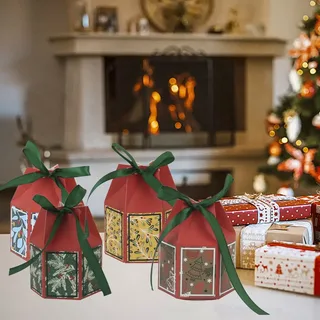
Many gifts are judged, before opening, by their packaging. The right packaging and styling of festive gift packaging create a feeling of celebration, get people excited, and make an outsize impression for a small gift. That’s why festive gift packaging is a matter of more than just appearance.
When selecting a Christmas Boxes for a gift, think about what’s inside. Determine the size, shape, and weight of the gift, as well as its fragility. The closer it fits into the box, the less likely it will shift during transit, and some soft packing material will help to protect fragile items, but never overpack a box when sending multiple gifts together.
Look isn’t everything, but it’s not always difficult either. A basic package in seasonal hues will ensure it looks cozy and professional. Tie a bow, place a handwritten tag, or attach a sprig of green to give it some additional character. For a contemporary finish, keep it simple with a crisp pattern, limited highlighting colour, or a reusable fabric bow instead of decorations.
Match the Package to the Person and Present
Consider the recipient. A youngster might like fun, cartoonish covers; an office-mate might prefer a more subtle package. If the gift is for a family member, make it even more special by including a little personal note to read before the recipient gets to the gift. A brief note inside the lid will do the trick.
Functionality counts as much as style. Make sure that the box is simple to put together and closes tightly. If your gift is going to travel, make sure it’s well put together and that its lid fits tightly. If your gift is on the heavy side, go for sturdy materials and reinforced corners. For lighter treats, a small box might do the trick.
When you’re purchasing a bit of packaging for a shop or event, consistency can give your display more of a professional look. Select a number of matching sizes and shades, and use the identical style for various products. If you’re a retail enterprise eager to exhibit seasonal products with a uniform look, Boxo Packaging has a wide range of packaging options.
Before ordering, it helps to make a short checklist:
- Take the gift with all its packaging.
- Choose a box that does not make you look as if you have given a missed appearance.
- Choose something durable for delicate or heavier items.
- Select colors and details for the recipient.
- Reuse or recycle your packaging if possible.
Make Festive Packaging Even More Special
A good package will also keep stuff out of the trash. Instead of finding an unnecessarily large box with a mountain of filler, choose something that fits more closely. Save ribbons and tags that can be reused, and use things that are easy to recycle in your community. If you’re wrapping many presents, pre-sort your supplies to avoid wasting paper.
For a finishing touch, add tissue paper layers to the inside of the box or place smaller items at varying heights. You can also use the outside to tease what’s on the inside, or just give some idea of who it’s for without revealing the whole thing. Using a tag with the recipient’s name is a nice touch.
The ideal packaging is simply the right fit – for the gift, the giver, and the recipient. It should safeguard the contents, be rewarding to open, and hint at a touch of thoughtfulness. Whether you’re buying a single gift at home or wrapping a complete selection of seasonal harvests, a considerate wrapping can make the giving all the sweeter.
Window Packaging: A Clear View of Better Product Presentation
Review: Buyers usually make up their minds within seconds about whether they will venture further to look at a product. In an instant, a good display helps by allowing them to see details such as the color, shape, and quality of the product before they even take the item out of its package. That is why Window Packaging is important in retail for food products, gifts, and other items.
The correct layout begins with the product. Think about the size and weight, and what sort of layout works best for the product. The window should reveal a feature but not give away too much. For instance, a small but clearly visible aperture could reveal a feature of the product while leaving space for a brand name, product information, or instructions.
The packaging matters too. Stiff card will provide support and a printable surface, with transparent film behind it that will act as a light barrier for the display window. Use materials that suit the product’s storage and handling. For an item that will be touched often, ensure that the window is firmly in place and the pack will stay intact.
Balance Visibility, Protection, and Style for Your Brand
A pack may be eye-catching, but it must also be robust. Consider risks like dust, moisture, impact, or storage conditions, and select a design that takes these factors into account. Certain food items may need a specific type of pack, such as one that is single- or multi-serve – ensure these needs are understood before manufacturing.
Make the packaging visually simple. So that a consumer can see the product and immediately understand what it is. Use clear typefaces, a limited color palette, and high contrast between the print area and the display window. Position any important information on the packaging so that it is not obstructed by folds, seams, or the product.
When it comes to designing packaging – you should consider the following:
- Weight the item and insert space for it to be securely positioned.
- Decide which feature customers should see first.
- Select materials appropriate to the needs of storage and handling.
- Keep branding & product details clear.
- Try out a sample before you order in bulk.
A prototype can help surface problems that are hard to see on a screen. Watch if it holds its position, if the opening frames well, and if the package is simple to put together. If the product moves or the window fogs, modify the design or material before continuing.
Establish a Consistent Shelf-Ready Appearance
The strength of packaging for a business is in how all the products feel like they belong together. Similar colors, window shapes, and typography can give a suite of products a feeling of style, while still letting each one stand out on its own. Packaging can also carry helpful details like product name, ingredients, care instructions, or a short description.
Placement in retail is one to consider when designing. You have to remember that the packaging will be placed next to other similar products, in-store and under store lighting, as well as from the typical customer’s eyesight. The design and display area can help or hinder when trying to be eye-catching.
For small businesses, a workable design is a way to get the best of looks and production and storage needs. Here is what Boxo Packaging has to offer, so that your team can look at what structure, printing, and visibility accomplish together; but ultimately, the decision comes down to what is best for your product.
Make the Final Design Work in Practice
See the entire package from all sides prior to approving the finished design. Make sure the window is properly aligned, all latches are secure, all data appear to be visible, and the package closes snugly. If the package will be mailed, test it with the product inside with padding; if it will be on a store shelf, see how it looks when customers view and handle it.
A successful pack can do more than just show what’s inside. It can communicate presence, help guide the customer to make a choice, and safeguard the product through everyday use. Window packaging can create great visual impact and a positive consumer experience with the right content, size, and shape, and an easy-to-understand hierarchy of information.