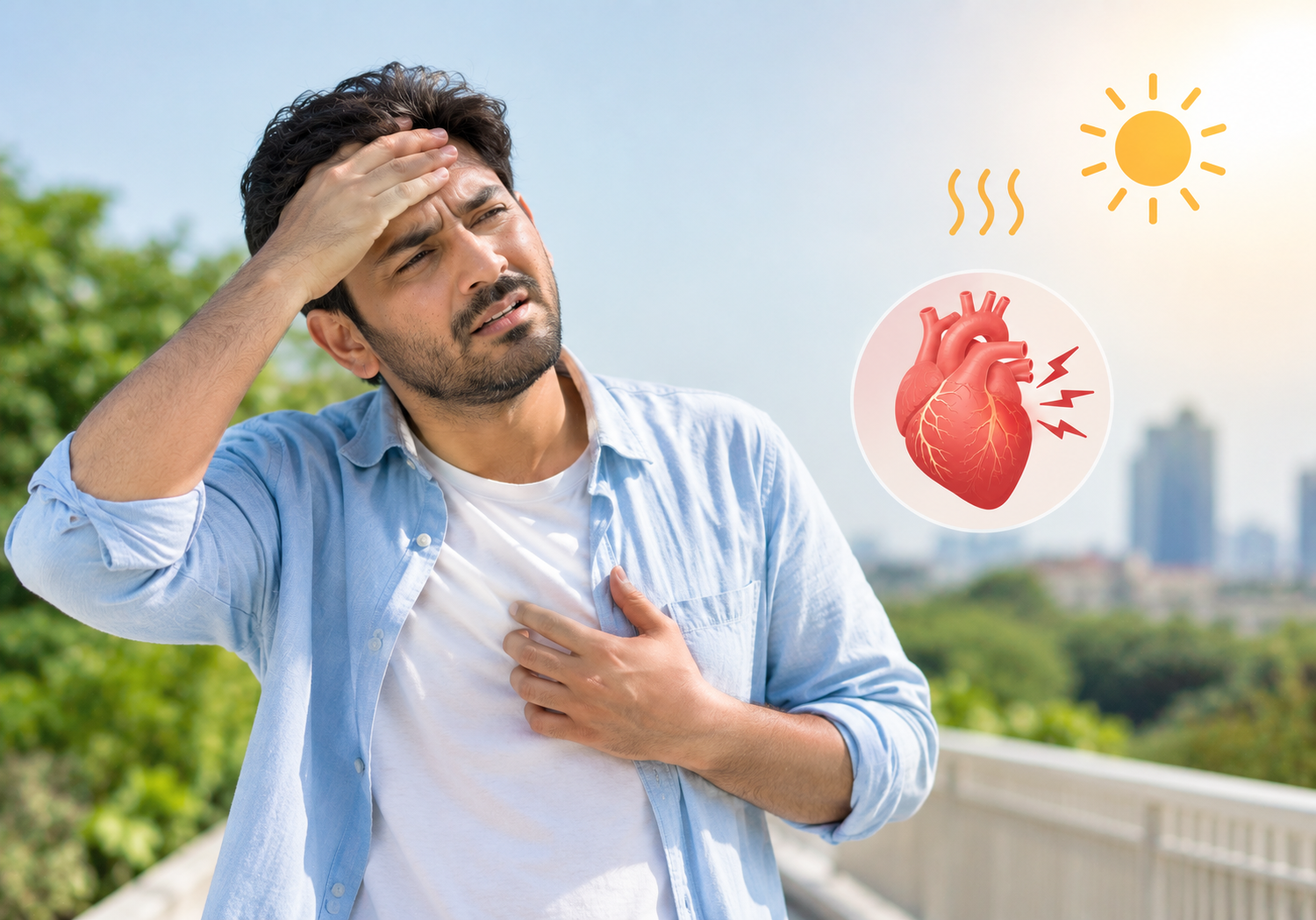
Most of us think of summer as beach days and iced coffee, not something to be cautious about. But doctors have been saying it for years, and the data backs them up: extreme heat puts real, measurable stress on your heart. And no, this isn’t just a concern for people who already have heart disease, though for them, the risk is noticeably higher.
So let’s actually break down what’s happening in your body during a heatwave, and who needs to be more careful than others.
What Heat Actually Does to Your Heart
When the temperature climbs, your body’s main job becomes cooling itself down. To do that, blood vessels near the skin widen and blood flow increases, which means your heart has to pump harder and faster to keep up. Add sweating into the mix, which drains fluids and electrolytes, and you’ve got a heart working overtime while losing some of the fuel it needs to do the job well.
For a healthy heart, this is usually manageable. But if you’re dehydrated, out in the sun too long, or already dealing with high blood pressure or blocked arteries, that extra strain can tip things into dangerous territory: chest pain, irregular heartbeat, or in severe cases, a heart attack.
There’s also research showing that big daily temperature swings very hot afternoons followed by cooler evenings are linked to a higher chance of heart attacks too. It’s not just the heat itself; it’s the body constantly adjusting to it.
Older Adults With No Heart Problems Still Need to Pay Attention
If you’re older and haven’t had any heart issues, it’s easy to assume summer heat doesn’t apply to you. That’s not quite right. Age alone changes how your body handles heat: older adults naturally retain less water, sweat less efficiently, and are slower to notice early signs of dehydration or overheating.
A few things that genuinely help:
- Drink water throughout the day, not just when you feel thirsty: thirst kicks in later as we age
- Avoid being outdoors between late morning and mid-afternoon, when heat peaks
- Wear light, breathable clothing and take breaks in shade or air conditioning
- Keep an eye out for dizziness, unusual fatigue, or a racing heartbeat; these are early warning signs, not something to push through
None of this requires major lifestyle changes. It’s mostly about timing and awareness.
If You’ve Had a Heart Attack and a Stent, This Matters More
For anyone who’s already had an angioplasty procedure after a heart attack and has a stent implant, summer heat isn’t something to take lightly. The arteries may be open again, but the heart itself is still more vulnerable to added stress, and heat is exactly that added stress.
A few things doctors consistently recommend for this group:
Keep taking your medications, heat or no heat. Certain heart medications beta blockers, ACE inhibitors, diuretics can actually make the body respond more intensely to high temperatures. That’s not a reason to skip doses; it’s a reason to be extra careful about hydration and shade. Never adjust medication on your own without your cardiologist’s input.
Hydrate deliberately, not casually. Dehydration thickens the blood slightly, which can raise the risk of clotting, a real concern for anyone with a stent. Water throughout the day, not just during meals, makes a difference.
Skip strenuous outdoor activity during peak heat. Gardening, walking, or errands are fine, just not between noon and 4 pm on the hottest days. Early mornings or evenings are safer windows.
Don’t ignore symptoms as “just the heat.” Chest tightness, breathlessness, or unusual fatigue during hot weather should never be brushed off, especially for someone with a history of blockage. It’s always better to call your doctor and be told it’s nothing than to wait it out.
Stay on top of follow-up visits, especially before summer starts. A quick check-in with your cardiologist before the hottest months hit can help adjust medication timing or hydration advice specific to your condition.
The Bottom Line
Summer heat doesn’t cause heart attacks on its own, but it does add pressure to a system that may already be working harder than it should. For healthy older adults, a little extra caution water, shade, timing goes a long way. For those who’ve already had a heart attack and have had a stent placed, that caution becomes non-negotiable. The good news is that none of this requires giving up summer. It just means being a little smarter about how you spend it.