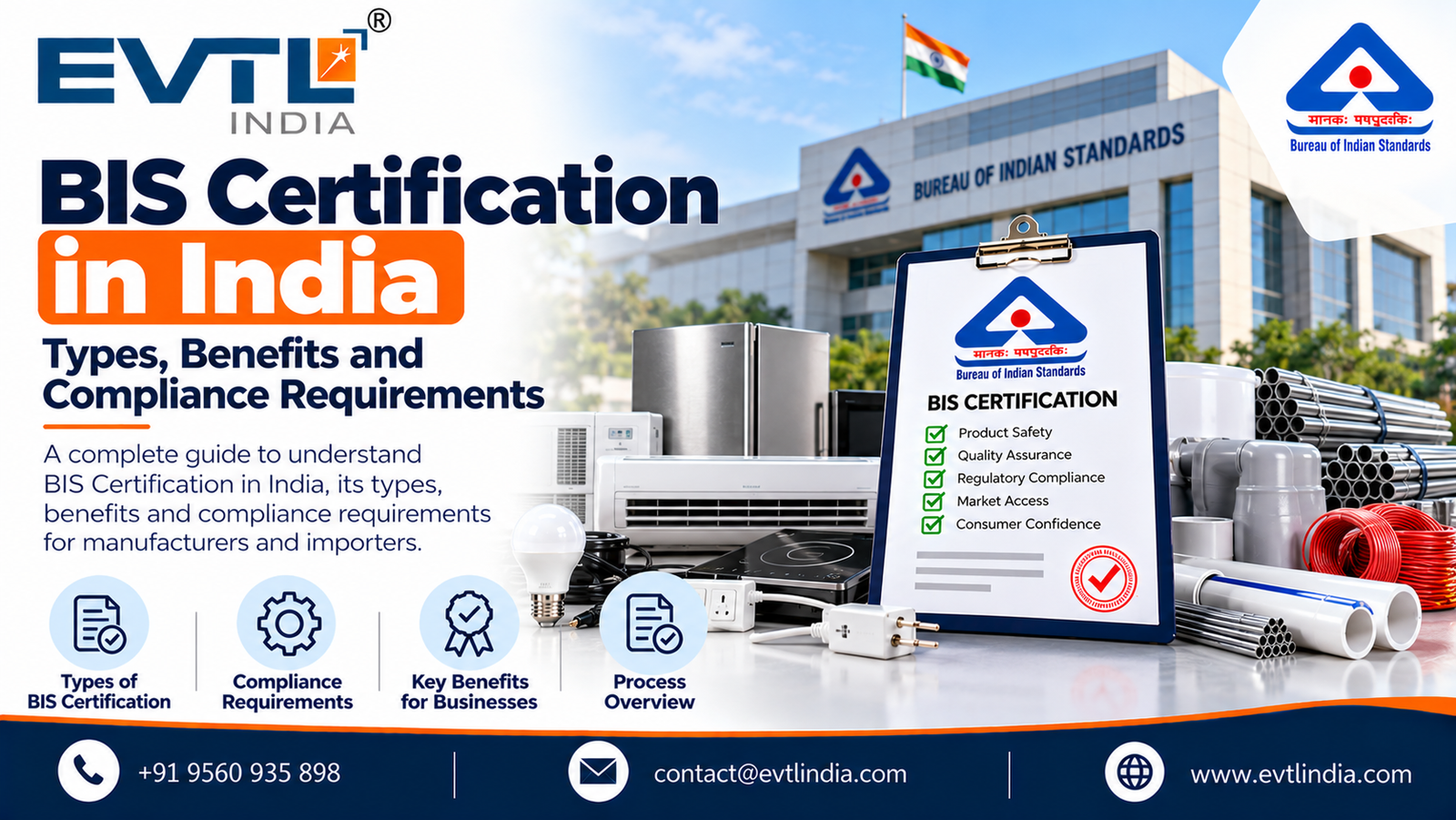
BIS Certification is an important requirement for manufacturers and importers whose products fall under India’s applicable mandatory certification regulations. The Bureau of Indian Standards (BIS) is India’s national standards body, responsible for developing Indian Standards and operating conformity assessment schemes to help ensure product quality, safety, and reliability.
Depending on the product category and applicable government notifications, businesses may need BIS certification before manufacturing, importing, distributing, or selling products in the Indian market. Certification requirements vary according to the product, relevant Indian Standard (IS), manufacturing location, and applicable certification scheme.
For businesses planning to enter or expand in India, understanding the BIS Certification process is essential. Working with an experienced certification consultant can help businesses understand applicable requirements, prepare documentation, coordinate testing, and manage the application process more efficiently.
What Is BIS Certification and Why Is It Important?
BIS Certification demonstrates that a product meets the requirements of the relevant Indian Standard under the applicable BIS conformity assessment scheme. Depending on the scheme, certification may involve product testing, factory assessment, documentation verification, and ongoing compliance requirements.
For products covered by mandatory Quality Control Orders (QCOs) or other applicable regulations, obtaining the required approval is essential for legal market access.
The key benefits of BIS Certification include:
- Regulatory compliance: Helps businesses meet applicable Indian product certification requirements.
- Product quality: Supports conformity with relevant Indian Standards.
- Consumer confidence: Provides assurance that certified products meet specified requirements.
- Market access: Enables businesses to meet certification conditions for selling regulated products in India.
- Brand credibility: Demonstrates a commitment to product safety and compliance.
However, the exact benefits and obligations depend on the product category and certification scheme.
Types of BIS Certification Services
BIS operates different certification schemes for various product categories. Selecting the correct scheme is an important first step.
1. BIS ISI Mark Certification
ISI Mark Certification is commonly associated with products certified under the BIS Product Certification Scheme. It applies to numerous products, including electrical appliances, construction materials, steel products, and other notified categories.
The process generally involves identifying the applicable Indian Standard, preparing the required documents, product testing, factory assessment where applicable, and obtaining the licence from BIS.
2. BIS CRS Registration
The Compulsory Registration Scheme (CRS) covers specified electronic and IT products. Depending on the product and applicable requirements, registration generally involves testing samples at a BIS-recognised laboratory and submitting the required application and supporting documents.
3. BIS FMCS Certification
The Foreign Manufacturers Certification Scheme (FMCS) enables eligible foreign manufacturers to obtain BIS certification for products manufactured outside India and covered by the relevant scheme.
Foreign manufacturers must comply with the applicable Indian Standard and scheme requirements, including factory inspection and testing where required.
4. BIS Scheme X Certification
Scheme X applies to specified products and machinery covered by its applicable regulatory framework. Manufacturers should verify the relevant product scope, Indian Standards, and current regulatory requirements before applying.
How to Choose the Best BIS Certification Agency
Choosing the best BIS Certification agency requires more than comparing service prices. Businesses should evaluate the consultant’s experience, technical understanding, transparency, and ability to support the relevant certification scheme.
Consider the following factors before selecting an agency:
Experience with your product category: Choose a consultant familiar with your product’s applicable Indian Standard and certification requirements.
Knowledge of BIS procedures: The agency should understand application requirements, testing procedures, factory inspections, and relevant regulatory notifications.
Documentation support: An experienced consultant can help organise technical documents, test reports, factory information, and other required records.
Transparent communication: The agency should explain the process, estimated timelines, professional fees, and possible challenges clearly.
After-certification support: Ask whether the agency assists with renewal requirements, surveillance obligations, scope changes, and other compliance-related matters.
Remember that BIS itself grants licences and registrations under its applicable schemes. A private consultancy can provide professional assistance but cannot independently guarantee approval or issue a BIS licence.
Why Businesses Look for a Top BIS Certification Agency
Manufacturers and importers often seek a top BIS Certification agency to simplify the certification process and reduce avoidable documentation or procedural errors.
An experienced consultant can help identify the relevant Indian Standard, check whether certification is mandatory, prepare an application checklist, coordinate with appropriate laboratories, and guide the business through the applicable process.
For foreign manufacturers, additional assistance may be required to understand factory inspection arrangements, authorised Indian representatives where applicable, and scheme-specific documentation.
Professional support can be particularly useful for businesses managing multiple products or operating in regulated industries. Nevertheless, the final approval depends on fulfilling the applicable requirements and BIS’s assessment.
Documents Required for BIS Certification
The documents required depend on the product and certification scheme. Common requirements may include:
- Business registration and manufacturing unit details.
- Product specifications and technical information.
- Applicable Indian Standard details.
- Manufacturing process and factory information.
- Test reports from an eligible laboratory, where required.
- Quality control and testing equipment details.
- Authorisation documents and representative details, where applicable.
- Application forms, declarations, and other scheme-specific records.
Businesses should verify the latest requirements before submitting an application because incomplete or incorrect documentation may delay processing.
BIS Certification Process in India
The general certification process involves the following steps:
- Identify the applicable standard: Confirm the product category, relevant IS code, and mandatory certification status.
- Prepare documentation: Collect technical, manufacturing, and business records.
- Complete product testing: Arrange testing according to the applicable scheme.
- Submit the application: File the required application and supporting documents.
- Complete the assessment: Undergo factory inspection or other assessments where required.
- Obtain approval: BIS evaluates compliance before granting the applicable licence or registration.
- Maintain compliance: Follow marking, renewal, surveillance, and other continuing obligations as applicable.
Processing time and costs vary depending on the scheme, product complexity, testing requirements, and application readiness.
Conclusion
BIS Certification plays an important role in helping manufacturers and importers comply with India’s product quality and safety regulations. Selecting the best BIS Certification consultant can make the process more organised by providing guidance on applicable standards, documentation, testing, and regulatory procedures.
When comparing a top BIS Certification agency, prioritise technical expertise, transparent communication, and experience with your specific product category rather than relying solely on promotional claims.
EVTL India provides BIS certification consultancy support to businesses seeking guidance on applicable certification schemes, documentation, and compliance procedures. Before starting the process, confirm the latest requirements with BIS and the relevant government authorities to ensure your product follows the correct certification pathway.