
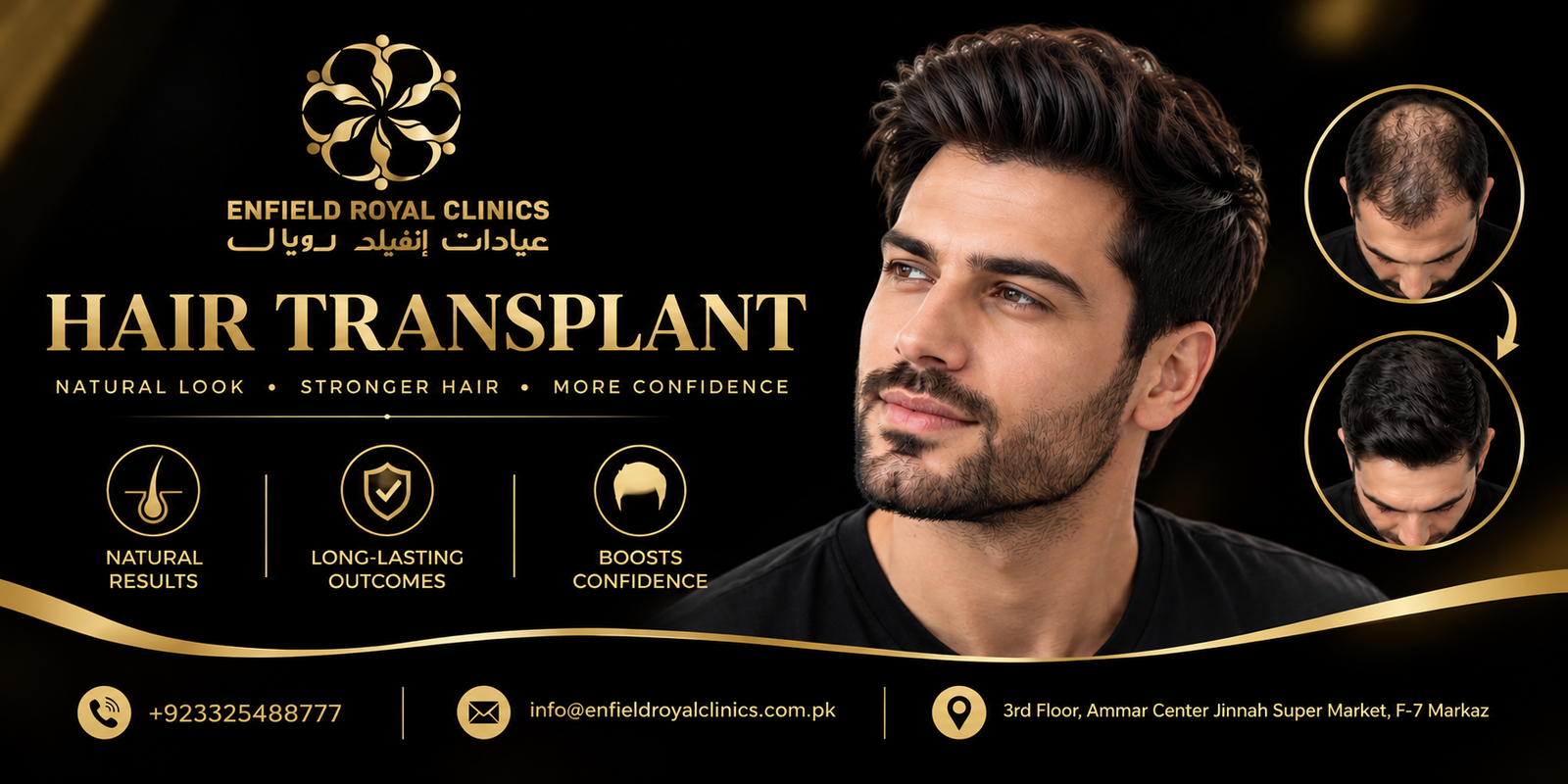
Hair loss can affect a person’s appearance, confidence, and daily life. Although thinning hair may develop for several reasons, including genetics, hormonal changes, aging, and certain medical conditions, hair transplant surgery can offer a long-term option for suitable candidates. The procedure involves moving healthy hair follicles from a donor area to parts of the scalp where hair has become thin or disappeared.
For people considering a hair transplant in Islamabad, understanding each stage of the procedure can help them make informed decisions. From the initial assessment to the recovery period, every step plays an important role in achieving a natural-looking result. The technique, number of grafts, and expected outcome depend on the individual’s hair loss pattern, donor hair quality, scalp condition, and overall health.
What Happens Before Hair Transplant Surgery?
Hair transplant surgery begins with a consultation and detailed assessment. Before recommending treatment, a qualified hair transplant surgeon examines the scalp, reviews the patient’s medical history, and discusses their concerns and expectations.
The assessment helps determine whether the person is a suitable candidate. It also allows the surgeon to identify the likely cause of hair loss. Some types of hair loss may respond better to medication or treatment of an underlying condition rather than surgery.
During the consultation, the surgeon typically evaluates:
- Hair loss pattern: The areas affected by thinning or baldness and whether the condition is stable or progressing.
- Donor hair availability: The density and quality of hair at the back and sides of the scalp.
- Scalp health: Signs of inflammation, infection, scarring, or other conditions that may affect healing.
- Medical history: Existing health conditions, medications, allergies, and previous hair restoration procedures.
- Hairline design: The placement and shape of the new hairline in relation to facial features and future hair loss.
The surgeon may also discuss the number of grafts needed, the most appropriate technique, potential risks, and realistic expectations. Not every patient can achieve full scalp coverage, especially when donor hair is limited.
Which Hair Transplant Techniques Are Commonly Used?
Two widely used techniques are Follicular Unit Extraction (FUE) and Follicular Unit Transplantation (FUT). Both involve transferring hair follicles from a donor area to areas affected by hair loss, but they differ in how the follicles are collected.
Follicular Unit Extraction (FUE)
FUE involves removing individual follicular units from the donor area using a small specialized instrument. Each unit may contain one or several hairs. The collected grafts are then prepared for implantation into the recipient area.
This method does not require removing a long strip of scalp. Instead, it leaves many tiny extraction marks that usually become less noticeable as they heal. FUE is often chosen by patients who prefer to keep their hair relatively short, although the final appearance of the donor area depends on the extraction pattern, healing, and individual skin characteristics.
Careful extraction is essential because removing too many follicles from one area can create visible thinning or an uneven donor appearance.
Follicular Unit Transplantation (FUT)
FUT involves removing a narrow strip of scalp from the donor area, usually at the back of the head. The strip is divided into individual follicular units under magnification before the grafts are implanted.
The donor wound is closed, leaving a linear scar that may be concealed by surrounding hair. FUT can provide a substantial number of grafts in selected cases, but its suitability depends on the patient’s scalp characteristics, hairstyle preferences, and treatment goals.
Neither method is automatically better for every patient. The most suitable approach depends on donor capacity, the extent of hair loss, desired coverage, and the surgeon’s assessment.
How Is Hair Transplant Surgery Performed Step by Step?
Although the exact process varies by technique and treatment plan, most procedures follow several main stages.
1. Preparing the Scalp
The treatment area is assessed, and the planned hairline and recipient sites are marked. Depending on the chosen technique, the donor area may be trimmed or shaved. The scalp is cleaned to reduce the risk of infection.
Local anesthesia is generally used to numb the donor and recipient areas. Patients may feel brief discomfort when the anesthetic is administered, but the treated areas should become numb before the main procedure begins.
2. Extracting the Hair Follicles
For FUE, the surgeon extracts individual follicular units from the donor area. For FUT, a strip of scalp is removed and dissected into follicular units.
The extracted grafts must be handled carefully because the follicles can be damaged by excessive pressure, dehydration, or improper storage. Their condition can influence how well they survive after implantation.
3. Preparing the Recipient Area
The surgeon creates small openings in the areas where hair growth is needed. Their placement, direction, angle, and density are planned to match the natural growth pattern as closely as possible.
Hairline design requires particular care. Single-hair grafts may be placed near the front to create a softer, more natural transition, while grafts containing more hairs may be used farther behind for additional density when appropriate.
4. Implanting the Grafts
The prepared follicles are placed into the recipient sites. The surgeon distributes the grafts according to the treatment plan, considering the existing hair, scalp shape, and desired coverage.
The goal is not simply to place as many grafts as possible. Proper spacing, direction, and distribution are important for a natural appearance and for avoiding unnecessary damage to existing hair.
The procedure may take several hours, depending on the number of grafts and the technique used. Larger sessions can require most of a day, and some cases may need more than one session.
What Happens Immediately After the Procedure?
After a hair transplant in Islamabad, the scalp may be red, tender, swollen, or sensitive for a short period. Small scabs usually form around the implanted grafts, while the donor area may also feel sore or tight.
These effects are generally temporary, but recovery varies from person to person. The patient receives instructions on cleaning the scalp, sleeping comfortably, managing discomfort, and avoiding activities that could disturb the grafts.
Common aftercare recommendations include:
- Washing the scalp only as instructed.
- Avoiding rubbing, scratching, or picking at scabs.
- Protecting the scalp from direct sunlight and injury.
- Avoiding strenuous exercise for the period recommended by the treating team.
- Taking prescribed medication according to instructions.
- Attending follow-up appointments to monitor healing.
Patients should contact their healthcare provider if they develop worsening pain, spreading redness, fever, unusual discharge, or other concerning symptoms. These may require prompt assessment.
When Does New Hair Growth Begin?
Hair transplant results develop gradually rather than immediately. Many transplanted hairs shed during the first few weeks after surgery. This process, often called shock shedding, can be a normal part of the hair growth cycle and does not necessarily mean the transplant has failed.
The follicles can remain in the scalp even after the visible hair shafts shed. New growth commonly begins to become noticeable after around three to six months, although the timing varies.
Between six and twelve months, patients often see more meaningful changes in coverage and density. Hair may continue to mature and improve for 12 to 18 months, particularly in some areas of the scalp.
The final outcome depends on several factors, including graft survival, donor hair quality, the patient’s natural hair characteristics, healing, and continued hair loss in untreated areas. A transplant redistributes existing follicles; it does not create new follicles or stop the underlying cause of progressive hair loss.
Who May Be a Suitable Candidate for Hair Transplant Surgery?
Hair transplant surgery may be suitable for adults with pattern hair loss, certain stable areas of thinning, or selected forms of hair loss caused by injury or scarring. However, candidacy must be determined individually.
A person with sufficient healthy donor hair and realistic expectations may be more likely to benefit. Someone experiencing sudden or unexplained hair loss, active scalp inflammation, or an unstable hair loss pattern may need further investigation before surgery is considered.
Age alone does not determine suitability. The surgeon also needs to consider the likely progression of hair loss. If thinning continues after transplantation, the surrounding natural hair may become less dense, potentially affecting the overall appearance. Medical treatments may be recommended for some patients to help preserve existing hair, depending on their diagnosis and health needs.
A careful assessment helps establish whether surgery is appropriate, which technique may work best, and what degree of coverage is realistically achievable.
Frequently Asked Questions
1. Is hair transplant surgery painful?
Local anesthesia is used to numb the scalp during the procedure. Some discomfort may occur when the anesthetic is administered, and mild soreness or tightness can develop afterward. The level of discomfort varies according to the technique and individual sensitivity.
2. How long does a hair transplant procedure take?
The procedure often takes several hours and may last most of a day when a large number of grafts is required. The duration depends on the technique, graft count, and complexity of the treatment plan.
3. Are hair transplant results permanent?
Transplanted follicles often retain characteristics from their donor area and can produce hair for many years. However, results vary, and natural hair loss may continue in untreated areas. Long-term planning and follow-up can help patients manage changes over time.
4. When can a patient return to normal activities after a hair transplant?
Many patients resume light daily activities within a few days, but strenuous exercise and activities that could injure the scalp may need to be avoided longer. The recovery schedule depends on the procedure and the surgeon’s instructions.
Conclusion
Hair transplant surgery involves several carefully planned stages, including scalp assessment, donor hair extraction, preparation of the recipient area, and precise graft implantation. FUE and FUT offer different ways to collect follicles, and the most appropriate technique depends on each patient’s needs and donor hair availability.
For anyone considering a hair transplant in Islamabad, understanding the process, recovery requirements, and gradual growth timeline can make treatment decisions easier. A thorough professional assessment, realistic expectations, and proper aftercare are essential parts of planning for a natural-looking result.