Have you ever wondered what keeps your Audi running like the day you drove it off the lot? Are you curious about whether you’re doing enough to protect your investment? Or perhaps you’re asking yourself if those service intervals really matter as much as everyone says?
Here’s the thing – your Audi is a finely engineered machine that demands proper care. German engineering is brilliant, but it’s not magic. Without regular maintenance, even the most sophisticated vehicles can develop problems that cost a fortune to fix. The good news? A well-maintained Audi can deliver exceptional performance for years, often exceeding 200,000 kilometres without major issues.
In this guide, we’ll walk you through everything you need to know about keeping your Audi in peak condition. From understanding service schedules to knowing what maintenance tasks are non-negotiable, we’ve got you covered. We’ll also explore service costs in Australia, common problems you can avoid, and how to choose the right service centre. Whether you’re a new Audi owner or you’ve been driving one for years, you’ll find practical advice to help protect your pride and joy.
Understanding Your Audi Service Schedule
What Is Included in an Audi Full Service?
A full service on your Audi is a thorough health check for your vehicle. It covers all the basics plus a detailed inspection of critical components. Typically, you can expect an engine oil and filter change, brake fluid check, air filter replacement, and a comprehensive multi-point inspection.
Beyond these essentials, technicians will examine your suspension, steering, exhaust system, and electrical components. They’ll also check your lights, wipers, and top up any fluids that need attention. Think of it as an annual physical for your car – catching small issues before they become expensive headaches.
Audi Minor Service vs Major Service: What’s the Difference?
A minor service is your standard check-up, usually performed between major services. It focuses on oil and filter changes, basic fluid checks, and a visual inspection of key components. It’s quicker and more affordable, designed to keep things ticking along nicely.
A major service, on the other hand, is far more extensive. This includes everything in a minor service plus spark plug replacement, transmission fluid change, and detailed brake inspections. Major services typically occur every two years or at specific kilometre intervals. They take longer but provide peace of mind that every system has been thoroughly examined.
How Often Should You Service Your Audi?
Most Audis require servicing every 15,000 kilometres or 12 months – whichever comes first. However, this can vary depending on your model and driving conditions. If you frequently drive in stop-start traffic or harsh conditions, you might need more frequent attention.
Modern Audis often have service reminder systems that monitor your driving habits and adjust intervals accordingly. Don’t ignore these alerts! They’re programmed to ensure your vehicle receives care exactly when it needs it.
Essential Audi Maintenance Tasks You Shouldn’t Skip
Engine Oil and Filter Changes
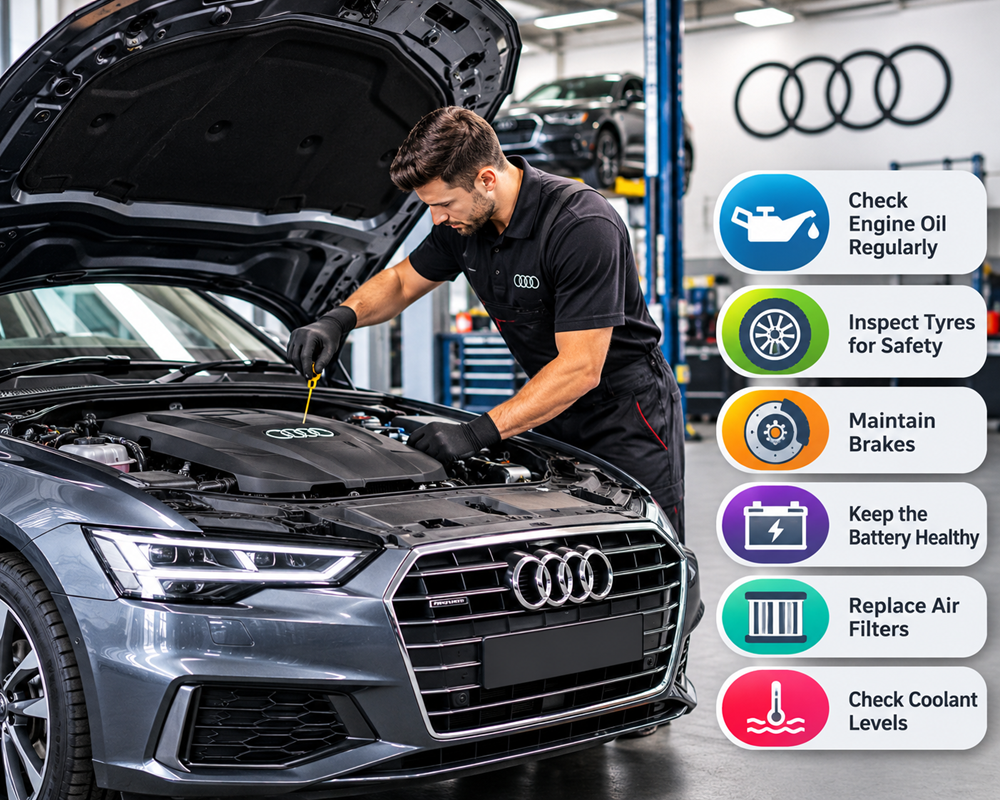
Your engine oil is the lifeblood of your Audi. It lubricates moving parts, reduces friction, and helps keep your engine cool. Regular oil changes as part of professional Audi service prevent increased wear, maintain fuel efficiency, and help avoid potentially costly engine damage.
Audi engines, particularly turbocharged variants, work hard and run hot. This means oil can degrade faster than in less performance-oriented vehicles. Using the correct manufacturer-specified oil isn’t optional – it’s essential for protecting your engine and maintaining long-term performance.
Brake System Inspections and Replacements
Your brakes are your most important safety feature. Regular inspections ensure your brake pads, discs, and fluid are all in good condition. Worn brakes don’t just perform poorly – they’re genuinely dangerous.
Audi vehicles are often heavier than average due to their quattro all-wheel-drive systems. This extra weight puts additional strain on brake components, making regular checks even more important.
Timing Belt and Cambelt Replacement
The timing belt (or cambelt) is a critical component that synchronises your engine’s internal movements. If it fails, the results can be devastating – we’re talking bent valves, damaged pistons, and repair bills running into thousands of dollars.
Most Audis require timing belt replacement between 90,000 and 150,000 kilometres, depending on the model. This isn’t a task to delay. The belt itself is relatively inexpensive, but the labour is significant. Still, it’s nothing compared to the cost of engine repairs if it snaps.
Transmission and Gearbox Servicing
Whether you’ve got a manual, automatic, or Audi’s DSG dual-clutch transmission, regular gearbox servicing keeps shifts smooth and extends the life of your drivetrain. Transmission fluid degrades over time, losing its ability to lubricate and cool effectively.
Many people overlook transmission servicing because it’s not always included in standard schedules. However, changing your transmission fluid every 60,000 to 80,000 kilometres can prevent expensive repairs down the track.
Audi Service Costs: What to Expect

How Much Does an Audi Service Cost in Australia?
Let’s be honest – Audis aren’t the cheapest cars to maintain. A minor service typically ranges from $300 to $500, while a major service can cost anywhere from $600 to $1,200 or more, depending on your model and what’s required.
Premium vehicles use premium parts, and Audi-specific components often cost more than generic alternatives. Plus, the engineering complexity means service times can be longer. However, these costs are fairly comparable to other premium brands like BMW and Mercedes-Benz.
Dealership vs Independent Specialist: Which Offers Better Value?
Dealerships provide factory-trained technicians and genuine parts, but their prices reflect this. Independent Audi specialists can often deliver the same quality service at 20-40% less. The key is finding a specialist with proper diagnostic equipment and Audi expertise.
Many independent workshops now use genuine or OEM-equivalent parts and have technicians with dealership experience. They’ve simply chosen to operate outside the dealer network, passing savings on to customers.
Does Servicing at an Independent Mechanic Void Your Audi Warranty?
Short answer: no. Australian Consumer Law protects your right to choose where you service your vehicle. As long as services are performed according to manufacturer specifications using appropriate parts, your warranty remains intact.
Make sure you keep detailed records of all services performed. This documentation proves your vehicle has been properly maintained should any warranty claims arise.
Common Audi Problems and How Regular Servicing Prevents Them
Oil Consumption Issues
Some Audi engines, particularly certain TFSI variants, are known for consuming more oil than average. Regular servicing allows technicians to monitor oil levels and identify consumption patterns early. Addressing issues promptly prevents more serious engine problems.
Electrical System Faults
Modern Audis are packed with sophisticated electronics. Regular servicing includes diagnostic scans that can detect electrical issues before they cause noticeable problems. Early intervention is always cheaper than emergency repairs.
Cooling System Failures
Cooling system components like water pumps and thermostats have limited lifespans. Regular inspections catch wear before failure occurs. A failed cooling system can cause overheating, leading to expensive engine damage.
Choosing the Right Audi Service Centre
What to Look for in a Qualified Audi Specialist
Look for workshops with Audi-specific diagnostic equipment and technicians who’ve received proper training. Check online reviews and ask about their experience with your particular model. A good specialist will happily discuss their qualifications.
Certifications from industry bodies and membership in professional associations indicate commitment to quality. Don’t hesitate to ask questions – reputable workshops welcome enquiries from potential customers.
Are Audis Expensive to Maintain Compared to Other Premium Brands?
Audis sit roughly in the middle of premium brand maintenance costs. They’re generally less expensive to service than some European competitors but cost more than mainstream Japanese brands. The quattro all-wheel-drive system adds some complexity, but overall, maintenance costs are reasonable for the segment.
DIY Maintenance Tips for Audi Owners
Simple Checks You Can Do Between Services
Between professional services, you can perform basic checks yourself. Monitor your oil level monthly, check tyre pressures fortnightly, and keep an eye on coolant levels. Inspecting your windscreen wipers and topping up washer fluid takes moments but makes a real difference.
Listen for unusual sounds and pay attention to how your car feels. You know your Audi better than anyone – if something seems off, get it checked out.
When to Leave It to the Professionals
Anything involving your brakes, suspension, or engine internals should be handled by qualified technicians. The complexity of modern Audi systems means DIY repairs can sometimes cause more problems than they solve. When in doubt, consult a professional.
Protecting Your Audi Investment
Keeping your Audi in peak condition isn’t complicated, but it does require commitment. Regular servicing according to manufacturer schedules, addressing issues promptly, and choosing qualified technicians all contribute to long-lasting performance.
The bottom line? Prevention is always cheaper than repair. Those service intervals exist for good reason, and skipping them is false economy. A well-maintained Audi will reward you with years of driving pleasure and retain its value better at resale time.
Your Audi represents a significant investment, and treating it well makes perfect sense. Find a service centre you trust, stick to the maintenance schedule, and enjoy the experience of driving a properly cared-for German machine. Your future self – and your wallet – will thank you for it.