Temperatures are climbing across North Texas, and pool fences in Plano have become one of the season’s most requested home upgrades. Homeowners who put off safety work all winter are calling contractors, checking city codes, and comparing materials before the first pool party of the year. This piece covers why demand spikes every spring, what Texas and Plano actually require for a compliant barrier, what keeps a gate genuinely safe, and how to get a project done before Memorial Day.
Why Pool Fence Demand Rises Before Summer
Every March, pool contractors across Collin County watch the same pattern play out. Phone calls pick up, estimate requests double, and installers who had open calendars in January are suddenly booked three weeks out.
Part of it is timing. Families open their pools in April or May, and a fence that’s sat on the to-do list since October suddenly feels urgent. And part of it is real estate. A lot of Plano homes date to the 1990s and early 2000s, and their pools were often installed under older codes, or a previous owner tore the fence out and never replaced it.
There’s also a reason contractors hear over and over: insurance. Some policies now ask about pool barriers at renewal, and a missing or non-compliant fence can affect coverage or premiums. Add in warmer weather and school letting out, and spring turns into the busiest season of the year for pool fence Plano installers.
Word travels fast in a neighborhood, too. One close call at a backyard gathering, and within weeks several households on the same street are asking for quotes.
Texas and Plano Pool Barrier Rules, in Plain Terms
Texas doesn’t have one statewide pool fence law that covers every home, which catches homeowners off guard when they move in from states with stricter, uniform codes. Instead, requirements come from a mix of state building codes and local ordinances. Plano, like most Texas cities, enforces pool barrier rules through its version of the International Residential Code. Inspectors check for compliance during new pool construction, and often again during real estate transactions.
The rule, boiled down, is this: a barrier around the pool has to be hard for a young child to climb, open, or crawl under. In practice, that means a minimum fence height, limited gaps between vertical members, and specific rules for gate hardware. Homeowners who aren’t sure their fence meets these standards can check the details with Plano pool fence installers, who work with Plano city inspectors regularly and know which details tend to get flagged.
Code requirements are a floor, not a ceiling. A fence that passes inspection isn’t always the safest option for a house with toddlers, dogs, or a steady stream of guests. Once families understand what the code actually requires, plenty decide to go beyond the minimum anyway.
What a Compliant Fence Needs to Include
A code-compliant pool barrier comes down to a handful of consistent principles, even though the exact numbers shift slightly by jurisdiction.
Height matters first: most codes require a minimum barrier height, often 48 inches, measured from the outside grade. Gaps matter next, and vertical members typically can’t sit more than four inches apart, since that’s roughly the width of a small child’s head. Horizontal rails on the outside need to be spaced or angled too, so nobody can climb them like a ladder.
Ground clearance is the detail that trips up DIY installers most. The gap between the bottom of the fence and the ground usually can’t exceed two inches, and that single inch can be the difference between a fence that passes inspection and one that gets sent back for correction.
None of this is complicated on its own. But getting all of it right, consistently, around an entire pool perimeter, is where professional installation earns its keep.
Self-Closing Gates and Latches
Gates deserve their own section. They cause more compliance failures than any other part of a pool barrier.
A compliant gate swings outward, away from the pool, and closes and latches on its own. No propping it open with a brick. No counting on a family member to remember to shut it. The self-closing mechanism has to work every single time, without anyone thinking about it.
Latch height is where a lot of older installations fail. A latch sitting low enough for a child to reach isn’t compliant, no matter how well the rest of the fence is built. Codes typically require the release mechanism to sit high on the gate, often above 54 inches, or on the pool side where a child can’t reach it from outside.
Here’s what homeowners often miss: a fence with a broken self-closing hinge works no better than no fence at all while that gate sits open. Contractors say inspecting, and sometimes replacing, gate hardware is one of the most common repairs on fences that otherwise look fine.
Choosing a Fence Type and Planning the Timeline
Homeowners in Plano generally choose between three options: mesh pool fencing, aluminum or ornamental fencing, and glass panel systems.
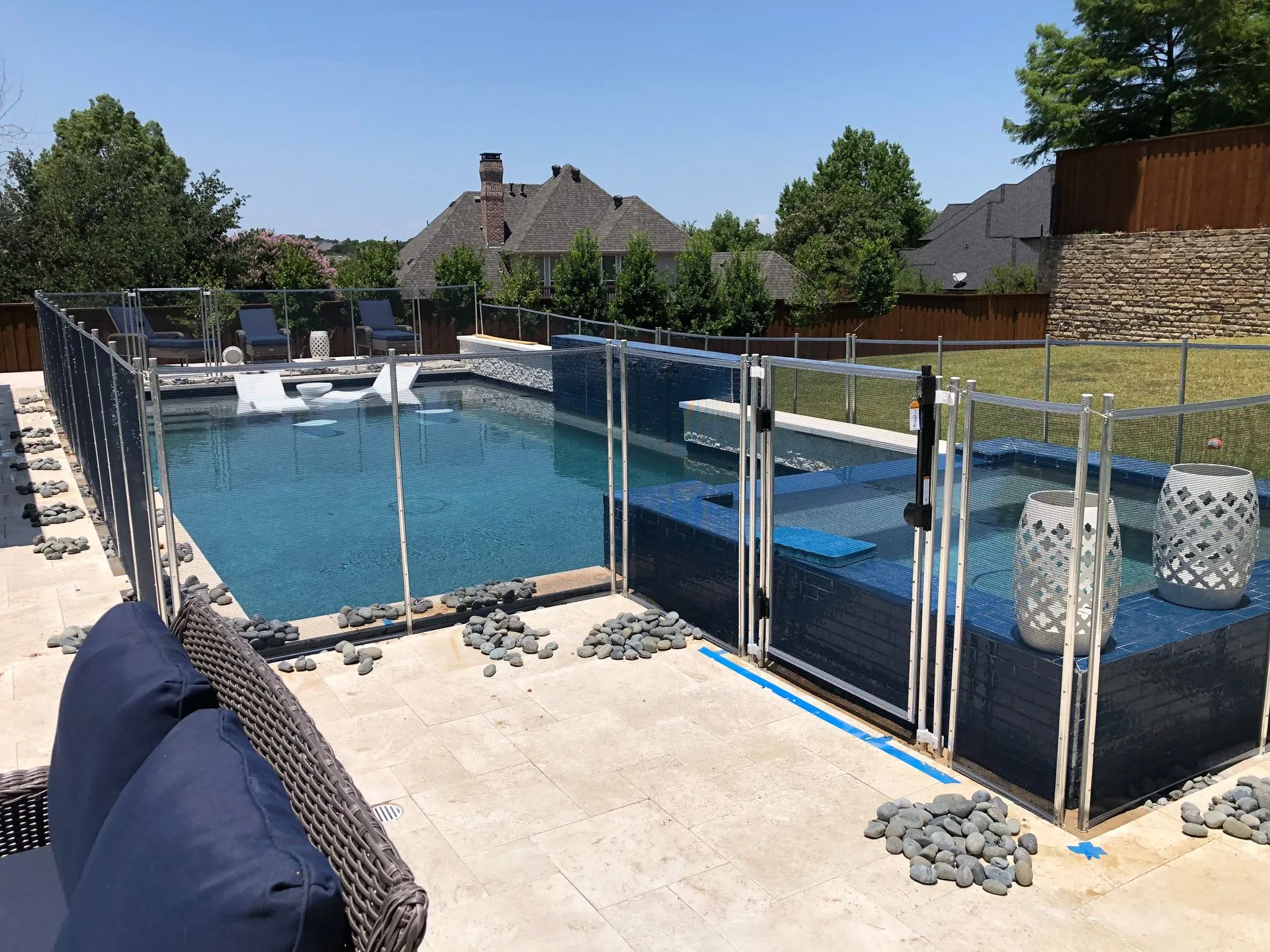
Mesh fencing is usually the fastest to put up and the easiest to take down for pool parties, which makes it a favorite for families racing a summer deadline. Aluminum fencing gives a more permanent, architectural look and needs less upkeep year to year. Glass panels offer an unobstructed view of the pool, but they typically cost more and take longer to order.
Installation timelines vary. A straightforward mesh fence around a standard residential pool can often go up in a single day. Aluminum and glass installations tend to run longer, especially when custom gates, slope adjustments, or permit inspections are involved. Homeowners who want a fence ready before Memorial Day should start the process by late winter or very early spring, before installer schedules fill up.
Conclusion
Pool fence demand in Plano climbs every spring for reasons that hold up under scrutiny: warmer weather, real estate turnover, insurance requirements, and a sharper awareness of backyard safety after a close call somewhere nearby. Texas code sets the baseline for what a compliant barrier needs to include. But the practical details, gate hardware, gap spacing, ground clearance, long-term durability, are what actually decide whether a project succeeds or falls short.
Texas Pool Barrier works with Plano homeowners on exactly this kind of project, from checking whether an existing fence still meets current code to designing and installing a new barrier that fits a family’s layout and timeline. Their installers handle the code research, the gate hardware, and the inspection details, so homeowners don’t have to become code experts themselves before summer arrives.
A pool without a compliant barrier is a risk that grows every day it sits unaddressed. The homeowners calling contractors this spring already know that. The question isn’t whether a fence is needed. It’s how soon it can go in.
This article was contributed on behalf of Texas Pool Barrier, a Texas-based company that designs, sells, and installs code-compliant pool safety fencing for residential properties across the state. Texas Pool Barrier works with homeowners to evaluate existing barriers, plan new installations, and meet local code requirements before pool season begins. More information is available at Texas Pool Barrier.