
Introduction
Talk to anyone who has worked in finance for ten years or more, and they’ll tell you the job looks very different now. At Tech Leads IT, we hear the same story from learners again and again: the spreadsheets are getting retired, the manual reconciliations are shrinking, and a cloud system called Oracle Fusion Financials Training keeps coming up in job descriptions. So why is everyone suddenly talking about it?
Let’s go through the real reasons, without the sales pitch.
Why Finance Teams Are Moving to Oracle Fusion Financials
Picture a typical month end at a company running older, disconnected tools. Payables is in one system, the ledger is in another, and somebody in the middle exports files, fixes formats, and pastes numbers into a workbook at 9 p.m. Everyone has done a version of this, and nobody enjoys it.
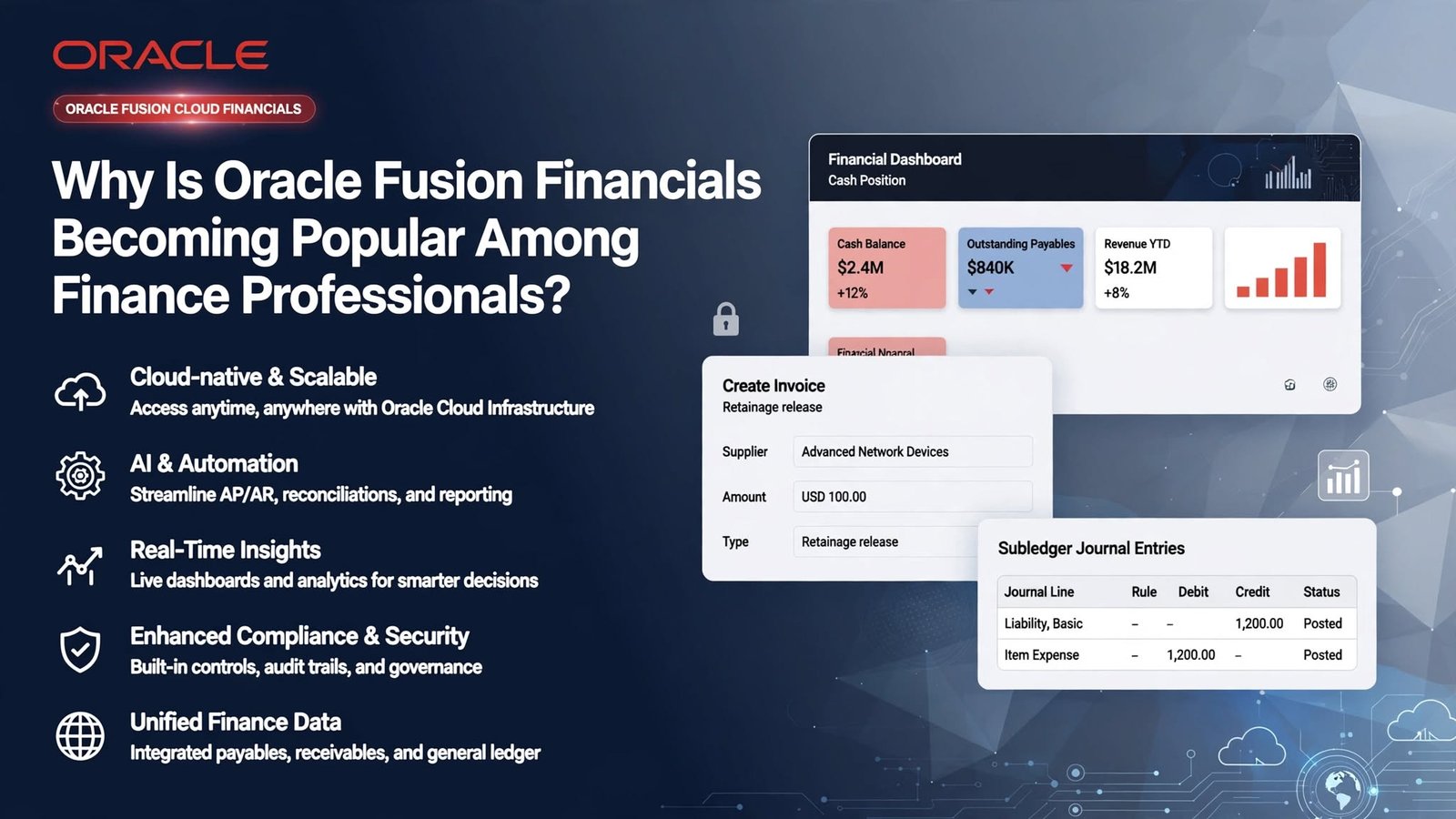
Oracle Fusion Financials puts General Ledger, Payables, Receivables, Fixed Assets, Cash Management, Expenses, and Tax on one platform. When an invoice is approved, the accounting entry flows through on its own. When a customer payment lands, it shows up in cash and receivables reports without a second round of typing.
That’s the heart of it. The system doesn’t do anything magical. It just removes the friction that finance people have been quietly putting up with for years, and that alone is enough to win people over.
Why Oracle Fusion Financials Training Matters More Than Ever
Here’s something we see often. A talented accountant joins a company that has just moved to Oracle Cloud. They know their accounting cold, but the screens are unfamiliar, the terminology is new, and for the first few weeks they feel like a beginner again.
That’s exactly where Oracle Fusion Financials Training earns its value. Companies that adopt the system need people who can use it on day one, not people who will figure it out over a year. Anyone who can configure a ledger, run a payment batch, or explain why an invoice is stuck on hold has a clear edge in the job market.
There’s also a confidence factor that’s hard to measure. When you’ve practiced in a real environment, a failed validation or an unapplied receipt doesn’t make your stomach drop. You know where to look. Interviewers pick up on that quickly, and so do managers.
Cloud Access and Reporting You Can Actually Rely On
Older finance systems often lived on a server in the office. If that server was down, or you were traveling, you were stuck. Oracle Fusion Financials runs in the cloud, so a finance controller can check the numbers from home, from a client site, or from a train, as long as there’s a connection.
Reporting has improved too. Before, a CFO might wait until the books closed to see how the month went. Now dashboards and built-in analytics show cash position, open payables, and revenue trends while the month is still happening. If something looks off on the 12th, you can deal with it on the 12th instead of discovering it on the 3rd of next month.
For finance professionals, this shifts the job. Less time goes into gathering figures, and more goes into explaining them. Leadership wants someone who can say what the numbers mean and what to do about them, and a good system makes that conversation possible.
Automation Takes the Boring Work Off Your Plate
Almost everyone in accounts payable has a list of tasks they’d happily never do again. Keying in invoice details. Chasing approvals over email. Matching documents line by line. Oracle Fusion Financials handles a lot of this for you.
Invoices go through built-in validation. Approval workflows send documents to the right person automatically. Bank statements get matched against payments and receipts, so you only look at the genuine exceptions. Recurring journals and allocations can be scheduled instead of rebuilt every month.
A common worry is that automation makes finance jobs less secure. In practice, it tends to go the other way. When the repetitive work shrinks, the people who understand the system become more valuable, because they’re the ones who can set it up properly and fix it when something breaks. Plenty of professionals tell us their work became more interesting after the move, not less.
Fitting Oracle Fusion Financials Online Training Around a Real Work Schedule
Most people who want to learn this software already have full-time jobs. Evenings are short and weekends disappear fast. That’s the main reason Oracle Fusion Financials Online Training has become the usual route for working professionals.
You can attend from home, whether you live in a big city or a small town, and you don’t lose hours to travel. If you miss a session or want to hear something again, recordings help. And with live classes, you can ask the trainer a question right when it comes up, which makes a big difference compared to watching videos alone.
One piece of advice, though. Whatever program you pick, check how much of it is hands-on. Reading about how to create a supplier is fine, but actually creating one, making a mistake, and fixing it is how things stick. If a course is mostly slides, keep looking.
Better Controls and Fewer Audit Headaches
Speed gets the attention, but finance people care just as much about trust. Auditors and regulators want to know that the numbers are right and that the right people approved each transaction.
Oracle Fusion Financials builds this in. Security is tied to roles, so people only see and do what their job requires. Approval history is recorded. You can see who created a transaction, who approved it, and when it hit the books. Checks like duplicate invoice detection and budgetary control stop certain problems before they spread.
Anyone who has spent audit season digging through old emails for proof of an approval will appreciate this. With the system keeping the trail, you pull the evidence instead of reconstructing it. Companies in banking, healthcare, and manufacturing care a lot about that, which is one reason they choose Oracle.
What a Good Oracle Fusion Financials Course Actually Teaches
If you’re wondering what a proper Oracle Fusion Financials Course covers, think of it as following money through a business from start to finish.
You usually start with the foundation: ledgers, legal entities, business units, and the chart of accounts. It isn’t the most exciting part, but everything else depends on it, and mistakes made here are painful to undo later. Then you move into Payables for supplier invoices and payments, Receivables for billing and cash application, and General Ledger for journals and reporting.
Better courses go further into Fixed Assets, Cash Management and bank reconciliation, Subledger Accounting, Tax, and Expenses. The ones worth your money also use real situations. Why is this invoice on hold? Why is this receipt unapplied? Why won’t the period close? Working through problems like these teaches you to think like a consultant instead of just clicking through screens, and they’re often the exact questions that come up in interviews.
Where This Skill Can Take Your Career
People often ask what they can actually do with this knowledge. The honest answer is: quite a lot, depending on where you’re starting.
Accountants can move into functional consulting and help companies set up and roll out the system. Finance analysts can build better reports and smooth out the close process. Professionals who know Oracle E-Business Suite can upgrade their skills as employers migrate to the cloud. Fresh graduates with commerce or accounting degrees get a way into ERP work that used to be hard to reach.
Demand also isn’t limited to one type of company. Large enterprises, service firms, and global capability centers all run Oracle Cloud, and they all need people who understand it. Pay usually follows that demand, especially for people who combine solid finance knowledge with hands-on system skills. There are no guarantees in any career, but the pattern has held up for a while now.
How to Pick the Right Learning Path
There are a lot of programs out there, and they aren’t all equal. A few things are worth checking before you sign up.
Look at the trainer first. Someone who has worked on real implementations explains things differently than someone reading from a manual. Ask whether you’ll get your own practice environment. Check that the syllabus covers the whole finance cycle and not just one module. And find out if there’s help with interviews and certification, because that support can save you months.
Be honest about where you’re starting, too. If you’re new to finance, spend some time on accounting basics first, since the software makes much more sense once the concepts are clear. If you already have that background, you can concentrate on how Oracle handles the things you already understand.
Conclusion
The Oracle Fusion Financials course is popular for simple reasons. It connects the finance function in one place, takes over repetitive work, tightens controls, and gives leaders numbers they can use while there’s still time to act. For finance professionals, it also opens doors that weren’t there before.
If you’re thinking about learning it, good guidance makes the process much smoother. Tech Leads IT works with learners who want practical, confident skills, whether that means structured classroom-style learning, flexible online sessions, or a complete course built around real finance scenarios. Start with the basics, practice often, and the system will feel a lot less intimidating than it does on day one.