Ribbed Fabric Is Not Just an Aesthetic Choice
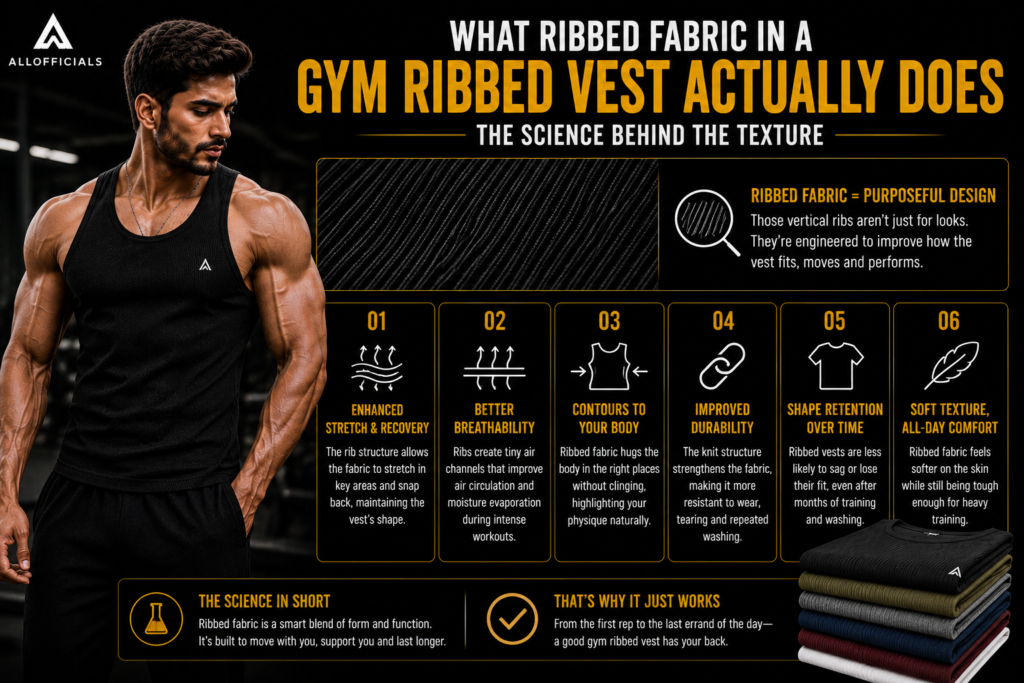
Many people assume the vertical rib pattern exists only because it looks athletic. That is only part of the story. Those raised lines change how the fabric bends, stretches and sits against your body throughout a workout. A ribbed workout top feels different because its surface is physically different, not because of clever marketing language.
During a chest workout in a busy Pune gym, I noticed something interesting after several sets of incline presses. The vest never became one flat sheet of wet fabric across my torso. Small gaps remained between the raised ribs, and those channels seemed to reduce that sticky feeling you often get from completely smooth material. It was not dramatic, but it was noticeable over a ninety-minute session.
Here’s the thing — ribbed construction changes how pressure spreads across the fabric. Instead of every thread carrying the same load during movement, the raised and recessed sections expand at slightly different rates. That helps the material recover after repeated stretching across the shoulders and chest. It does not guarantee durability, though. Fibre quality and stitching still matter just as much.
The Material Composition That Makes Ribbed Gym Vests Work
Most well-made ribbed training vests sold in India use a polyester-spandex blend. Polyester moves moisture away from the skin more efficiently than cotton, while spandex gives controlled elasticity during pulling, pressing and overhead movements. A blend around 90–95% polyester with 5–10% spandex usually provides enough flexibility without feeling overly soft or loose after repeated washes.
Fabric weight also deserves attention. Many buyers never check GSM, yet it affects comfort every day. Around 180–220 GSM generally suits Indian training conditions because it balances durability with breathability. A heavier ribbed fabric may feel reassuring in an air-conditioned gym in Delhi during winter but can become warmer during humid evenings in Kochi or Chennai. Cheaper options around ₹500–700 can still work well for occasional training, while people exercising five or six days each week often benefit from paying more for better recovery and stitching.
How the Rib Structure Changes the Training Experience
Raised ribs change the way fabric contacts your skin. Instead of every square centimetre touching the body at once, only the higher sections stay in constant contact while the recessed channels create tiny pockets for airflow. During shoulder presses and pull-ups, that structure usually prevents the vest from clinging as aggressively as some flat-knit alternatives. It also tends to stay aligned instead of twisting across the torso during overhead movement because the textured surface creates slightly more stability.
The Gym Ribbed Vest collection from AllOfficials is worth exploring if this style fits your training preferences.
One unexpected detail surprised me after several weeks of use. Liquid chalk dust that settled on the fabric collected along the grooves instead of spreading evenly across the surface. It looked messy until I brushed it off, but it also made it easier to see where sweat and chalk were building up during long upper-body sessions. That is not something manufacturers usually mention, yet it says a lot about how the surface texture actually behaves.
What the Anti-Odour Claims Actually Mean
Anti-odour labels often create unrealistic expectations. Many treatments use silver ions or similar antimicrobial finishes that slow the growth of odour-causing bacteria. They reduce smell over time, but they do not stop sweat itself. If a vest stays inside a closed gym bag for twelve hours after training, even treated fabric will eventually develop an unpleasant smell.
Worth noting — moisture management and odour control are related but not identical. Moisture-wicking polyester moves sweat away from the skin so it can evaporate more efficiently. Anti-odour treatment targets bacteria that feed on sweat residue. One helps you feel drier during the workout, while the other usually helps the garment smell fresher between washes. Both treatments gradually lose effectiveness after repeated laundering, so gentle washing practices matter.
Frequently Asked Questions
Q: Why does ribbed fabric feel different from flat-knit gym wear during training?
A: The rib structure creates alternating raised and recessed channels across the fabric surface. Those channels allow slightly more air movement between fabric and skin than flat-knit material, which many people notice during sweaty upper-body sessions in warm Indian gyms.
Q: Does ribbed fabric stretch as well as flat-knit in gym vests?
A: A quality polyester-spandex blend usually stretches comfortably across the chest and shoulders. The stretch feels more structured than flat-knit because the ribs expand before the fibres themselves reach maximum extension.
Q: Is ribbed gym vest fabric good for India’s humid training conditions?
A: It usually performs well because the rib channels promote a little more airflow while moisture-wicking polyester helps move sweat away from the body. That combination tends to feel more comfortable in coastal cities where humidity stays high for much of the year.
Final Thoughts
Fabric science matters more than advertising terms. Ribbed construction changes airflow, stretch behaviour and surface contact in measurable ways, but those advantages depend on the underlying fibre blend, stitch quality and garment design. Texture alone cannot compensate for poor manufacturing.
A ribbed vest makes the most sense for people who spend plenty of time on upper-body training and appreciate a more structured feel against the skin. Others may be perfectly satisfied with a simpler flat-knit training top if comfort, budget or workout style points them in that direction. Understanding what the fabric actually does makes choosing between the two much easier.