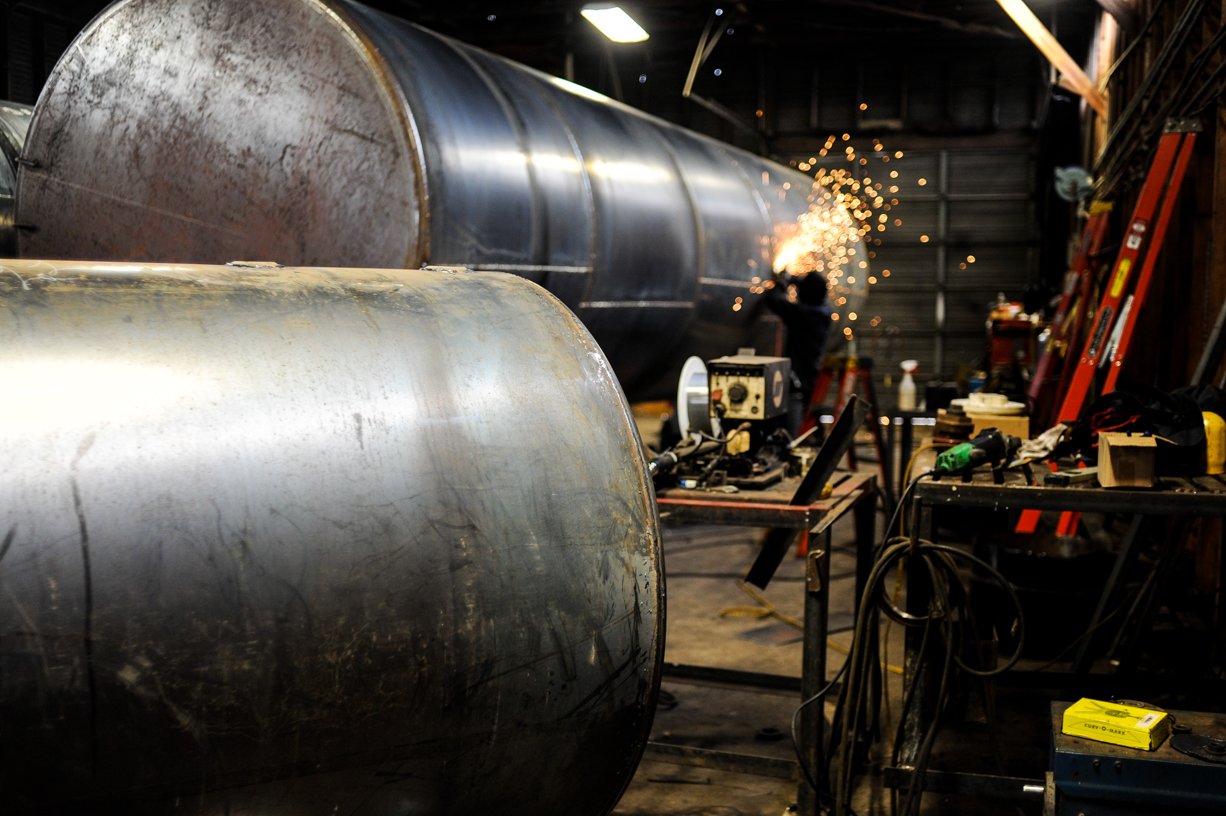
A fuel tank must do more than hold liquid; it must withstand vibration, temperature changes, corrosion, pressure, and demanding operating conditions. Choosing the right material is therefore a major engineering decision. For many applications, Aluminum fuel tank fabrication offers an excellent balance of strength, weight, corrosion resistance, and design flexibility. However, steel, stainless steel, and advanced composites can also make sense when project requirements call for different performance characteristics.
Why Material Selection Matters in Fuel Tank Fabrication
Material selection affects nearly every part of a tank’s performance. Weight, durability, corrosion resistance, manufacturability, cost, and compatibility with the stored fuel all need consideration before production begins.
A material that works well for one application may be unsuitable for another. For example, a lightweight tank for a mobile vehicle has different requirements from a stationary industrial storage tank.
Good fuel tank fabrication begins by identifying the operating environment and intended use. Manufacturers should consider the fuel type, tank capacity, expected service life, exposure to weather, vibration levels, temperature range, and installation requirements.
Key Factors to Evaluate
Before selecting a material, manufacturers should review:
- Weight: Important for vehicles, marine equipment, and mobile machinery.
- Strength: Determines how well the tank handles impacts, vibration, and structural loads.
- Corrosion resistance: Essential when tanks encounter moisture, chemicals, salt, or outdoor conditions.
- Fuel compatibility: The material must remain stable when exposed to the stored fuel.
- Fabrication requirements: Cutting, bending, forming, and welding methods vary by material.
- Maintenance: Some materials require more surface protection or inspection than others.
- Cost: Both initial manufacturing expenses and long-term maintenance should be considered.
These factors help engineers avoid choosing a material based solely on purchase price. A slightly more expensive material may provide lower maintenance costs and a longer service life.
Aluminum Is a Popular Choice for Modern Fuel Tanks
Aluminum has become a practical choice for many fuel tank applications because it combines relatively low weight with good mechanical performance and corrosion resistance.
For vehicles, boats, trailers, generators, and specialized equipment, reducing unnecessary weight can improve efficiency and handling. Aluminum can also be formed into many shapes, allowing manufacturers to make tanks that fit limited or irregular installation spaces.
Another advantage is its natural resistance to corrosion. Aluminum develops a thin oxide layer when exposed to air, which helps protect the underlying metal from further oxidation.
Benefits of Aluminum Tanks
Aluminum provides several advantages in suitable applications:
- Lower weight compared with many steel alternatives
- Good corrosion resistance
- Excellent formability
- Strong strength-to-weight ratio
- Easy integration into custom designs
- Suitable for welded construction
- Good heat dissipation
However, aluminum is not automatically the best choice for every project. Engineers still need to select the appropriate alloy and thickness and use fabrication techniques suited to the material.
Weld quality is particularly important. Poor welding practices can create weak points, distortion, or leakage. Experienced fabricators therefore control heat input, joint preparation, shielding, and inspection throughout production.
Steel Provides Strength and Structural Durability
Steel remains an important material in fuel tank fabrication, particularly where high structural strength, impact resistance, or cost efficiency is a priority.
Carbon steel is widely used in industrial applications because it is strong, readily available, and relatively economical. It can also be cut, formed, and welded using established manufacturing processes.
The main concern is corrosion. Unlike aluminum, untreated carbon steel can rust when exposed to moisture and oxygen. Protective coatings, liners, paint systems, or other corrosion-control methods may therefore be necessary.
When Steel Makes Sense
Steel can be a strong option when:
- The tank requires substantial structural strength.
- Weight is less important than durability.
- The tank is installed in a relatively controlled environment.
- Protective coatings can be maintained.
- Project budgets favor a cost-effective material.
- Existing manufacturing equipment is optimized for steel.
For heavy-duty industrial equipment, the additional weight of steel may be an acceptable trade-off for its strength and availability.
Stainless Steel Handles Demanding Environments
Stainless steel is another material worth considering when corrosion resistance is a major concern. Its chromium content helps create a protective surface layer, giving many stainless-steel grades strong resistance to corrosion.
This characteristic can be valuable in demanding environments where moisture, chemicals, cleaning processes, or harsh operating conditions are present.
Stainless steel can also provide an attractive combination of durability and cleanability. However, it typically costs more than standard carbon steel and can require greater attention during fabrication.
Important Stainless Steel Considerations
Not every stainless-steel grade performs identically. The correct grade should be selected according to the environment, fuel, temperature, and mechanical requirements.
Fabricators must also manage heat during welding because excessive heat can affect the material’s properties and appearance. Proper joint preparation and post-fabrication cleaning can help maintain corrosion resistance.
For specialized industrial applications, the additional material cost may be justified by reduced maintenance and longer service life.
Composite Materials Offer Specialized Advantages
Composite materials are gaining attention in applications where weight reduction and corrosion resistance are especially important. These materials typically combine a reinforcing component with a resin or other matrix.
Fiberglass-reinforced plastics, for example, can provide useful corrosion resistance and design flexibility. Certain composite systems may also be manufactured into complex shapes that would require multiple fabrication steps with conventional metals.
However, composites require specialized design and manufacturing knowledge. Their behavior under impact, heat, pressure, and long-term fuel exposure must be evaluated carefully.
Where Composites Can Be Useful
Composite tanks may be considered for:
- Specialized transportation equipment
- Corrosion-sensitive environments
- Applications where low weight is critical
- Custom equipment designs
- Systems requiring unusual shapes
The right composite formulation depends heavily on the intended application. Manufacturers should verify fuel compatibility and applicable industry requirements before committing to a composite design.
Comparing Common Fuel Tank Materials
The following table provides a practical comparison of common material choices used in tank construction.
| Material | Main Advantage | Main Limitation | Typical Applications |
|---|---|---|---|
| Aluminum | Lightweight and corrosion resistant | Requires controlled welding | Vehicles, marine equipment, generators |
| Carbon Steel | Strong and economical | Requires corrosion protection | Industrial equipment, stationary tanks |
| Stainless Steel | Excellent corrosion resistance | Higher material cost | Harsh industrial environments |
| Composite | Lightweight and corrosion resistant | Specialized manufacturing | Custom and specialized equipment |
The best choice depends on the complete operating environment rather than one material characteristic. A lightweight application may favor aluminum, while a stationary industrial system may benefit from steel.
How Fuel Type Influences Material Selection
The stored fuel is one of the most important factors in material selection. Different fuels can interact differently with metals, coatings, seals, liners, and composite resins.
Manufacturers should verify that the selected material is compatible with the exact fuel formulation. This is particularly important when fuels contain additives or when the tank may experience changing fuel compositions.
Temperature also matters. A material may perform well at normal operating temperatures but behave differently under extreme heat or cold.
Consider the Entire Tank System
Material compatibility should not stop at the tank walls. Engineers should also evaluate:
- Fittings
- Welds
- Fasteners
- Gaskets
- Hoses
- Vents
- Internal coatings
- Fuel-level sensors
A tank can be manufactured from an appropriate metal and still develop problems if an incompatible gasket or fitting deteriorates after prolonged exposure.
Fabrication Methods Affect Final Tank Performance
Material selection and manufacturing technique are closely connected. Cutting, bending, forming, welding, and finishing must all match the chosen material.
For aluminum tanks, welding is often central to the manufacturing process. Consistent weld penetration and proper joint preparation help create strong, leak-resistant seams.
Steel fabrication may involve different welding processes and finishing requirements. When corrosion protection is necessary, surface preparation and coating application become critical parts of production.
Precision Matters in Custom Tank Design
Custom tanks often need to fit around engines, frames, electrical components, plumbing, or other equipment. Even a small dimensional error can create installation problems.
Computer-aided design and accurate measurement can help manufacturers develop tanks that match the available space. Fabricators can then cut and form components according to the approved design.
This approach reduces material waste and limits costly modifications during installation.
Welding Quality Is Critical
A fuel tank can have an excellent material specification and still fail if its joints are poorly fabricated. Welds must withstand mechanical stress while maintaining a reliable seal.
Manufacturers should use qualified welding procedures and inspect critical joints for defects. Depending on the application, inspection may include visual checks, leak testing, dye penetrant testing, or other appropriate methods.
Preventing Common Fabrication Problems
Several issues can reduce tank performance:
- Inadequate weld penetration
- Excessive heat distortion
- Contamination during welding
- Poor joint preparation
- Incorrect material thickness
- Inadequate leak testing
- Improper surface finishing
Quality control should continue throughout fabrication rather than being treated as a final inspection step.
Design Features Can Improve Tank Reliability
Material choice is only one part of successful fuel tank fabrication. The tank’s geometry and supporting features also influence durability.
Baffles, for example, can reduce fuel movement inside a tank. This can be particularly useful in vehicles and mobile equipment where sudden movement may cause fuel to shift from one side to another.
Mounting points should also distribute loads properly. If a tank is mounted incorrectly, vibration and repeated movement can place unnecessary stress on the tank walls or welds.
Vents, drains, access points, and fittings should be positioned with maintenance and safety in mind.
How to Choose the Right Material for a Project
Manufacturers can simplify the selection process by creating a clear list of requirements before requesting fabrication quotes.
Start by identifying the application and fuel type. Next, determine whether low weight, high strength, corrosion resistance, cost, or long service life is the highest priority.
A practical selection process includes:
- Identify the stored fuel and operating temperature.
- Determine the required tank capacity.
- Assess vibration, impact, and environmental exposure.
- Establish weight and space limitations.
- Compare suitable materials and fabrication methods.
- Review maintenance expectations.
- Confirm applicable industry and safety requirements.
- Select a qualified fabrication partner.
This process helps prevent expensive redesigns later. It also gives fabricators the technical information needed to recommend appropriate material thicknesses, joints, fittings, and finishes.
Working With an Experienced Fabricator
Choosing an experienced fabricator can be just as important as selecting the material. A capable manufacturer understands how different metals behave during cutting, forming, welding, and finishing.
Ask potential suppliers about their experience with similar tank designs. It is also useful to discuss quality-control procedures, leak testing, material traceability, and inspection practices before production begins.
Clear communication is especially important for custom projects. Providing accurate dimensions, drawings, fuel specifications, mounting requirements, and operating conditions allows the fabricator to develop a more reliable solution.
Conclusion
Choosing the right material is one of the most important decisions in fuel tank fabrication. Aluminum is often attractive because it provides low weight, corrosion resistance, and design flexibility, while steel can deliver strong structural performance and cost efficiency. Stainless steel and composites may be better suited to specialized environments where corrosion resistance or weight reduction takes priority. Ultimately, the best material depends on fuel compatibility, operating conditions, design requirements, fabrication methods, and long-term maintenance needs. By evaluating these factors carefully and partnering with an experienced manufacturer, businesses can create tanks that perform reliably throughout their intended service life.
FAQs
1. What is the best material for a fuel tank?
There is no single best material for every application. Aluminum, carbon steel, stainless steel, and composites can all be suitable depending on fuel compatibility, weight requirements, corrosion exposure, strength needs, and operating conditions.
2. Why is aluminum commonly used for fuel tanks?
Aluminum offers a useful combination of low weight, corrosion resistance, strength, and formability. These characteristics make it practical for many vehicle, marine, generator, and specialized equipment applications.
3. Is steel better than aluminum for fuel tank construction?
It depends on the application. Steel can provide excellent strength and cost efficiency, while aluminum generally offers a lower weight and strong corrosion resistance. The operating environment should determine the final choice.
4. Does fuel type affect material selection?
Yes. Different fuels and fuel additives can interact differently with tank materials, coatings, seals, and fittings. Manufacturers should verify compatibility before selecting materials for a new tank.
5. What should manufacturers consider when ordering a custom fuel tank?
Manufacturers should provide information about tank capacity, fuel type, dimensions, mounting points, operating temperatures, environmental exposure, weight limits, fittings, and applicable requirements. These details help the fabricator develop a suitable design.