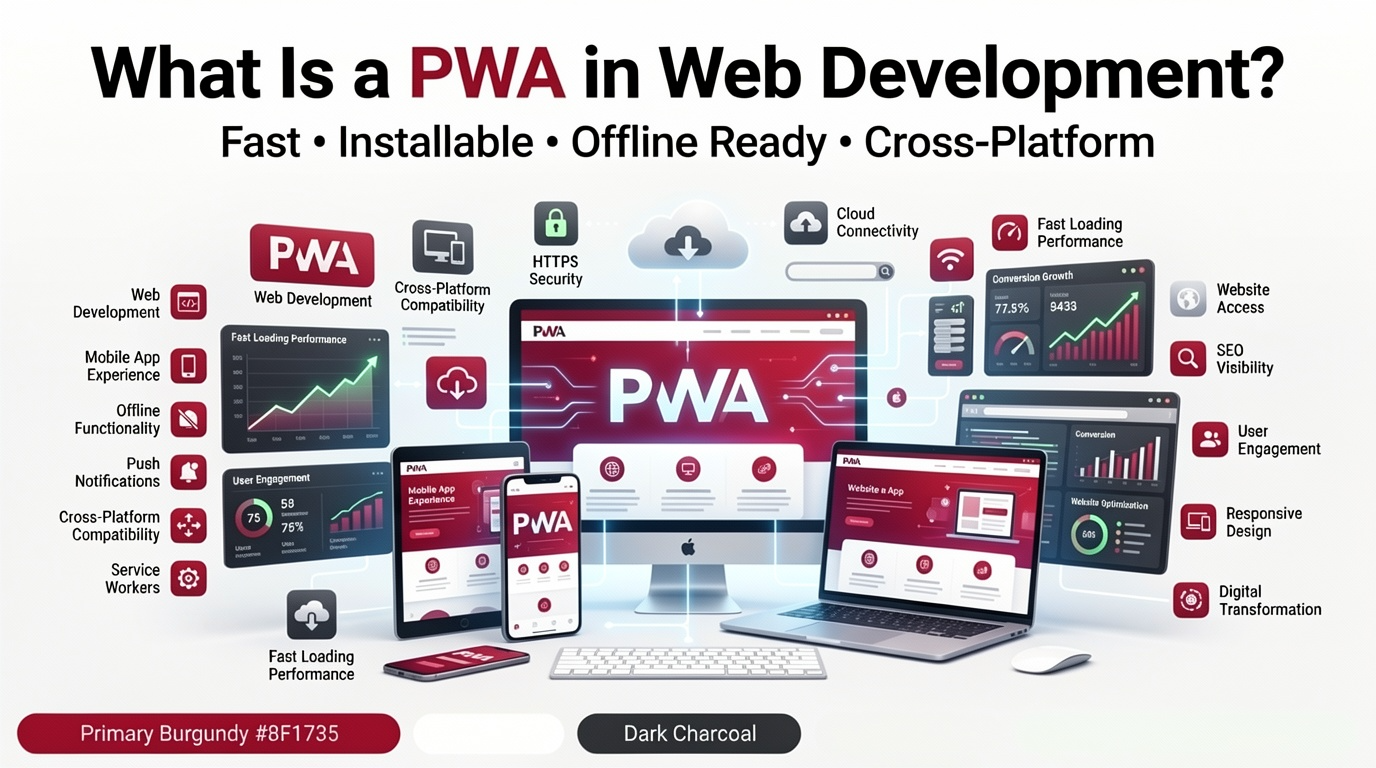
As businesses continue investing in digital experiences that are faster, more accessible, and cost-effective, progressive web application development services have become increasingly popular. Organizations today need solutions that combine the best features of websites and mobile applications without the complexity and expense of maintaining separate platforms. This is where Progressive Web Applications (PWAs) offer a powerful advantage. They provide users with app-like experiences directly through a web browser while delivering speed, reliability, and convenience across devices.
For businesses seeking to improve user engagement, increase conversions, and reduce development costs, PWAs have emerged as one of the most valuable innovations in modern web development.
Understanding Progressive Web Applications
A Progressive Web Application, commonly known as a PWA, is a web-based application that uses modern web technologies to deliver experiences similar to native mobile apps.
Unlike traditional websites, PWAs can be installed on a user’s device, function offline, send push notifications, and provide fast, responsive interactions.
The concept combines the accessibility of the web with the functionality of mobile applications, creating a seamless user experience across different devices and platforms.
Users can access a PWA through a browser and choose to add it directly to their home screen without visiting an app store.
This convenience has made PWAs increasingly attractive for businesses and consumers alike.
Why PWAs Are Gaining Popularity
Consumer expectations continue to evolve. Users expect websites and applications to load instantly, function smoothly, and provide consistent experiences regardless of device or internet connection.
Traditional websites often struggle to meet these expectations, while native mobile apps can be expensive to develop and maintain.
PWAs bridge this gap by offering:
- Fast loading speeds.
- Offline functionality.
- Cross-platform compatibility.
- Lower development costs.
- Improved user engagement.
- Enhanced accessibility.
- Simplified maintenance.
These benefits explain why many businesses are choosing PWAs as part of their digital transformation strategies.
How a PWA Works
Progressive Web Applications rely on several technologies that work together to create app-like experiences.
Service Workers
Service workers are background scripts that enable key PWA functionality.
They help:
- Cache content.
- Improve loading speeds.
- Support offline access.
- Manage push notifications.
- Enhance performance.
By storing resources locally, service workers allow applications to continue functioning even when internet connectivity is limited.
Web App Manifest
The web app manifest provides information about the application, including:
- Application name.
- Icons.
- Theme colors.
- Display settings.
- Launch preferences.
This enables users to install the application on their devices and experience it like a native app.
Secure HTTPS Connections
PWAs require secure connections to protect user data and ensure application integrity.
HTTPS helps safeguard communications between users and servers while improving trust and security.
Key Features of Progressive Web Applications
PWAs offer several capabilities that distinguish them from traditional websites.
Fast Performance
Speed plays a critical role in user satisfaction.
PWAs use advanced caching techniques that significantly reduce loading times and improve responsiveness.
Users can access content quickly, even on slower networks.
Offline Functionality
One of the most valuable features of PWAs is their ability to operate without a continuous internet connection.
Previously viewed content and essential application features remain available offline, improving user experiences in areas with limited connectivity.
Mobile-Friendly Experience
PWAs automatically adapt to different screen sizes and devices.
Whether users access the application from a smartphone, tablet, laptop, or desktop computer, the experience remains consistent and user-friendly.
Push Notifications
Push notifications enable businesses to communicate directly with users.
These notifications can be used to:
- Share updates.
- Promote products.
- Send reminders.
- Increase engagement.
- Encourage repeat visits.
This feature helps businesses maintain stronger relationships with their audiences.
App-Like User Interface
PWAs provide navigation and interactions similar to native applications.
Users experience smooth transitions, intuitive controls, and responsive interfaces that enhance usability.
Benefits of PWAs for Businesses
Organizations across industries are adopting PWAs because they offer significant business advantages.
Reduced Development Costs
Developing separate applications for Android, iOS, and web platforms can be expensive.
PWAs allow businesses to maintain a single codebase that functions across multiple devices and operating systems.
This reduces development, testing, and maintenance costs.
Faster Time to Market
Because a single application serves multiple platforms, businesses can launch solutions more quickly.
Shorter development cycles help organizations respond faster to market demands and customer needs.
Improved User Engagement
Research consistently shows that faster, more responsive experiences lead to higher engagement levels.
PWAs help reduce bounce rates while increasing:
- Session duration.
- Page views.
- Customer interactions.
- Conversion opportunities.
Better engagement often translates directly into improved business outcomes.
Increased Accessibility
Users can access PWAs instantly through a web browser without downloading large application files.
This removes friction from the user journey and simplifies access to services and information.
Better Search Engine Visibility
Unlike native mobile applications, PWAs are discoverable through search engines.
This creates opportunities for increased organic traffic and improved online visibility.
Businesses can benefit from both SEO and enhanced user experiences simultaneously.
PWA vs Native Mobile Applications
Many organizations wonder whether they should invest in native mobile apps or PWAs.
The answer depends on business objectives, audience requirements, and available resources.
Advantages of Native Apps
Native applications provide:
- Deep device integration.
- Maximum performance.
- Advanced hardware access.
- Platform-specific features.
For highly complex applications requiring extensive device functionality, native development may remain the preferred option.
Advantages of PWAs
PWAs offer:
- Lower development costs.
- Cross-platform compatibility.
- Instant accessibility.
- Simplified maintenance.
- Faster deployment.
- Search engine visibility.
For many businesses, these benefits outweigh the limitations associated with native applications.
Industries Benefiting from PWAs
PWAs are being adopted across numerous industries.
E-Commerce
Online retailers use PWAs to improve shopping experiences, increase conversions, and reduce cart abandonment rates.
Fast loading speeds and offline functionality help create more seamless purchasing journeys.
Healthcare
Healthcare providers leverage PWAs to deliver patient portals, appointment scheduling systems, and health information platforms.
Accessibility and reliability are especially valuable in healthcare environments.
Education
Educational institutions use PWAs to provide learning resources, student portals, online courses, and collaboration tools.
Students can access information from virtually any device.
Financial Services
Banks and financial institutions implement PWAs to offer secure digital experiences while maintaining accessibility and performance.
Hospitality and Travel
Hotels, airlines, and travel companies use PWAs to provide booking systems, travel updates, and customer support services.
Improved user experiences often result in increased customer satisfaction and loyalty.
Common Use Cases for Progressive Web Applications
PWAs support a wide range of business applications.
Popular use cases include:
- Customer portals.
- Online marketplaces.
- Booking systems.
- Learning management platforms.
- Healthcare applications.
- Corporate intranets.
- Content publishing platforms.
- Community portals.
- Membership websites.
- Service-based platforms.
Their flexibility makes them suitable for organizations of all sizes.
Challenges of PWA Development
While PWAs offer many advantages, businesses should also understand potential challenges.
Limited Hardware Access
Although browser capabilities continue improving, some advanced device features remain more accessible through native applications.
Browser Compatibility Considerations
Different browsers may support PWA features differently.
Developers must ensure compatibility across various environments.
User Awareness
Some users are unfamiliar with installing PWAs.
Businesses may need to educate users about available features and benefits.
Despite these challenges, ongoing technological advancements continue strengthening the capabilities of Progressive Web Applications.
The Future of Progressive Web Applications
The future of PWAs appears highly promising.
As web technologies evolve, PWAs are becoming increasingly powerful and capable.
Emerging trends include:
- Improved browser support.
- Enhanced performance optimization.
- Advanced offline capabilities.
- Greater device integration.
- AI-powered user experiences.
- Cloud-native architectures.
- Expanded enterprise adoption.
Many experts predict that PWAs will continue playing a major role in digital product development as businesses seek cost-effective alternatives to traditional mobile applications.
Why Businesses Should Consider PWA Development
Organizations seeking digital solutions that combine accessibility, performance, and affordability should seriously consider Progressive Web Applications.
PWAs help businesses:
- Reach broader audiences.
- Reduce development expenses.
- Improve user satisfaction.
- Increase engagement.
- Accelerate innovation.
- Simplify maintenance.
- Support long-term growth.
Their ability to deliver app-like experiences through the web makes them an attractive solution for modern digital strategies.
Conclusion
Progressive Web Applications represent one of the most significant advancements in modern web development. By combining the strengths of traditional websites and native mobile applications, PWAs provide businesses with a powerful way to improve user experiences while reducing development complexity and costs. Their speed, reliability, accessibility, and cross-platform functionality make them ideal for organizations seeking scalable digital solutions.
As businesses continue adapting to evolving customer expectations, Progressive Web Applications will play an increasingly important role in delivering seamless digital experiences. For organizations looking to build innovative web solutions with modern technologies, responsive design, enterprise functionality, and future-ready performance, Vibrant Logics offers the expertise and development capabilities needed to transform ideas into high-performing digital products that drive long-term business success.