When sitting on a stationary motorcycle or maneuvering it around a garage with the engine switched off, turning the handlebars from lock to lock should feel smooth, progressive, and completely quiet. Discovering a distinct rubbing, scraping, or binding noise originating from the front wheel area when turning the bars while stationary can be both puzzling and concerning. Unlike noises that occur only when the wheel is actively rolling along the pavement, a stationary rubbing noise indicates an interaction directly triggered by the rotation of the steering stem and handlebar assembly.
Misrouted or Stiff Control Cables and Wiring Harnesses
One of the most common causes of a rubbing noise when turning handlebars on a stationary motorcycle is friction from control cables, brake hoses, or electrical wiring looms. Modern motorcycles feature a complex network of throttle cables, clutch cables, hydraulic lines, and main wiring harnesses passing through the narrow gap surrounding the steering head and fork stanchions. As the handlebars turn from center to full left or right lock, these flexible lines must flex and slide smoothly within designated guide rings and frame channels.
If a cable has been misrouted during recent maintenance, or if an aftermarket handlebar has altered the stock tension and arc of the control lines, these cables will scrub against the metal frame, headlight bucket, front mudguard, or lower triple clamp. Over time, hardened rubber sheaths or dirty cable guides dry out, producing a dry, rhythmic rubbing sound as the handlebars swing through their steering arc.
Steering Head Bearings, Seals, and Stem Friction
Another critical area to investigate when diagnosing stationary front-end noise is the steering head bearing assembly. Located inside the frame’s head tube, the upper and lower steering stem bearings support the entire front fork assembly and permit smooth directional control. Over time, grease within the steering head tube can degrade, dry out, or wash away due to pressure washing and weather exposure.
When the protective rubber dust seals surrounding the steering head dry out or become misaligned, they can drag directly against the metal surfaces of the triple clamp, producing a quiet but distinct rubbing sound whenever the handlebars are moved. Additionally, if the steering head bearings are over-tightened or severely worn, the bearing races develop notched grooves. While worn bearings often create a subtle click or hard spot, damaged dust caps and dry seal lips rubbing against the head tube are a primary culprit behind continuous rubbery friction sounds during stationary bar turns.
Brake Hose Tension and Caliper Rotor Contact
Even when a motorcycle is stationary and the front wheel is not actively spinning, turning the handlebars alters the tension and geometry of the front brake lines. Hydraulic front brake hoses run from the master cylinder on the right handlebar down to the floating or fixed calipers mounted on the fork legs. If the brake hose is twisted, incorrectly clamped, or pulled taut as the handlebars turn, it exerts subtle lateral leverage on the brake caliper or mounting bracket.
On floating caliper designs or systems with slight pad drag, this lateral pressure can push the brake pads into uneven contact with the stainless steel brake disc. As the fork leg rotates relative to the frame, this slight flexing moves the caliper just enough to scrape against the rotor or compress the pad retractor springs, causing a metallic rubbing sound. Inspecting the brake line guides and verifying that hydraulic hoses have sufficient slack across the entire steering sweep helps eliminate this system interaction.
Front Mudguard, Cable Guides, and Bodywork Clearances
Physical contact between plastic bodywork components and moving steering hardware is another frequent cause of unexpected stationary rubbing noises. The front mudguard (or fender) is mounted directly to the lower fork legs, while fairings, horn mounts, and headlight housings are typically attached to the fixed frame or upper triple tree. When the handlebars rotate, the clearance between these stationary and moving assemblies changes dynamically.
Common physical causes of rubbing in this area include:
- Distorted Cable Guide Loops: Metal or plastic cable guides attached to the lower triple clamp or front fender can become bent inward, causing throttle cables or speedo lines to drag heavily against the front mudguard.
- Aftermarket Accessories and Bodywork: Non-OEM front fenders, fork braces, or auxiliary light brackets can flex slightly, bringing them into physical contact with fork protectors or radiator cowls at full steering lock.
- Loose Fender Mounting Bolts: Vibration can loosen mudguard hardware, allowing the plastic fender structure to twist out of alignment and rub against the fork stanchions or brake hose brackets when the handlebars turn.
Diagnostic Mastery and Systematic Motorcycle Troubleshooting
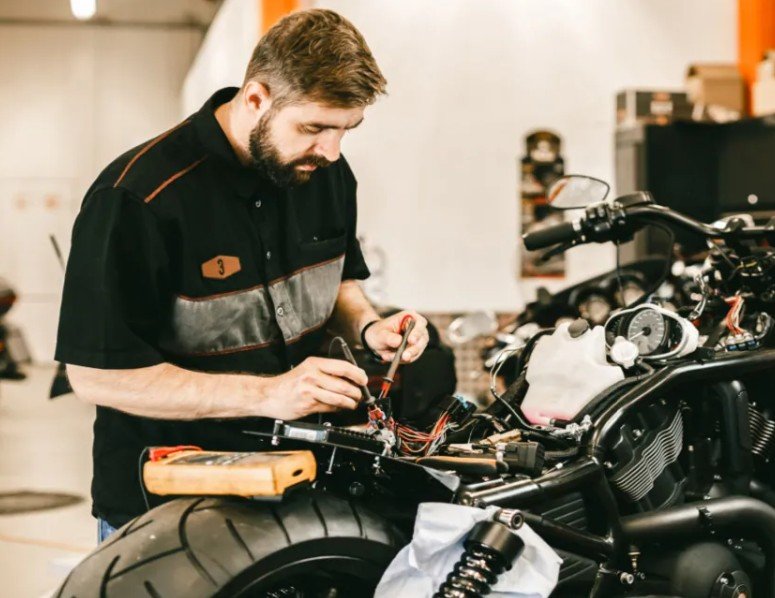
Isolating the root cause of a front-end noise requires a methodical diagnostic approach rather than guessing or replacing functional components. Mechanics usually begin by elevating the motorcycle’s front wheel off the ground using a paddock stand or center stand, relieving weight from the front suspension. From there, individual components—such as cable guides, brake lines, and dust seals—can be systematically inspected, moved, and lubricated while turning the handlebars by hand to isolate the exact point of friction.
Developing the practical skills needed to diagnose electrical, hydraulic, and mechanical motorcycle anomalies requires structured technical education and hands-on practice. Enrolling in a comprehensive motorbike maintenance course arms motorcycle enthusiasts and aspiring mechanics with essential workshop knowledge, enabling them to execute precise diagnostic checks, maintain critical safety systems, and keep motorcycles operating quietly and smoothly.
Conclusion and Preventative Maintenance Steps
A rubbing sound heard when turning the handlebars while stationary should never be ignored, as it indicates unwanted friction within the steering, braking, or control infrastructure. Whether caused by a dry dust seal on the steering head stem, a misrouted throttle cable dragging across the frame, or a taut brake line flexing against a caliper mount, identifying and resolving the issue is straightforward once you know where to look.