Modern HVAC systems do more than heat and cool buildings. They also play an important role in maintaining indoor air quality. Because air continuously circulates through ducts, filters, coils, and other components, keeping an HVAC system clean can contribute to a more comfortable indoor environment. One technology increasingly used for this purpose is ultraviolet light, particularly UV-C light.
UV light in HVAC systems is designed to help control microorganisms and reduce biological buildup on certain components. While it does not replace filtration, cleaning, or proper ventilation, UV technology can serve as an additional layer of support. Understanding its benefits, applications, limitations, and installation requirements can help homeowners and facility managers determine whether it is appropriate for their HVAC system.
What Is UV Light in an HVAC System?
Ultraviolet light is electromagnetic radiation that occurs naturally in sunlight. HVAC applications commonly use UV-C wavelengths because this portion of ultraviolet radiation can disrupt the genetic material of microorganisms exposed to sufficient UV energy.
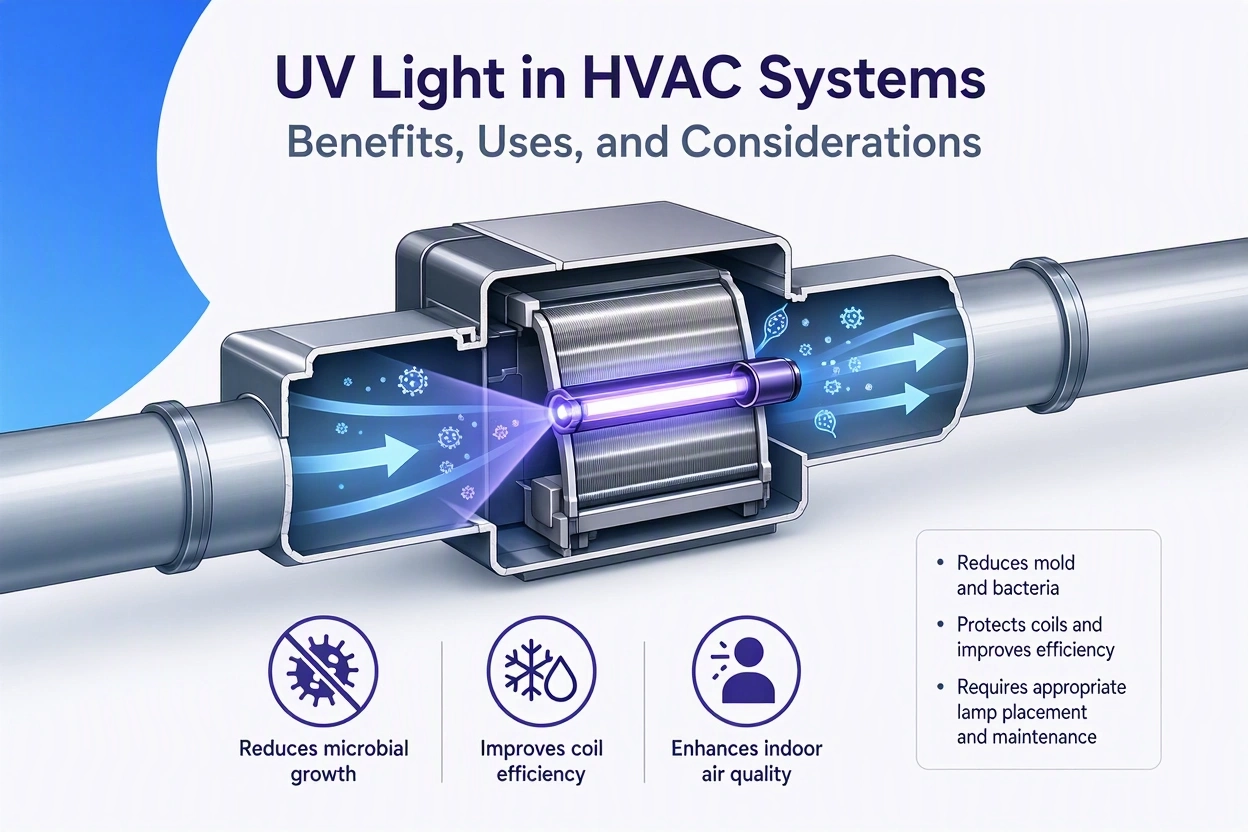
In an HVAC system, UV lamps may be installed near the evaporator coil, inside air-handling equipment, or within ductwork. The goal is generally to expose microorganisms and surfaces to UV radiation as air passes through the equipment or as microorganisms settle on treated surfaces.
The effectiveness of a UV system depends on several factors, including lamp intensity, exposure time, distance from the target, airflow, equipment design, and maintenance.
Benefits of UV Light for HVAC Systems
1. Helps Control Microbial Growth
One of the primary reasons UV-C technology is installed in HVAC equipment is to help control microbial growth. Moisture around cooling coils and drain pans can create conditions where biological buildup may develop.
A properly designed UV system can expose these surfaces to UV-C radiation, helping limit the growth of microorganisms. This can be particularly useful in systems that operate in humid environments.
2. Supports Cleaner Evaporator Coils
The evaporator coil is an important component of an air-conditioning system. Dust, dirt, moisture, and biological material can accumulate on the coil over time.
UV lamps positioned near the coil can help maintain a cleaner coil surface by reducing biological buildup. A cleaner coil can make routine maintenance easier and help the HVAC system maintain its intended heat-transfer performance.
However, UV light should not be considered a substitute for professional coil cleaning. Heavy dirt and debris still require physical cleaning.
3. Can Support Indoor Air Quality
Indoor air quality depends on many factors, including ventilation, filtration, humidity, building materials, and occupant activities. UV-C technology can complement these strategies by helping control certain airborne microorganisms that pass through a treated area.
It is important to understand that UV light is not a universal air purifier. Its performance depends heavily on how the HVAC system is designed and how long microorganisms remain exposed to the UV energy.
4. May Help Reduce HVAC Odors
Certain unwanted odors can be associated with microbial growth inside damp HVAC components. By helping control biological buildup on surfaces, UV technology may contribute to reducing some HVAC-related odors.
Nevertheless, persistent odors should be investigated rather than simply treated with UV light. Problems such as standing water, dirty filters, mold contamination, or drain issues may require corrective maintenance.
5. Provides an Additional Layer of Protection
UV technology works best as part of a broader HVAC maintenance strategy. High-quality filtration, adequate ventilation, humidity control, regular inspections, and professional cleaning remain important.
When properly integrated, UV light can provide another tool for managing cleanliness and indoor air quality within an HVAC system.
Common Uses of UV Light in HVAC Systems
UV systems are used in various residential, commercial, and institutional applications. In residential air-conditioning systems, UV lamps are often installed near the indoor coil or air handler.
Commercial buildings may use larger UV systems in air-handling units, mechanical rooms, or duct systems. Facilities such as offices, schools, retail buildings, and healthcare environments may consider UV technology when indoor air quality and HVAC cleanliness are important operational concerns.
The correct configuration varies according to the size and design of the HVAC equipment. A system designed for a small residential air handler may not be appropriate for a large commercial air-handling unit.
Important Considerations Before Installation
Installing UV light is not simply a matter of placing a lamp inside an HVAC cabinet. Proper design and installation are essential.
First, UV-C radiation can be hazardous to eyes and skin when people are directly exposed to it. UV lamps should therefore be installed in locations that prevent accidental exposure during normal operation. Access panels, interlocks, shielding, and appropriate safety procedures may be necessary depending on the installation.
Second, UV lamps require maintenance. Their output can decline over time, even when the lamp still appears to be operating. Manufacturers typically specify replacement intervals and cleaning requirements.
Third, UV performance depends on system design. Air velocity, lamp placement, surface distance, temperature, humidity, and exposure duration can all influence results. Professional HVAC technicians can evaluate these factors before selecting equipment.
UV Light Does Not Replace HVAC Maintenance
One of the most important considerations is that UV technology should complement—not replace—routine HVAC maintenance.
Filters still need to be replaced or cleaned according to their specifications. Coils may need periodic cleaning, condensate drains must remain clear, and ductwork and air-handling components should be inspected when necessary.
A poorly maintained HVAC system cannot be transformed into a healthy system simply by installing a UV lamp. Good maintenance practices provide the foundation, while UV technology can serve as an additional component.
Is UV Light Worth Considering?
UV light can be a valuable addition to certain HVAC systems, especially where microbial control, coil cleanliness, and indoor air quality are important priorities. Its benefits, however, depend on proper equipment selection, installation, exposure conditions, and ongoing maintenance.
For homeowners and building managers considering UV technology, the best approach is to evaluate the entire HVAC system rather than focusing on the UV lamp alone. A qualified HVAC professional can determine the appropriate location, lamp capacity, safety requirements, and maintenance schedule.
Ultimately, UV light should be viewed as one part of a comprehensive indoor air quality strategy. When combined with effective filtration, ventilation, humidity management, and regular HVAC servicing, it can help create a cleaner and better-maintained air-conditioning environment.
Article Publised by: acjakarta.com