Summary: One of the most important factors in laser eye surgery is corneal thickness, which determines the effectiveness and safety of laser eye surgery. It affects eligibility, treatment planning, and long-term outcomes. A competent eye surgeon provides a high level of diagnostics to examine the health of the cornea and provide individual care with a focus on visual acuity and integrity of the structure.
Precision is the foundation of modern vision correction. In the realm of refractive procedures, success is not defined by technology alone but by the intricate harmony between advanced diagnostics and clinical expertise. Corneal thickness is one of the most important and frequently neglected variables in this equation; it directly affects safety and eligibility for laser eye surgery.
The Cornea: It is Not a Transparent Film
The outermost lens of the eye is the cornea, which helps focus light and is important for vision. It consists of several layers, each of which is important in ensuring optical accuracy and biomechanical stability. Nevertheless, what makes it suitable for correction with a laser is not only its shape but also its thickness.
The thickness of the cornea is measured in microns and can vary from person to person. Although this deviation is normal, it is significant for refractive surgery planning. An overly thin cornea might not be safe to undergo reshaping, whereas a thicker cornea will tend to provide a greater range of correction.
The Importance of Corneal Thickness in Laser Vision Correction
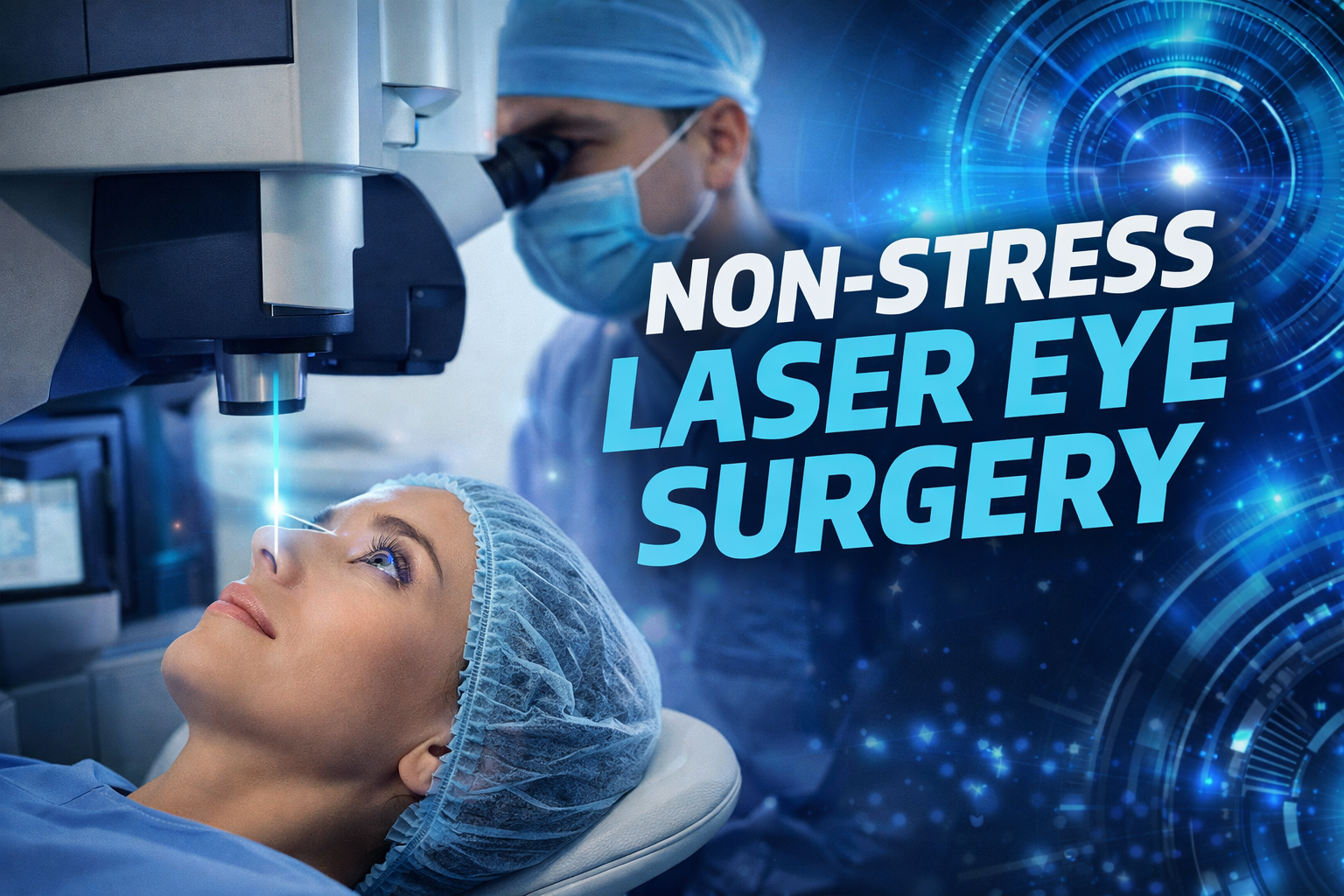
In laser eye surgery, a very precise laser is used to correct refractive errors of the eye, like myopia, hyperopia, or astigmatism. This remodeling includes the abrasion of microscopic layers of the corneal tissue. The amount of tissue excised depends on the level of correction needed.
This is where the thickness of the cornea plays an important role:
- Safety Margin: There should be a minimum residual corneal thickness that should be left to ensure structural integrity.
- Risk Prevention: The lack of thickness may lead to an increase in the risk of complications such as corneal instability.
- Customization: Treatment plans will be customized according to the individual corneal measurements to achieve the best results.
These parameters are carefully checked by a competent eye surgeon and can only recommend a procedure. This guarantees that every patient receives a treatment plan that aligns with both visual goals and safety standards.
Half-step Higher Diagnostics: The First Step to Clarity
Corneal thickness in a professional eye care facility is measured using sophisticated diagnostic devices such as corneal pachymetry and topography. These technologies give a map of the cornea in detail, showing not only its thickness, but also its curvature and surface irregularities.
This is a thorough evaluation that enables the surgeon to:
- Identify eligibility for laser eye surgery.
- Choose the most suitable treatment strategy.
- Reduce risks with data-oriented planning.
This attention to detail diagnostics indicates patient safety and quality of care – the qualities of a competent eye surgeon.
Personalized Treatment Planning
There are no two eyes that are the same, and there should also be no two treatment plans. The corneal thickness is a distinguishing factor in tailoring laser procedures. For instance:
Patients with sufficient corneal thickness are good candidates for regular laser correction.
Associates of borderline thickness might need different strategies, or they can be recommended alternative solutions, depending on a clinical examination.
This is done not just to carry out a procedure, but to make sure that the procedure selected is consistent with long-term ocular health.
A Combination of Safety and Vision Goals
Although it is understandable that people want to have vision without spectacles, it should not be at the expense of safety. Corneal thickness is a guiding index that helps balance between aesthetic and medical accountability.
Detailed preoperative assessment guarantees that:
- The cornea is capable of withstanding the process of reshaping.
- The visual correction is stable and sustainable.
- Risk profile is low.
This strategy emphasizes the need for a competent ophthalmologist who does not offer generalized solutions to the problem but rather focuses on the patient’s individual factors.
The Importance of Expertise in Results
Precision is increased with technology, yet results are determined by expertise. Clinical experience is critical to the interpretation of corneal data, decision-making, and running the procedure.
An expert surgeon combines diagnostic information with surgical expertise to:
- Optimize visual results
- Maintain corneal integrity
- Provide an efficient patient experience.
This care level will guarantee that laser eye surgery is not only effective, but also safe and reliable.
Conclusion
Corneal thickness is not just a number, but a pillar to successful and safe laser vision correction. It affects all the steps of the process, starting with the eligibility determination up to the surgical planning.
This parameter is an effective instrument in attaining accurate, customized, and enduring visual results when considered by a competent eye surgeon. When one is planning to go through laser eye surgery, knowledge of the role of corneal thickness is a necessary step to an informed and confident decision.
FAQs
1. What is the importance of corneal thickness in Laser eye surgery?
The thickness of the cornea defines the amount of tissue that can be safely removed during the operation so that the eye is structurally stable after the correction.
2. How is corneal thickness measured?
It is quantified with sophisticated diagnostic equipment, such as pachymetry, which gives a clear reading of the cornea in microns.
3. Can I undergo Laser eye surgery if I have thin corneas?
It is based on eligibility through a detailed assessment. An excellent eye surgeon will evaluate the possibility of a safe treatment approach according to your corneal profile.
4. Does the corneal thickness influence the outcomes of the surgery?
Yes, it has a direct effect on the safety and effectiveness of the procedure, and it affects the manner in which the cornea can be reshaped.
5. Is corneal thickness the only factor considered before surgery?
No, it is among various parameters that matter, such as corneal shape, eye health, and refractive error, which are observed in the course of a detailed examination.