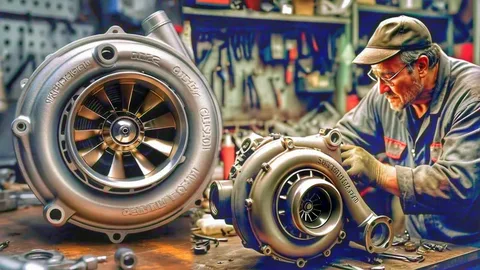
In my decade of experience as an automotive technical writer and SEO strategist, I have watched the automotive landscape shift toward smaller, high-output engines. Whether you are driving a precision-tuned Audi from Germany or a legendary Subaru from the Japanese domestic market, there is a high probability that a turbocharger is the heart of your vehicle’s performance.
A turbocharger is a marvel of engineering. It uses “wasted” energy from your exhaust gases to spin a turbine, which in turn forces more air into the engine, creating significant power from a relatively small displacement. However, this power comes at a cost: heat and speed. A turbocharger can spin at speeds exceeding 200,000 RPM while being bathed in exhaust gases that reach temperatures over 900°C. In the demanding climate of Alberta, these extreme operating conditions make specialized care a necessity, not an option.
The Lifeblood: Why Oil Quality is Non-Negotiable
If you take only one thing away from my years of analyzing turbocharger failures, let it be this: your turbocharger is an oil-driven component. The “bearing housing” between the hot exhaust turbine and the cool intake compressor relies on a thin film of oil to prevent metal-on-metal contact at astronomical speeds.
In JDM and European cars, the tolerances are incredibly tight. If your oil is old, contaminated, or of the wrong viscosity, it will “coke” or carbonize inside the turbo’s oil feed lines. Imagine your arteries clogging; once the oil flow is restricted, the bearing fails within seconds. This is why I always advocate for high-quality synthetic oils that can withstand extreme thermal shearing without breaking down.
The “Warm-Up” and “Cool-Down” Rituals
One of the most common ways drivers unknowingly kill their turbos is through improper thermal management. When you start your car on a frigid Calgary morning, the oil is thick and slow-moving. If you immediately pull out onto the road and “boost” the engine, the turbo turbine will be spinning at high speeds before the oil has reached the bearings.
Conversely, the “hot shut-down” is equally dangerous. If you’ve just finished a spirited drive or a long climb and you immediately turn off the engine, the oil flow stops instantly. The heat soaking from the turbine then bakes the stagnant oil inside the turbo, leading to that dreaded carbon buildup I mentioned earlier. I always recommend letting your turbocharged engine idle for at least 60 seconds after a drive to allow the oil to carry that heat away.
Maintaining the Intake and Exhaust Ecosystem
A turbocharger does not live in a vacuum. It is part of a larger breathing system that includes the air intake, the intercooler, and the exhaust.
- Air Filtration: A turbo is essentially a high-speed vacuum. If your air filter is low-quality or dirty, small particles can strike the compressor blades. At 200,000 RPM, even a grain of sand acts like a bullet, causing “denting” that unbalances the wheel and leads to catastrophic shaft failure.
- Vacuum and Boost Leaks: For European cars especially, plastic and rubber charge pipes can crack over time. When this happens, the turbo has to work twice as hard (over-speeding) to reach the boost levels requested by the computer. This extra effort leads to premature wear.
When you are looking for high-quality car repair Calgary SW, it is vital to find a team that understands these specific pressure systems. At Heritage AutoPro and Tire, I’ve noted that the most successful turbocharger longevity comes from technicians who don’t just look at the turbo itself, but inspect the entire intake tract for signs of trouble.
Common Signs of a Fading Turbocharger
As a driver, you are the first line of defense. You don’t need a degree in mechanical engineering to spot a turbo that is struggling. Watch for these “tell-tale” signs:
- The “Police Siren” Sound: A healthy turbo should have a faint, high-pitched whistle. If that whistle turns into a loud, rhythmic whine or a “siren” sound, the internal blades may be touching the housing.
- Blue Smoke from the Exhaust: This typically indicates that the internal seals of the turbo have failed, allowing engine oil to leak into the intake or exhaust stream where it is burned.
- Languid Acceleration: If your car feels like it’s lost its “punch” or if the boost comes in much later than usual, you likely have a wastegate issue or a boost leak.
- The Check Engine Light: Modern JDM and European ECUs are very sensitive to “Under-boost” or “Over-boost” conditions and will trigger a code immediately to protect the engine.
The Cost of Neglect vs. The Cost of Care
Replacing a turbocharger on a modern luxury import is not a minor expense. Between the high-cost precision parts and the intensive labor required to access the unit (often involving removing half the engine bay), bills can easily reach the several-thousand-dollar mark.
Compare this to the cost of 5,000 km oil changes, high-quality filters, and a few minutes of patience during warm-up and cool-down. The “care” path is significantly cheaper. Furthermore, a failing turbo can “grenade,” sending metal shards directly into your engine’s cylinders, which turns a turbo replacement into a full engine replacement.
Final Thoughts
Turbocharged JDM and European vehicles offer an unparalleled driving experience, they are efficient, powerful, and responsive. However, they are not “set and forget” machines. They require a driver who is in tune with their mechanical needs and an environment that respects the laws of thermodynamics.
Respect the oil, mind the heat, and keep the air clean. If you follow these three pillars of turbocharger care, your boosted engine will continue to provide that signature “kick” for years to come on Calgary’s roads.