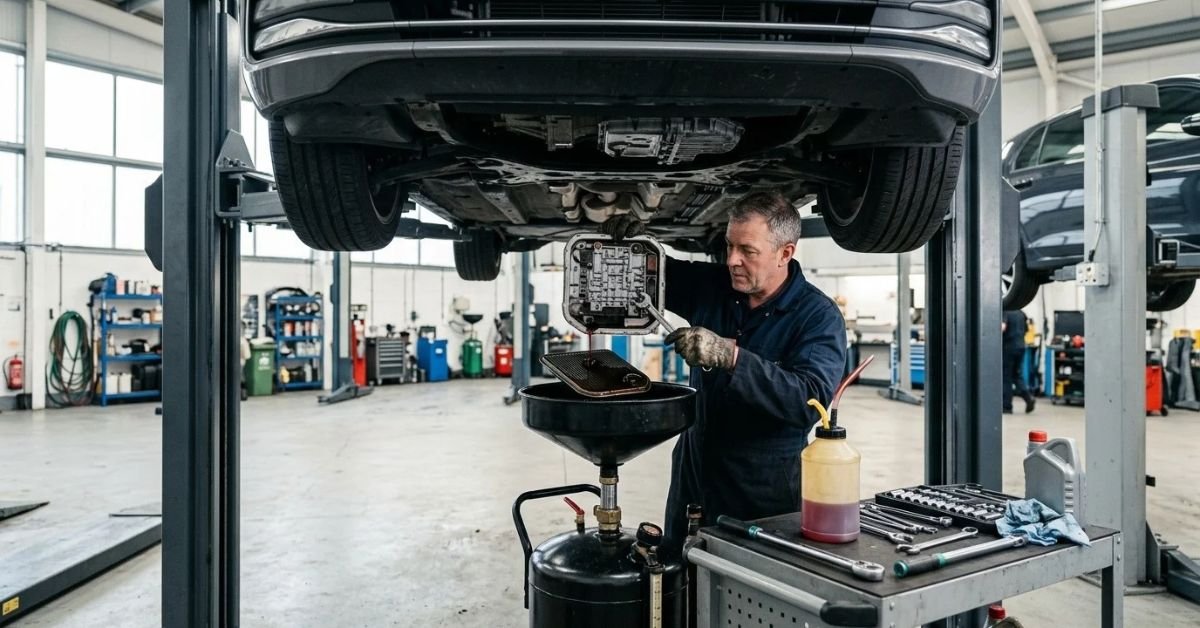
Getting a transmission fluid change at the right time can help keep your car’s gearbox running smoothly, efficiently, and reliably for longer. Many UK drivers overlook this essential maintenance until they experience slipping gears symptoms, delayed shifting, unusual noises, or other warning signs.
Fresh transmission fluid helps lubricate and cool internal components while reducing the buildup of harmful debris and contaminants. Delaying maintenance can increase wear and potentially lead to costly gearbox problems.
If you notice unusual transmission behaviour, speaking with a trusted car mechanic can help identify issues early and avoid an unexpected automatic transmission repair cost.
1. Why Your Gearbox Needs Fresh Fluid
Transmission fluid acts as both a lubricant and a coolant for your vehicle’s intricate gear system. Over time, heat causes the fluid to break down, losing its ability to protect moving metal surfaces.
Once the fluid degrades, you will start noticing gearbox fluid contamination signs like dark colour or a burnt smell. Regular replacement ensures that your gear shifts remain precise and your engine power transfers efficiently to the wheels. Think of this service as a cheap insurance policy for your expensive vehicle components.
2. Common Symptoms of Fluid Trouble
Recognising the early warning signs of low or contaminated fluid allows you to act before disaster strikes. You might experience delayed gear shifting issues where the car hesitates briefly before moving into the next gear.
This annoying delay often happens when internal pressure drops due to old, sludge-filled transmission fluid. If you feel sudden surges or grinds during normal acceleration, your car is telling you that it needs urgent attention. Never ignore these subtle changes in driving behaviour, as they rarely fix themselves without professional intervention.
3. The Dangers of Transmission Overheating
The gearbox generates immense heat during daily stop-start traffic, especially on busy UK motorway commutes. If your fluid is old, it cannot manage these transmission overheating problems effectively, leading to rapid internal wear.
An overheating transmission will eventually cause the car to enter “limp mode” or fail to move forward altogether. You will often smell something sweet or burnt coming from under the bonnet when the system reaches critical temperatures. Keeping the fluid fresh helps the cooling system maintain stable operating levels in all driving conditions.
4. When Should You Schedule a Change?
Most manufacturers recommend checking your gearbox fluid every 30,000 to 60,000 miles, depending on your car model. However, if you do a lot of towing, heavy city driving, or short stop-start journeys, you should change it more often.
Many modern vehicles have sealed units, but professional mechanics can still perform a thorough transmission fluid change effectively. Consult your owner’s manual for specific guidelines tailored to your car’s exact make, engine size, and age. Staying proactive prevents the cumulative damage that leads to massive mechanical failures later on.
Quick Maintenance Reference Table
| Sign of Trouble | What It Likely Means |
| Dark or Burnt Fluid | Significant gearbox fluid contamination signs indicating high heat damage. |
| Hesitation During Shift | Clear evidence of delayed gear shifting issues caused by low pressure. |
| High Engine RPM | Typical slipping gears symptoms where the transmission cannot lock onto the gear. |
| Sweet Burning Odour | A warning of active transmission overheating problems requiring immediate inspection. |
5. Avoiding Expensive Repair Bills
The primary reason to stay on top of your maintenance schedule is the potential automatic transmission repair cost. Replacing an entire gearbox can easily cost thousands of pounds, often exceeding the total value of an older car.
A simple fluid service is a tiny fraction of that price and prevents the breakdown from happening in the first place. By investing in routine care, you protect your bank account from the massive financial hit of major component replacement. Smart owners always choose consistent maintenance over risking a total system failure.
Conclusion
Your vehicle’s transmission is a highly complex machine that requires clean, healthy fluid to function perfectly. By watching for warning signs like hesitation or strange odours, you can schedule a transmission fluid change before problems escalate.
Regular maintenance is far cheaper than dealing with the stress and high automatic transmission repair costs of a full replacement. Keep your car reliable by following the manufacturer’s suggested service intervals for all your vital gearbox components. Taking these small steps today ensures you stay mobile and safe on the road for many miles ahead.
FAQ’s
1. How can I tell if my transmission fluid is bad?
Check the dipstick to see if the fluid looks dark, dirty, or gives off a sharp burnt smell. Healthy fluid should appear clear and bright red, which confirms you do not have gearbox fluid contamination signs. If it looks murky or gritty, it is time to book a professional service immediately.
2. Is a fluid change the same as a transmission flush?
A standard change typically replaces most of the fluid, whereas a flush uses machines to clean the entire system. Both methods help resolve delayed gear shifting issues by removing harmful metallic sludge and debris. Consult your mechanic to see which process is best for your specific vehicle’s age.
3. Will fresh fluid fix slipping gears?
If the slipping is caused by old, degraded fluid, a change might solve the problem entirely. However, if internal seals or clutches are already damaged, you might still experience slipping gears symptoms after the service. It is best to have an expert check the system to ensure no permanent internal damage exists.
4. How often should I check my transmission fluid level?
You should aim to inspect your fluid levels every time you perform an oil check or at least twice a year. Maintaining the correct level prevents transmission overheating problems that occur when there is not enough lubricant to circulate. Most cars have a simple dipstick that makes this quick inspection very easy to do.
5. Why is the automatic transmission repair cost so high?
Gearboxes contain hundreds of precise, complex parts that require specialist tools and labour to rebuild properly. Trying to fix internal faults often leads to a high automatic transmission repair cost because the entire unit usually requires removal. Preventative maintenance is the most effective way to keep these costs manageable for your budget.
6. Can I drive with low transmission fluid?
Driving with low fluid can cause severe overheating and permanent damage to your internal gear components. You will likely notice delayed gear shifting issues or erratic behaviour long before the car stops moving entirely. Never risk driving if you suspect your fluid level is critically low.
7. What happens if I ignore the fluid change recommendation?
Ignoring the advice leads to excessive heat, friction, and eventual total failure of the transmission system. You will likely start noticing slipping gears symptoms that progressively get worse until the car can no longer be driven. Repairing this level of damage is always significantly more expensive than simple routine maintenance.
8. Does towing heavy loads require more frequent changes?
Yes, towing places extra stress and heat on your transmission, which breaks down the fluid much faster. You should consider a transmission fluid change more frequently than the standard recommendation to combat these higher temperatures. Keeping your fluid fresh under stress is vital for the long-term health of your car.
9. Can dirty fluid cause my car to overheat?
Dirty fluid loses its ability to dissipate heat, which directly leads to dangerous transmission overheating problems inside the unit. When the fluid cannot carry heat away from the gears, the entire system reaches unsafe operating temperatures very quickly. Replacing the fluid restores the cooling properties needed to keep the system safe.
10. Are there any DIY tips for checking fluid?
Always check your fluid while the engine is warm and running on a level surface for the most accurate reading. Look for the classic gearbox fluid contamination signs by wiping the dipstick on a clean, white cloth. If you are unsure about your findings, it is always safer to have a professional mechanic take a look.