A website redesign is supposed to be a step forward. The brand looks sharper, pages load from a modern platform, and the team is proud of the launch. Then, a few weeks later, organic traffic starts sliding. Enquiries from search slow down and nobody can explain why. In most cases, the right first move is a thorough technical SEO audit.
Here is why redesigns and migrations so often damage search visibility, what that costs, and how an audit-led recovery gets things back on track.
The problem: a better-looking site that search engines like less
Redesigns and platform moves change far more than visuals. URLs, templates, navigation, internal links, page content and code all shift at once. Search engines have to re-learn the site, and if the signals they relied on have disappeared, rankings drop.
The confusing part is that the new site may genuinely be better for users. Leadership sees a modern design and assumes performance will follow, while the marketing team watches search traffic fall without a clear explanation.
Causes: what usually goes wrong during a relaunch
Most post-launch drops trace back to a few common oversights.
- Missing or broken redirects. Old URLs return errors or redirect to the homepage instead of their closest new equivalent.
- Lost content. Text-rich pages are replaced by sleek layouts with far less useful copy.
- Changed internal linking. Key pages lose prominence in menus and in-content links.
- Staging settings left live. Noindex tags or blocking robots rules carried over from the development site.
- Metadata and schema not migrated. Titles, descriptions and structured data revert to template defaults.
- Performance regressions. New animations, fonts and scripts slow pages on mobile devices.
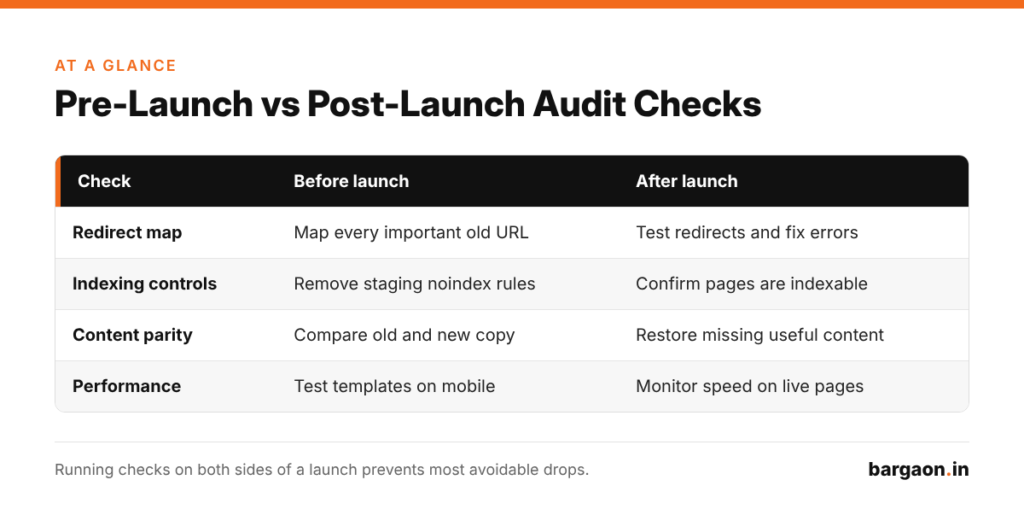
Impact: the real cost of an unplanned drop
Lost organic traffic means fewer enquiries, demo requests or orders from the channel that is usually the most cost-efficient. Teams often compensate by increasing paid spend, which protects short-term lead volume but raises acquisition costs.
The longer the issues stay unresolved, the harder recovery becomes. Search engines may consolidate signals around the wrong pages, external links continue pointing to dead URLs, and competitors capture the rankings you vacated. Internally, confidence in the new website suffers, and the redesign starts to look like a costly mistake even when the underlying platform is sound.
Recovery also competes for attention with everything else on the post-launch list. Developers are busy fixing design bugs and adding features, so SEO problems get logged but not prioritised. Without clear evidence of which issues are costing traffic, they keep slipping down the backlog while the losses quietly continue.
The solution: a technical SEO audit tied to recovery
A focused technical SEO audit compares what search engines saw before the launch with what they see now. It identifies which pages lost visibility, why they lost it, and which fixes will recover the most value fastest.
The audit should not be a generic checklist. It must connect each finding to affected pages and traffic so developers know exactly what to change first. If you lack internal capacity, an experienced technical SEO agency can run the audit and coordinate fixes with your web team. Treat it as a project with an owner, deadlines and verification, not as a one-off report.
Workflow: how the audit and recovery unfold
A structured process makes recovery quicker and more predictable.
- Gather history: collect old URL lists, analytics data, Search Console exports and backlink targets.
- Map old to new: check every important old URL against its new equivalent and redirect status.
- Crawl the new site: look for indexing blocks, broken links, thin pages and missing metadata.
- Compare performance: identify the pages and queries with the biggest losses.
- Fix in priority order: repair redirects, restore content and links, then address speed and schema.
- Track recovery: monitor indexation, rankings and traffic weekly until trends stabilise.
Benefits: recovery now and safer launches later
The immediate benefit is recovering lost visibility on the pages that matter most. Correct redirects pass value from old URLs, restored content gives search engines what they need, and cleaner signals help the new site settle faster.
There is a longer-term gain as well. The audit leaves behind documentation, URL maps and checklists that make future redesigns, migrations and template changes far safer. Teams learn to involve SEO before launch rather than after a drop, which saves time and protects revenue the next time the site changes. Developers, designers and marketers end up sharing one clear definition of a safe launch.
Planning a redesign or recovering from one?
Whether your traffic has already dropped or a relaunch is on the calendar, a technical review is the most reliable way to protect search performance. The earlier problems are spotted, the faster and cheaper they are to fix.
Bargaon helps growing companies audit, migrate and recover websites without losing hard-earned visibility. Visit the Technical SEO page to learn how audits are run and what a recovery plan includes.