Among the many indian restaurants amsterdam offers, Rasoi at Maasstraat 10 began differently, not as a business plan but as an argument between three friends about what Indian food in this city should taste like. They opened in the Rivierenbuurt with one rule, cook it the slow way or do not cook it at all, and in 2023 TripAdvisor handed the place a Travellers Choice award built on a full year of guest reviews.
This is the story of how that argument became a restaurant, and why the argument never really ended.
The complaint that started everything
Every restaurant begins as a complaint about other restaurants. Ours was specific.
Three friends, all carrying India in their memory, kept eating Indian food in Amsterdam and finding the same thing. Menus flattened into mild, medium and hot. Gravies that tasted identical under different names. The rich regional map of their home country, Kashmir’s warmth, Punjab’s tandoor culture, Bengal’s way with fish, reduced to a single beige category called curry.
The complaint hardened into a question. If a city this international could support great Italian, Japanese and Middle Eastern kitchens, why was Indian food still being asked to simplify itself? And the question, as questions do between stubborn friends, eventually demanded an answer with an address.
Why they chose the slow way
The founding rule sounds romantic until you understand what it costs.
Cooking Indian food the slow way means onions caramelising for the better part of an hour before any gravy begins, because rushed onions leave a raw sharpness no cream can bury. It means chicken resting in yoghurt and kashmiri chilli all afternoon, since the acid needs hours to soften the fibres properly. It means a clay tandoor lit long before service so it reaches its working heat near 480 degrees, and dum biryani pots sealed shut on trust, because that old royal technique does not allow you to peek.
None of this shows up on a plate photo. All of it shows up in the first bite. The three friends bet the entire restaurant on guests being able to taste the difference. The bet, so far, keeps paying.
A menu drawn like a map
Walk through the menu and you are really walking through their homesickness.
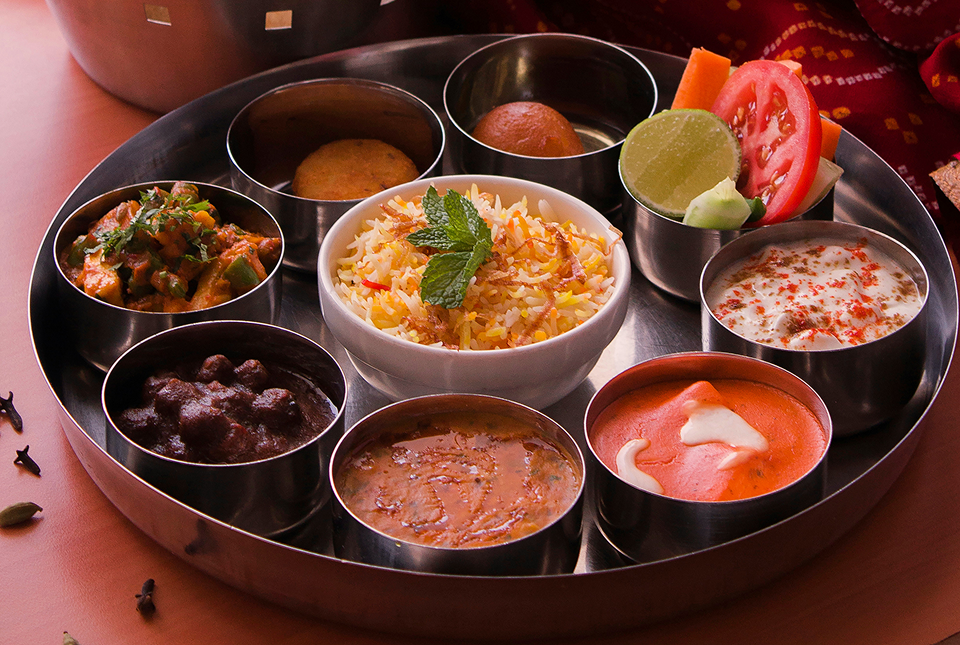
The Mutton Rogan Josh, the signature, carries Kashmir, goat braised with garlic, ginger and the dried chillies that colour a dish red without burning it. The Amritsari Chole Bhature and stuffed kulchas come from Punjab. The Bengal Fish Curry is done proper Kolkata style. The street food section, Pani Puri, Banarasi Tikki Chaat, Dahi Puri, recreates the roadside snacks three homesick friends missed most.
And because India’s table has always been half vegetarian, so is theirs. Nearly twenty vegetarian mains, several made vegan on request, sitting beside a 100% Halal meat kitchen. The idea was never fusion or reinvention. It was translation, done faithfully, for a city they had come to love.
The part guests notice without knowing why
One review on our about page, from a guest named Anthony, describes it better than we could. He wrote that eating at Rasoi felt less like visiting a restaurant and more like visiting friends at their home, and that talking to the chefs and owners came with stories.
That is not an accident of personality. It is the founders’ actual theory of what a restaurant is. Food answers hunger, but hospitality answers something else, and the three of them built the room accordingly, warm and unhurried, with signature cocktails around chai and saffron for the long evenings, a Phirni Brûlée marrying Indian rice pudding to a French caramel crust, and staff encouraged to explain any dish a guest hesitates over.
Ask about a dish’s home region on your next visit. Whoever answers will not be reciting training. They will be remembering something.
The honest chapter
A founders story that skips the hard parts is marketing, so here are ours.
The slow way has a cost, and guests feel it on a packed Saturday night when a complicated order takes longer then anyone would like. The kitchen chooses right over fast, every time, and that choice occasionally tests the patience of a hungry table. Friday and Saturday evenings fill the room, so booking ahead is genuinely wise, and the dishes marked very hot are marked by people who mean it.
There were harder chapters too. Opening a fine dining Indian restaurant in a city still learning that Indian food could be fine dining meant slow early months and second guessing. The Travellers Choice award in 2023 mattered so much precisely because it arrived from ordinary guests, locals from Zuid and De Pijp, travellers, first timers, one review at a time across a full year.
The argument continues, nightly
The best part of the story is that it has no ending.
The three friends still argue, about whether a new dish is ready for the menu, about whether the Hyderabadi gravies carry enough mint, about everything. The menu’s newest entries, the Peri Peri Chicken, the Dahi ke Kebab, the Afghani Paneer Tikka, each survived that argument before surviving the tandoor. Guests who found the place searching for the best indian restaurant near me are, whether they know it or not, eating the current state of a debate that started years ago between three homesick friends.
Doors open at noon Thursday to Sunday, 4PM the rest of the week, on a quiet street in the Rivierenbuurt. The onions are already cooking. The argument is already underway. Come taste whichever side is winning tonight.