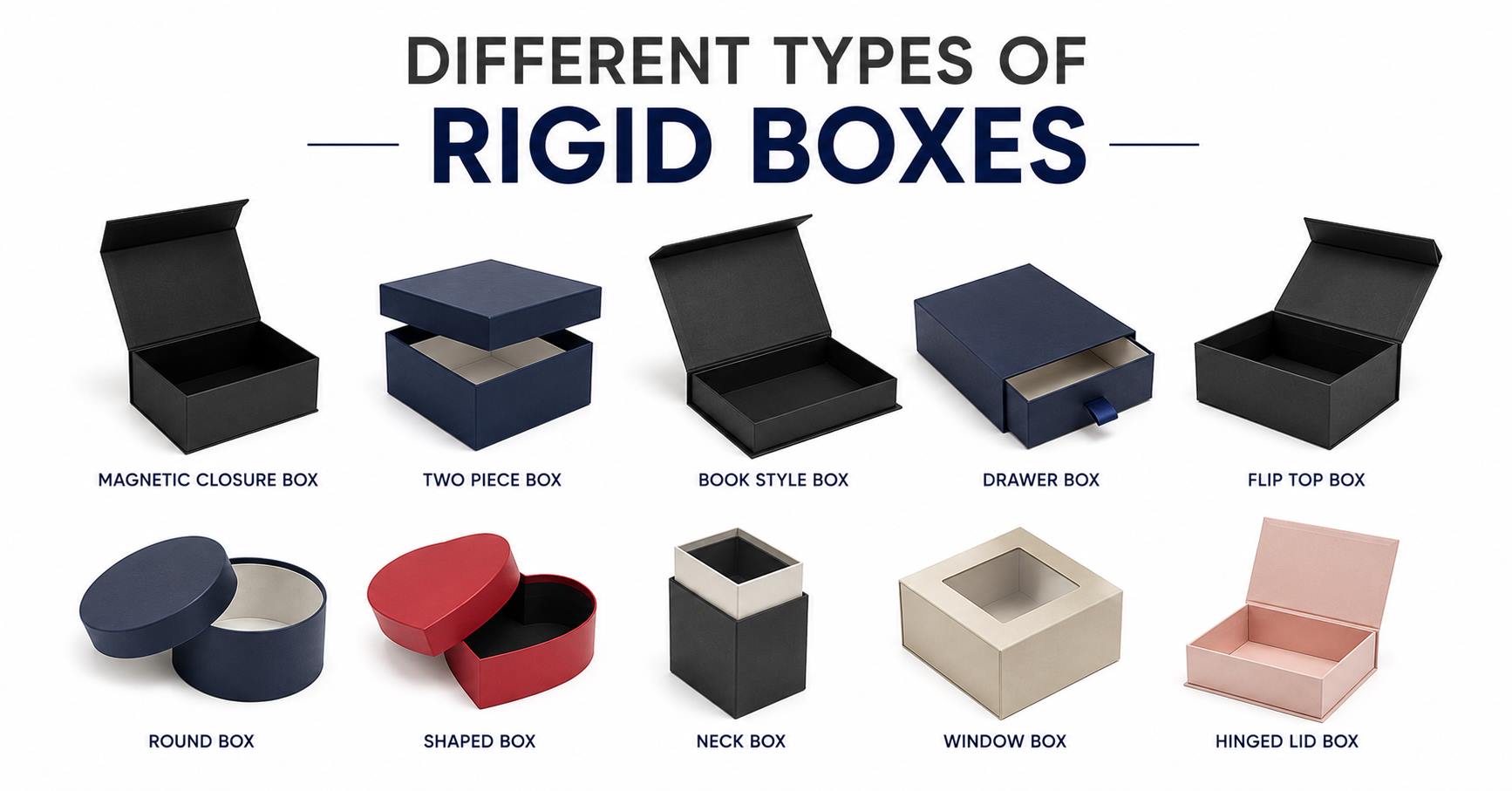
When introducing and even improving products of a superior nature, your decision about packaging materials determines how customers will rate your brand’s worthiness. Using rigid boxes is the standard in terms of packaging, as they combine durability with incomparable elegance.
In contrast to regular carton containers, this type of packaging is made out of thick and compacted paperboard that has been covered by special paper material. It is important to know what the peculiarities of this superior packaging type are to make your unboxing experience perfect.
Key Types of Rigid Boxes
1. Telescoping Boxes (Two-Piece Layouts)
In the traditional setup, the design involves two individual components: the base tray and the cover. In the case of telescopic designs, the cover overlaps the base completely, while in non-telescopic designs, a part of the base remains uncovered.
The popularity of such designs in expensive phones and cosmetic products is owing to the fact that the friction offered during the lifting of the lid results in a slow unboxing experience. In case companies need to offer these designs universally, they tend to opt for custom printed boxes wholesale.
2. Hinged Lid Boxes (Book-Style / Clamshell)
These configurations feature a lid permanently attached to the base structure using a flexible paper hinge, opening seamlessly like a book. Brands often opt to use magnets, ribbons, or Velcro straps to ensure the closure stays secure throughout transit.
This is an ideal option for use in limited edition presentation kits and highly valuable products. The use of such packaging options provides the product with protection without needing any additional wrapping.
3. Drawer-Style Boxes (Slide / Matchbox)
The construction uses the sliding tray system, where there is an inner tray that slides horizontally inside an outer sleeve. Often constructed to include ribbon pull tabs or thumb holes, this hands-on approach is commonly employed when making packaging for expensive products such as jewelry, tech gadgets, or gift cards.
Incorporating this approach into your normal box custom packaging design keeps the customer engaged throughout the process of unboxing.
4. Shoulder & Neck Boxes
A more intricate structure design that includes a unique inner neck tray within the base itself. The cover fits tightly against the shoulder and leaves a little space where the middle neck plate is visible, usually colored in a contrasting or metallic shade.
This type of container design is associated exclusively with niche perfumes, luxurious makeup, and spirits. This container design will be perfect for giving your custom containers an edge over regular store designs.
5. Magnetic Closure Rigid Boxes
Magnetic closure rigid boxes are designed with built-in magnets that provide a secure and seamless closing mechanism. These boxes offer a premium unboxing experience and are commonly used for high-end cosmetics, electronics, and corporate gifts.
Rigid Box Specifications Matrix
| Box Type | Best Application | Primary Structural Feature |
| Telescoping | Smartphones, luxury electronics, retail footwear | Removable lid with controlled air-friction release |
| Hinged Lid | Influencer media kits, complex multi-item gift sets | Attached lid, often paired with magnetic closures |
| Drawer-Style | Jewelry, pocket knives, and luxury cosmetic concentrates | Sliding internal tray with structural outer slipcase |
| Shoulder & Neck | Fine spirits, niche perfumes, high-end collectibles | Exposed inner neck layer creating a visual split-tone |
Structural Manufacturing & Best Design Practices
To manufacture professional custom printed boxes, the primary substrate, heavy paperboard, is systematically scored and die-cut via industrial machinery before being folded and glued together at the corners. Businesses looking for an elite market positioning strategy need to consider some specialty finishes while choosing custom boxes with logo branding:
- Embossing & Debossing: The process of creating textured impressions for building a tactile bond.
- Foil Stamping: The process of stamping metallic sheets such as gold, silver, or holographic foils using heat and pressure.
- Lamination: The process of adding a protective film that can be matte, gloss, or soft touch.
Whether you’re purchasing custom wholesale boxes or mailer boxes, it’s important to find the right balance between durability and unboxing appearance before your product is placed in retail stores.
Procurement & Inventory Considerations
When ordering customized boxes from a website or buying boxes in bulk, there is a need to track the production timeline accurately. Unlike flat pack boxes, pre-assembled boxes occupy much more space in the storage area.
The involvement of qualified engineers guarantees that your custom boxes fit perfectly into the packaging inserts and give an exceptional unboxing experience.
Conclusion
Selecting an appropriate structure for your luxury rigid boxes is crucial to determine how much value you can impart on your brand through your products. Depending on whether you choose a telescopic, drawer, or shoulder structure for your packaging, it should reflect the superior nature of the contents. Through foil-stamping and embossing, the ordinary box will become an effective brand tool and a means of protecting your valuable inventory.
Frequently Asked Questions
What is the typical thickness of the paperboard used in rigid packaging?
Rigid packaging generally utilizes structural paperboard ranging from 1 to 3 mm in thickness.
Can rigid boxes be shipped flat to save on warehousing costs?
No, traditional rigid boxes are rigid setup boxes and must be shipped and stored fully assembled.
What is the difference between an embossed and a debossed logo?
Embossing raises the design above the paper surface, while debossing presses it down into the material.
Why do telescoping boxes find usage in luxury electronics packaging?
Due to the vacuum seal made by the lid and the base, the slide is very smooth and luxurious.
What are the most popular decoration methods for premium rigid boxes?
Foiling, spot gloss UV coating, matte laminations, and embossing are among the most common options.