Introduction
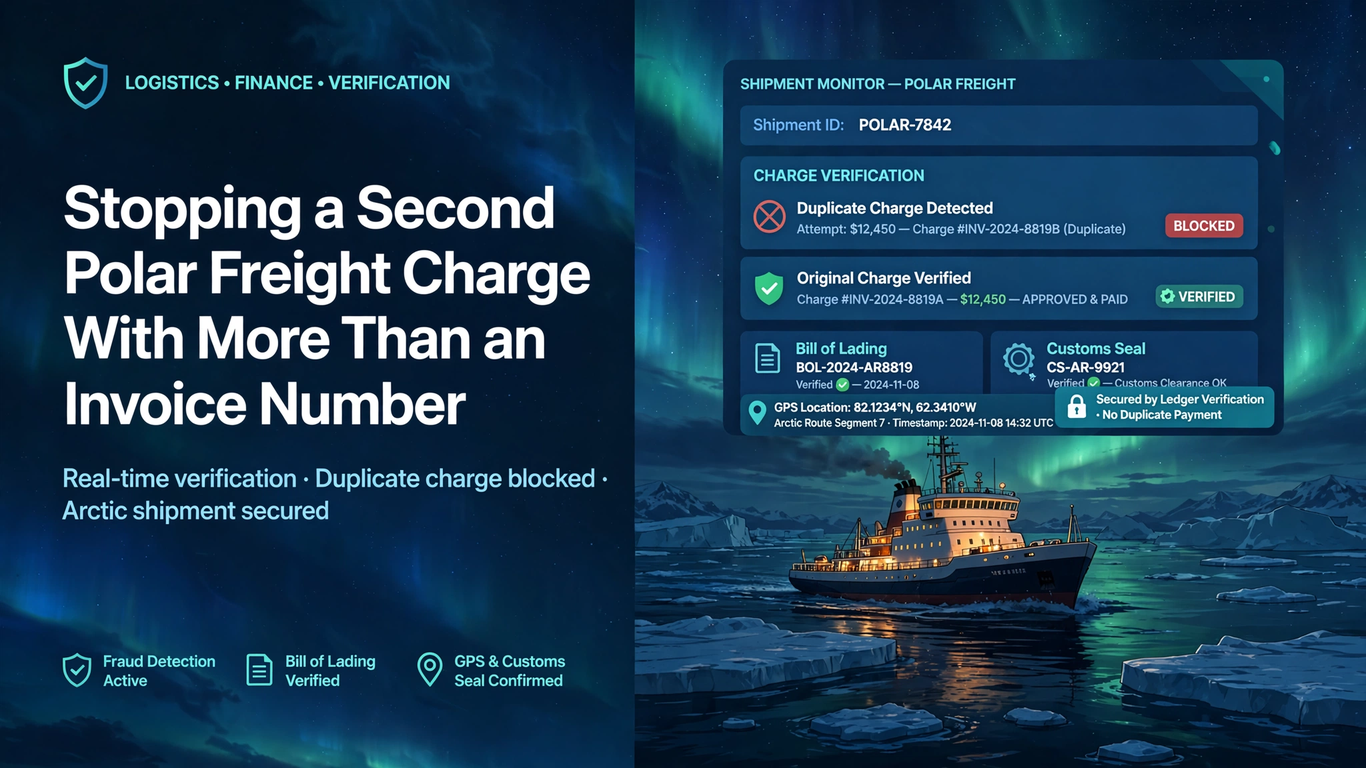
Picture a quiet morning at a polar-research institute’s payables desk. Tech Leads IT often uses this scenario to show how two ocean-freight invoices, one from the carrier and one from the forwarding agent, can arrive with different references yet carry the same amount, currency and sailing date. Is the second one a duplicate, a genuine agency fee, or another instalment under the contract?
The team must block a second payment without rejecting a charge needed to release temperature-sensitive equipment at port. A solid Oracle Fusion Financials Training path, whether through Oracle Fusion Financials Online Training or a classroom Oracle Fusion Financials Course, teaches you to look beyond the invoice number.
Start With a Fact Set You Can Actually Compare
The first move is to keep both original submissions exactly as received and note how each one arrived. The arrival channel matters, because a document that came straight from the carrier and one that came through an agent may carry different commercial meanings.
Then the analyst pulls out the details that count: legal supplier, supplier site, invoice type, amount, currency, invoice date, purchase order, shipment identifier, vessel, bill of lading, service period, tax and remittance details. She also splits the base ocean freight from the extras such as fuel, ice-class, handling and agency charges. Looking only at header totals would hide a duplicated component sitting inside a bigger invoice.
Some tidying is fine during analysis. Punctuation and prefixes can be ignored when comparing references. But the original values stay untouched in the accounting record and in the evidence package.
The purchase order and contract set the boundaries of what could legitimately be billed. A carrier might invoice the transport while an agent bills customs handling. A single voyage might also have agreed pre-departure and arrival installments. Logistics confirms milestones and whether the service was performed, procurement reads the commercial terms, and accounts payable controls invoice entry and payment. Nobody gets to decide just because two documents look alike.
Instead, the analyst builds a line-level bridge listing each billed service, the expected party, the contractual basis, any earlier invoice, the payment status and whatever difference remains unexplained. That turns a vague hunch into a population someone else can review.
What Oracle Fusion Financials Training Should Say About the Expanded Duplicate Check
Oracle’s guidance on finding duplicate invoices without relying on the invoice number alone explains that, once the feature is enabled, the check uses a combination of supplier, invoice type, amount, currency and date. It covers invoices already received and processed from that supplier. Oracle also names the lookup type and lookup code that have to be created and enabled before the feature works. That makes it broader than a plain invoice-number comparison. It is still a screen, though. Similar attributes can point to candidates, but they can’t prove that two documents describe the same economic obligation.
Knowing the exact combination helps set realistic expectations. If the carrier and the agent are set up as genuinely different suppliers, a check built around the supplier may never put their invoices side by side. If the same supplier rebills a corrected amount on a different date, not every attribute will line up. And the reverse happens too: recurring fixed freight charges can share supplier, type, amount, currency and date while covering entirely different containers.
For that reason, the team treats the system result as one layer of control and adds shipment and contract references on top. They also write down whether the expanded check was actually switched on at the time. Without that note, a reviewer might assume protection that was never there, and a quiet screen would be mistaken for a clean population.
Any solid Oracle Fusion Financials Training programme should make learners comfortable with this distinction between a screen that surfaces candidates and a judgement that settles them. The tool narrows the field. People still have to decide.
Investigate Before You Cancel Either Record
Say both documents contain the same base freight and fuel surcharge, and the agent’s version adds customs handling. The analyst starts asking questions. Did the agent pay the carrier and is it now recharging the institute? Was the carrier invoice attached only as support? Who actually holds the contractual right to collect? She checks earlier payments and the proposed payment population, then asks for a statement or written clarification through an approved channel.
That last step is worth dwelling on. A phone call or a casual email might clear things up quickly, but it leaves no trail. Written clarification from the supplier goes into the file and makes the final decision defensible when someone asks about it months later.
If the agent’s invoice duplicates the carrier’s obligation, it gets held or corrected under policy. If it’s a valid pass-through with separate liability, the file needs to explain why paying it won’t also settle the carrier’s charge.
Neither record should be casually deleted. An invoice entered in error needs a controlled cancellation or another approved disposition that shows who acted and why. A supplier credit should be linked to the invoice it affects rather than sitting around as unrelated negative spend. If one invoice has already been paid, recovery and supplier communication follow the institute’s own procedure; editing the reference on the second invoice cannot undo the first payment.
If both are still unpaid, the analyst keeps the disputed item out of payment selection while the valid document moves through normal approval. That avoids a broad hold on the supplier, which could delay unrelated cargo.
Why Oracle Fusion Financials Online Training Should Include Deliberate Test Cases
Blind spots only show up when you go looking for them. A useful exercise is to enter two invoices with different numbers for the same supplier and the same economic charge, keeping amount, currency, type and date constant. Then shift the date by one day, which mimics time-zone handling, and see whether the candidate is still visible. Try a credit document against an invoice. Try a different currency with the same numeric amount. Try two suppliers that share a remittance account. Finally, submit two legitimate container charges with identical headers but different bills of lading.
The goal isn’t necessarily an automatic block. It’s a predictable candidate set followed by competent human review.
A second round of testing starts from history. The analyst searches paid, cancelled, rejected and pending invoices for both carrier and agent, not just today’s unpaid queue. She compares gross and net amounts, since withholding or tax can disguise equality. She also checks whether an invoice was re-keyed after an import rejection, which can leave both a failed interface record and a valid transaction behind.
Access matters as well. The person who resolves a warning shouldn’t be able to quietly approve and pay for the same item. Screens, workflow and segregation of duties have to back each other up. When they’re treated as separate boxes, gaps appear between them, and those gaps are where duplicates slip through.
That is why Oracle Fusion Financials Online Training works best when learners run scenarios like these instead of only reading about the feature. Seeing a candidate appear, vanish or misfire teaches more than any description of how the check is meant to behave.
Reconcile the Decision All the Way to Payment
Before anything is released, accounts payable reconciles the approved contract obligation to invoices, credits, holds and payments, shipment by shipment. The bridge should show that every valid service is paid once and that every duplicate candidate has a documented outcome. Procurement confirms the commercial reading, logistics confirms service and shipment identity, and the payment approver reviews the exceptions.
Metrics deserve some care too. It helps to separate warnings investigated, confirmed duplicates, legitimate lookalikes, recovered payments and recurring supplier behaviours. A falling warning count looks like good news, but not if the configuration or the review scope has quietly weakened. A low number might simply mean fewer people are looking.
It also helps to keep a short record of what each lookalike taught the team: which supplier setups split a charge across two names, which agents regularly re-bill pass-through costs, which shipments carry fixed recurring fees. Those patterns feed back into supplier onboarding, contract notes and the next round of testing, so the same confusion doesn’t land in the inbox again next quarter.
What a Good Oracle Fusion Financials Course Should Leave You With
Different invoice references don’t prove different obligations, and matching totals don’t prove duplication. The best decision combines the supplier, type, amount, currency and date screen with contract terms, shipment identity, line-level services, prior processing and independent approval. Done that way, the second polar freight charge is stopped without stranding legitimate cargo or erasing the audit trail.
For learners, the lesson is practical. Predict what the check can compare, spot where supplier or date differences create gaps, investigate the obligation behind the paperwork, and reconcile every disposition through to payment. A well-designed Oracle Fusion Financials Course builds that habit, and it protects an institute’s money when the inbox gets truly confusing.