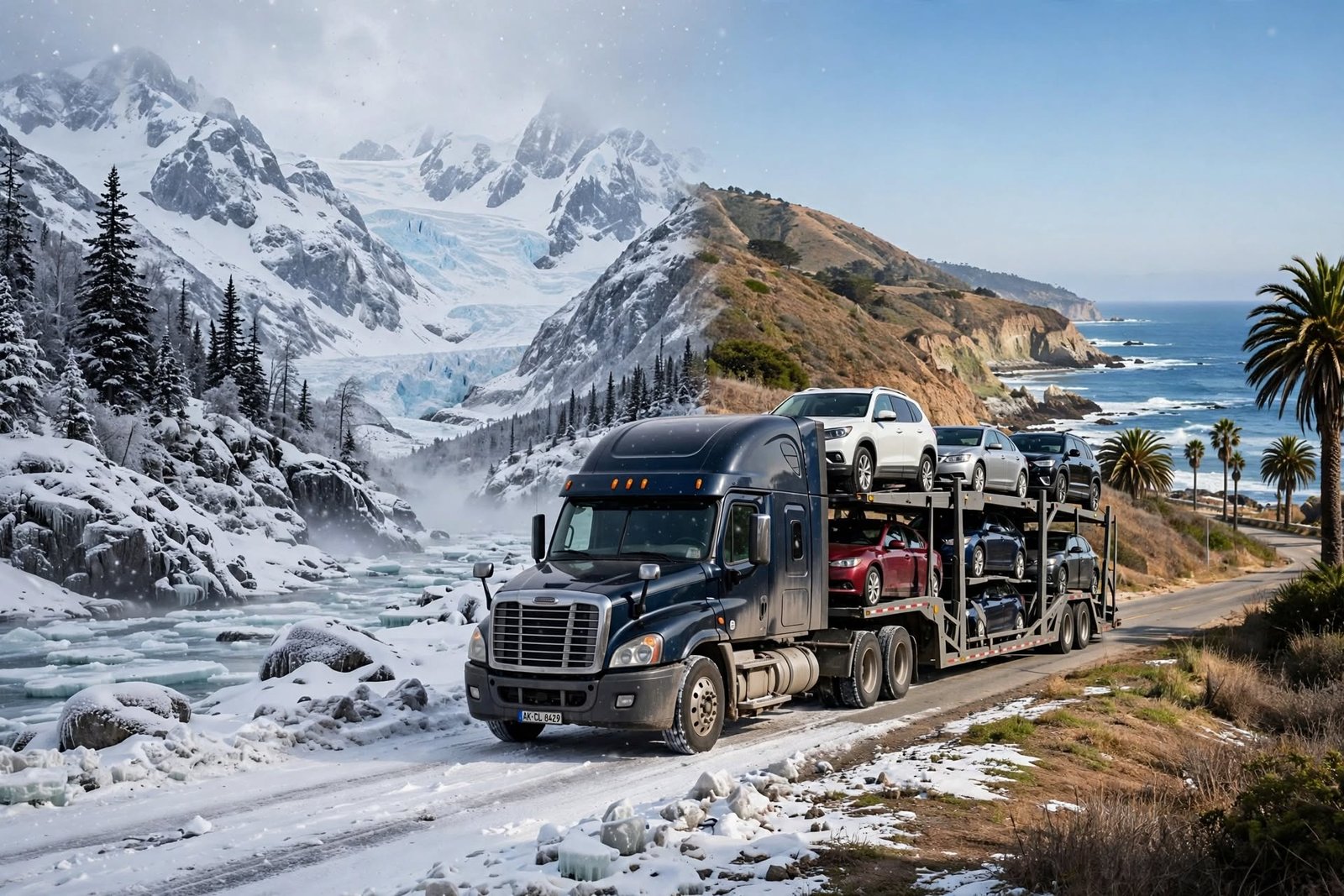
Moving a vehicle from Alaska to California involves more planning than arranging a typical mainland car shipment. Your car may need to travel overland, pass through a port, cross the Pacific by vessel, and continue through California before reaching its final destination. For someone booking this type of service for the first time, understanding the process can prevent confusion and unexpected expenses.
Whether you’re leaving Anchorage for Los Angeles, relocating from Fairbanks to San Diego, or moving closer to family in the Golden State, shipping from Alaska to California starts with knowing your route, preparing your vehicle, and asking the right questions before signing a transport agreement.
First, Understand How Your Vehicle Will Travel
Alaska’s geography makes this route different from shipping a car between two neighboring states. The transportation plan may combine highway travel and ocean freight, depending on your pickup location, departure port, destination, and carrier arrangements.
For example, a vehicle collected in Anchorage may need to travel to a suitable port before its ocean journey. Once it reaches California, additional transportation may be necessary if the port isn’t near your final address.
Not every shipment follows the same itinerary. Ask the provider to explain the planned route, where responsibility transfers between transportation providers, and whether inland pickup and delivery are included in the quote.
This is especially important if you’re moving to an inland California city rather than a coastal destination.
Your Pre-Booking Checklist: Six Things to Confirm
Before comparing prices, collect the details that determine whether a quote accurately reflects your needs.
- Pickup and delivery addresses: Provide ZIP codes and mention access restrictions, remote locations, or gated communities.
- Vehicle information: Have the year, make, model, dimensions if requested, and operating condition available.
- Preferred dates: Explain when the car can be collected and when you would ideally need it delivered.
- Transport arrangements: Confirm whether the quote includes the Alaska-to-port journey, ocean freight, and California delivery.
- Insurance and inspections: Ask what coverage applies during each transportation stage and how existing or new damage is documented.
- Payment terms: Review deposits, remaining balances, cancellation conditions, and any charges that could apply if arrangements change.
A detailed quote is more useful than an attractive starting price that leaves major parts of the journey unexplained.
The Price Depends on More Than Mileage
When researching shipping from Alaska to California, avoid treating it like an ordinary road-distance calculation. Ocean freight, port handling, inland transportation, and vehicle requirements can all influence the final amount.
| Cost consideration | What to ask the provider |
| Alaska pickup | Is the collection included from my specific community? |
| Port transportation | Who moves the vehicle to the departure terminal? |
| Ocean freight | Is the vessel portion itemized in the estimate? |
| California destination | Does the price include delivery beyond the arrival port? |
| Vehicle size | Will an SUV, truck, or modified vehicle cost more? |
| Vehicle condition | Are special loading arrangements required? |
| Port and handling fees | Are all expected charges disclosed in writing? |
There isn’t one reliable price for every shipment. The route, service availability, season, vehicle type, and delivery requirements all matter. Request an itemized quote based on your actual locations rather than relying on a generic online estimate.
If you receive several offers, compare their included services and terms side by side. The cheapest quote may not be the least expensive option once excluded transportation legs or additional handling charges are considered.
Prepare the Car Before Collection Day
A few practical tasks can make the handover smoother and help create a clear record of your vehicle’s condition.
Clean and photograph the vehicle. Remove dirt where possible, then take clear pictures of each side, the wheels, the roof, and any existing scratches or dents. Keep copies until delivery is complete.
Follow the carrier’s instructions. Ask about the required fuel level, keys, alarms, loose accessories, and personal belongings. Do not assume luggage or household items can remain inside the car; carrier and shipping rules may restrict them.
Check for mechanical problems. Tell the provider if the vehicle doesn’t start, has a fluid leak, or cannot roll, steer, or brake normally. Special handling may be necessary.
Gather the paperwork. Confirm which identification, registration, ownership documents, or shipping forms are required for your particular shipment. Requirements can vary according to the transportation arrangement.
Remove unnecessary items. Take out valuables, toll transponders, removable electronics, and other belongings that could be lost or damaged during handling.
A Timeline That Works Around Your Move
The shipping schedule should fit your relocation rather than dictate every other decision.
Several weeks before moving, begin comparing providers and confirm the route, approximate cost, and estimated transit window. Alaska-to-California shipments can involve multiple transportation stages, so avoid leaving arrangements until the final few days.
Before pickup, complete the inspection, paperwork, and vehicle preparation. Keep your booking confirmation and the provider’s contact details accessible.
During transit, use the agreed communication process to check for updates. Ask whom to contact if the ocean schedule changes or the vehicle is delayed at a port.
Before delivery, confirm the expected arrival window and arrange someone to receive the vehicle if you won’t be there personally. Inspect the car when it arrives and document any concerns according to the carrier’s reporting procedure.
Treat estimated dates as planning guidance unless the provider clearly specifies a guaranteed service commitment.
Choosing a Transport Provider Without Guesswork
Look beyond advertising claims when selecting a company. Ask how the provider coordinates the different parts of the journey, which services it directly arranges, and who is responsible for communication during each stage.
Review the written agreement carefully. It should explain the service being purchased, estimated timing, payment obligations, applicable insurance terms, and procedures for reporting damage or resolving problems.
Rapid Auto Shipping helps customers explore vehicle transportation options across the United States, including open and enclosed transport and door-to-door service where available. For an Alaska-to-California shipment, ask specifically about ocean freight, port arrangements, inland transportation, and the final delivery location. Request a free quote with your vehicle details and both ZIP codes so the proposed service can be evaluated against your actual needs.
Send Your Car South With a Clear Plan
The most important part of shipping a vehicle from Alaska to California is understanding the complete journey before committing. Confirm every transportation stage, prepare the car properly, compare itemized quotes, and allow flexibility for port and vessel schedules. With those details settled, first-time shippers can approach the relocation with clearer expectations and fewer last-minute surprises.
Frequently Asked Questions
1. How long does shipping from Alaska to California take?
The schedule depends on the pickup location, port arrangements, vessel availability, inland transportation, and destination. Ask for an estimated transit window covering the full journey, not just the ocean portion.
2. Can I ship an SUV or pickup truck?
Many transport arrangements accommodate SUVs and pickup trucks, but vehicle dimensions, weight, and modifications can affect eligibility and cost. Provide accurate specifications when requesting a quote.
3. Is door-to-door service available?
It may be available for portions of the journey, depending on road access and the transportation arrangement. Because ocean freight involves ports, ask exactly which legs include address-level pickup or delivery.
4. Should I leave personal belongings inside the vehicle?
Don’t assume personal belongings are permitted. Follow the carrier’s instructions and remove valuables before handover.
5. How can I avoid unexpected shipping charges?
Request an itemized estimate that identifies inland transport, ocean freight, port handling, delivery, and potential extra fees. Confirm the payment and cancellation terms in writing before booking.