Residential land development is changing rapidly as communities grow, homebuyer expectations evolve, and cities look for more sustainable ways to accommodate expanding populations. Modern residential land developers are no longer focused only on dividing large parcels of land into residential lots. Today, successful development involves thoughtful planning, infrastructure, environmental responsibility, accessibility, technology, and the creation of communities where people can genuinely enjoy living.
From sustainable neighborhoods and smart infrastructure to mixed-use communities and improved connectivity, several important trends are influencing how residential areas will look in the coming years. Understanding these trends can help developers, investors, homeowners, and communities prepare for the future.
1. Sustainable Residential Communities
Sustainability has become one of the most important trends in residential land development. Developers are increasingly considering how a new community can reduce its environmental impact while still providing comfortable and attractive living spaces.
Sustainable development can include energy-efficient homes, renewable energy systems, water-saving infrastructure, native landscaping, better waste management, and environmentally responsible construction materials. Developers may also preserve existing trees, natural drainage areas, wetlands, and other environmentally important features where practical.
The focus is shifting from simply constructing homes to creating communities that use land and resources responsibly. This approach can also help reduce long-term operating costs for homeowners.
Green and climate-resilient communities are expected to become increasingly important as buyers show greater interest in energy efficiency, sustainability, and environmentally conscious living.
2. Walkable and Connected Neighborhoods
Another major trend is the development of neighborhoods designed around convenience and connectivity. Traditional residential areas can sometimes require residents to drive long distances for everyday activities. Newer developments are increasingly designed to provide easier access to parks, schools, shops, recreational facilities, public transportation, and community services.
Walkable communities can include sidewalks, cycling paths, pedestrian-friendly streets, green spaces, and strategically located amenities. These features encourage residents to spend more time outdoors and can create stronger connections between different parts of a neighborhood.
The concept is particularly relevant to mixed-use and transit-oriented development, where homes can be located close to employment, retail, services, and transportation options. Urban planning research also highlights compact, mixed-use, transit-oriented neighborhoods as an approach that can improve access to opportunities while reducing land consumption and transportation costs.
3. Mixed-Use Residential Development
The traditional idea of separating residential, commercial, and recreational areas is gradually giving way to more integrated communities.
Mixed-use residential developments combine different functions within a planned area. A community may include homes alongside retail stores, restaurants, offices, recreational facilities, parks, and other services.
This creates a more convenient lifestyle because residents may not need to travel far for everyday needs. It can also encourage activity throughout the day and make neighborhoods more vibrant.
In India, for example, current real estate outlooks point toward increasing interest in mixed-use developments and integrated lifestyle destinations. Infrastructure expansion is also helping suburban and peripheral areas become more attractive for residential development.
4. Smart Technology and Digital Infrastructure
Technology is becoming an important part of modern residential communities. Smart development can go beyond individual smart-home devices and extend to the infrastructure serving an entire neighborhood.
Examples include smart security systems, digital access control, connected lighting, energy monitoring, intelligent water management, high-speed internet infrastructure, and community management applications.
Technology can make communities more convenient and potentially improve the management of resources. Residents may be able to control certain home functions through mobile applications, while property managers can monitor infrastructure and community services more efficiently.
As digital connectivity becomes an expected part of everyday life, residential land developers will increasingly need to consider internet connectivity and smart infrastructure during the planning stage rather than adding them after construction.
5. Greater Focus on Community Amenities
Homebuyers are increasingly evaluating more than the size and design of a house. The surrounding community can have a significant influence on the overall living experience.
As a result, residential land development is increasingly incorporating amenities such as walking trails, parks, playgrounds, community centers, fitness areas, swimming pools, sports facilities, landscaped open spaces, and gathering areas.
These amenities can help encourage interaction among residents and create a stronger sense of community. Instead of designing neighborhoods where homes simply sit beside one another, developers are placing greater emphasis on shared spaces that support social and recreational activities.
Well-designed public and community spaces can also make neighborhoods more attractive to families, young professionals, retirees, and other groups with different lifestyle requirements.
6. Transit-Oriented Development
Access to transportation is becoming increasingly important as cities become more crowded. Transit-oriented development focuses on creating residential and mixed-use communities near public transportation networks.
The goal is to make it easier for residents to access trains, metro systems, buses, and other forms of public transportation while reducing dependence on private vehicles.
Transit-oriented development can also support more efficient use of land. India’s 2026 Transit-Oriented Development regulations for Delhi, for example, promote planned, higher-density, mixed-use development around metro and RRTS corridors while incorporating affordable housing objectives.
For residential land developers, proximity to major transportation infrastructure can therefore become an important factor when evaluating potential development sites.
7. Expansion Beyond Major Urban Centers
Residential growth is not limited to established city centers. Infrastructure improvements are making suburban, peripheral, and smaller cities increasingly attractive for residential development.
Better roads, expressways, metro extensions, airports, employment centers, schools, healthcare facilities, and commercial developments can increase the appeal of previously less-developed areas.
Current Indian residential market forecasts indicate that infrastructure improvements are supporting activity in peripheral and suburban locations, while developers are also expanding into Tier II and Tier III cities.
This creates opportunities for residential land developers to plan new communities in areas where land may be more available and where population growth is expected over the long term.
8. Affordable and Diverse Housing Options
Affordability remains a major consideration in residential development. Rising land and construction costs can make it difficult for developers to provide homes at prices accessible to a broad range of buyers.
Future communities may therefore include a wider variety of housing options rather than focusing on one property type. These could include smaller homes, townhouses, apartments, villas, and residential lots designed for different budgets and household sizes.
Providing housing diversity can help communities accommodate young families, first-time buyers, professionals, retirees, and other groups.
Affordability is particularly important as urban populations continue to grow. Current housing discussions in India emphasize the need for better-planned housing supply and solutions addressing affordability, rental housing, and infrastructure constraints.
9. Climate-Resilient Development
Climate considerations are becoming an essential part of land planning. Developers need to consider factors such as flooding, extreme heat, water availability, drainage, vegetation, and other environmental risks when planning new communities.
Climate-resilient development may involve improved stormwater management, appropriate landscaping, efficient drainage systems, shade trees, permeable surfaces, water conservation, and careful site planning.
Rather than treating environmental risks as an afterthought, developers can incorporate resilience into the initial planning process. This can help create neighborhoods that are better prepared for changing environmental conditions.
10. Better Use of Data and Digital Planning Tools
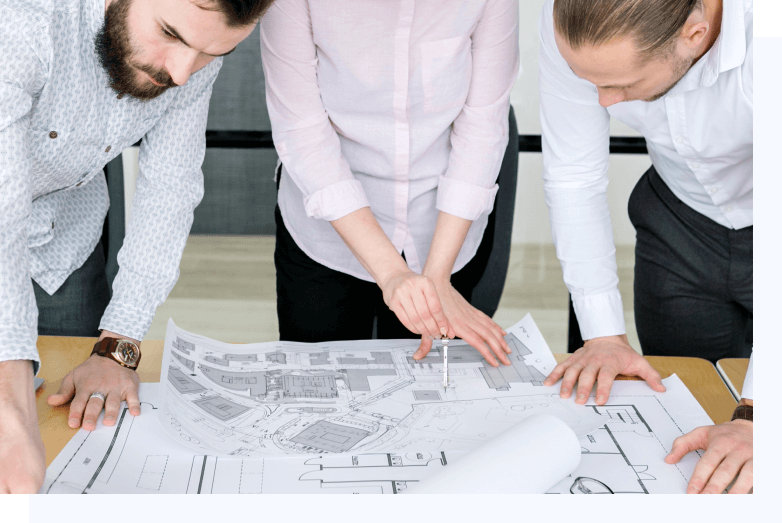
Technology is also changing how developers evaluate and plan land. Digital mapping, geographic information systems, 3D modeling, site analysis tools, and other technologies can help development teams understand a property’s characteristics before construction begins.
Developers can use digital tools to evaluate factors such as road connectivity, surrounding infrastructure, topography, land use, accessibility, and potential development constraints.
The broader real estate industry is also moving toward digital land records, improved registration systems, and greater adoption of property technology.
Better data can support more informed decision-making and help developers identify potential challenges earlier in the planning process.
11. Redevelopment and Smarter Use of Existing Land
Not all future residential growth will come from undeveloped land. Redevelopment is becoming another important part of the housing landscape, particularly in established urban areas where available land is limited.
Older buildings, underutilized properties, and outdated neighborhoods can sometimes be redesigned to provide modern housing and improved infrastructure.
Redevelopment can help cities accommodate additional residents without continuously expanding outward. It may also provide opportunities to introduce better public spaces, modern utilities, energy-efficient buildings, and improved transportation connections.
Current real estate outlooks identify redevelopment as an increasingly important trend in major Indian cities, supported by changing planning frameworks and development policies.
12. Designing Communities Around People
Perhaps the most important trend in residential land development is the shift toward people-centered planning.
A successful community is more than a collection of houses and roads. It needs to provide opportunities for recreation, social interaction, mobility, safety, convenience, and access to essential services.
Future residential communities are likely to focus more strongly on how people actually use spaces. Streets, parks, pathways, homes, retail areas, schools, and public spaces can be planned as connected elements rather than isolated components.
This people-first approach can help create neighborhoods that remain attractive and functional for many years.
The Future of Residential Land Development
The future of residential land development will be shaped by a combination of technology, sustainability, infrastructure, affordability, and changing lifestyle preferences. Developers who understand these factors can create communities that respond to both current demand and future needs.
The role of residential land developers is therefore becoming broader. Instead of simply preparing land for construction, developers are increasingly involved in creating complete environments where people can live, work, relax, and connect.
From walkable neighborhoods and mixed-use communities to smart infrastructure, green spaces, transit connections, and climate-resilient planning, tomorrow’s communities will likely place greater emphasis on quality of life.
Ultimately, successful residential land development is about creating long-term value—not only for property owners and investors, but also for the people who will call these communities home. As cities and populations continue to evolve, thoughtful land planning will play an important role in building communities that are sustainable, connected, adaptable, and prepared for the future.