Freight transportation in the United States depends on flexibility. Shippers, brokers, and carriers often face changing schedules, equipment shortages, seasonal demand spikes, and urgent delivery requirements. In these situations, power only trucking has become an increasingly practical solution.
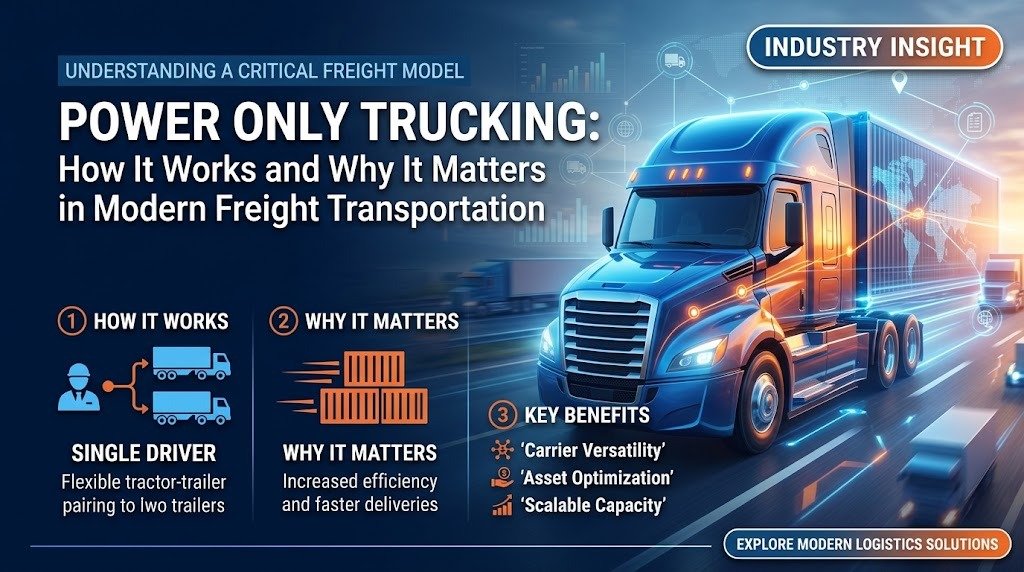
Instead of requiring a carrier to provide both the truck and trailer, this transportation model allows a carrier to supply only the tractor and qualified driver while using a trailer owned by the shipper, broker, or another party. This approach helps keep freight moving efficiently while making better use of available equipment.
Understanding how this service works can help businesses make informed logistics decisions and improve operational efficiency across their supply chains.
Understanding the Basics of Power Only Transportation
A traditional trucking arrangement typically involves a carrier providing both a tractor and trailer. With Power only trucking, the carrier supplies the tractor unit and driver, while the trailer is already available at the pickup location.
The trailer may be loaded or empty depending on the transportation requirement. The driver simply connects to the trailer and transports it to the designated destination.
This model is commonly used with:
- Dry van trailers
- Flatbed trailers
- Step deck trailers
- Refrigerated trailers
- Container chassis
- Specialized equipment trailers
Because the trailer remains with the customer or equipment owner, transportation can often be arranged more quickly when trailer availability is not a concern.
Why Businesses Use Power Only Trucking
One of the main advantages of power only trucking companies is their ability to provide flexibility during periods of high demand.
Many shippers own trailers but do not maintain their own fleet of tractors or drivers. Others may experience temporary shortages due to maintenance issues, staffing challenges, or unexpected freight volume increases.
Common situations where this transportation method is used include:
- Seasonal freight surges
- Port and rail container movements
- Trailer relocation projects
- Emergency freight transportation
- Warehouse overflow operations
- Dedicated shipping programs
For example, a distribution company may preload multiple trailers at its facility. Instead of waiting for trailers and tractors to arrive together, drivers can pick up loaded units as they become available, reducing loading delays and increasing efficiency.
Power Only Trucking in Supply Chain Operations
Power Only Trucking and Freight Flexibility
Modern supply chains rely heavily on adaptability. A delayed shipment, equipment shortage, or sudden increase in customer demand can disrupt transportation schedules.
This is where power only trucking offers operational advantages.
A retailer preparing for holiday inventory demand may need additional transportation capacity for only a few weeks. Rather than investing in additional equipment, the company can use power-only carriers to move preloaded trailers between distribution centers and stores.
Similarly, manufacturers often use power-only services when production schedules fluctuate. Trailers can be loaded and staged in advance, allowing transportation providers to pick them up when needed.
This separation between loading operations and transportation creates a more flexible workflow and helps reduce downtime.
Industries That Frequently Use Power Only Services
Several industries regularly depend on power-only transportation due to the nature of their operations.
Retail and Distribution
Large retailers often manage extensive trailer fleets. Distribution centers may load trailers around the clock, making it practical to use outside carriers for transportation.
Construction
Construction companies frequently move specialized equipment and materials using company-owned trailers. Hiring a power only truck service allows them to transport equipment without maintaining a large transportation fleet.
Agriculture
Agricultural operations often experience seasonal shipping peaks during harvest periods. Power-only transportation can provide additional capacity when demand rises.
Port and Intermodal Logistics
Container transportation represents one of the fastest-growing uses of power-only services. Containers arriving at ports often need immediate transportation to warehouses, rail yards, or distribution facilities.
Using carriers that provide tractors and drivers helps move freight efficiently while keeping container assets in circulation.
Event and Entertainment Logistics
Concert tours, sporting events, and trade shows frequently use dedicated trailers that travel across multiple locations. Power-only transportation allows organizers to move equipment while maintaining control of their trailer assets.
Operational Considerations Before Using Power-Only Transportation
Although the model offers flexibility, several factors should be evaluated before arranging a shipment.
Trailer Condition
The trailer must meet safety and compliance standards before transportation begins. Drivers are required to inspect equipment and identify any issues that could affect safe operation.
Scheduling Coordination
Because different parties may own the trailer and provide the transportation, communication becomes particularly important. Pickup times, trailer locations, and loading status must be accurately coordinated.
Insurance Requirements
Responsibilities for cargo, equipment, and liability coverage should be clearly defined before transportation begins. Different agreements may assign responsibilities differently depending on the shipment.
Equipment Compatibility
Not all trailers are compatible with every tractor configuration. Proper planning helps ensure smooth operations and avoids unnecessary delays.
Organizations that regularly use this transportation model often develop detailed procedures for equipment inspections, documentation, and scheduling to support efficient execution.
The Growing Role of Technology in Power-Only Freight
Technology has significantly improved the management of power-only freight operations.
Transportation management systems, electronic logging devices, GPS tracking, and real-time communication platforms allow carriers and shippers to coordinate more effectively than ever before.
Digital freight platforms have also expanded access to qualified carriers that specialize in power-only transportation. This has increased visibility into available capacity and simplified trailer movement across different regions of the United States.
Many logistics providers now use predictive analytics and freight tracking tools to improve trailer utilization and reduce empty miles. These improvements help create more efficient transportation networks while supporting better shipment visibility.
Industry providers such as EverMark Dispatchers and other logistics coordinators often work within these technology-driven environments to help connect freight opportunities with available transportation capacity while maintaining operational efficiency.
Conclusion
Power-only transportation has become an important component of modern freight logistics. By separating trailer ownership from tractor and driver services, businesses gain greater flexibility in managing freight movement across changing market conditions.
Whether supporting retail distribution, intermodal transportation, construction projects, or seasonal shipping demands, this model helps keep freight moving while making better use of available equipment. As supply chains continue to evolve, power only trucking companies are likely to remain a valuable resource for organizations seeking adaptable and efficient transportation solutions throughout the United States.