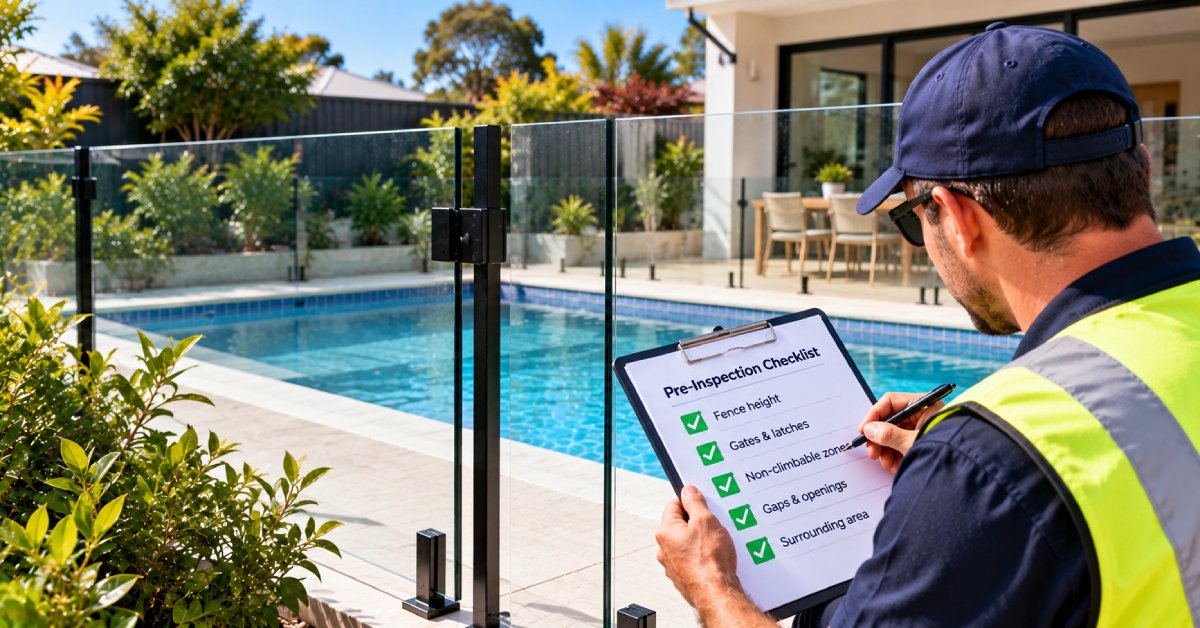
A pool fence may look secure while the gate creates the real compliance problem.
Gates are opened, closed, pushed, pulled, exposed to weather, and used far more often than most other parts of a pool barrier. Over time, hinges can loosen, posts can move, latches can wear, and the gate may stop closing as reliably as it once did.
For homeowners, landlords, and property managers in Canberra and surrounding areas, checking the gate before an inspection can help identify problems that may otherwise delay the compliance process.
The important point is that a gate does not only need to look secure. It needs to work consistently.
A Gate That Does Not Close by Itself Is a Problem
One of the first things worth checking is whether the pool gate closes automatically.
Open the gate and let it go without pushing it. It should return to the closed position without assistance.
If it stops halfway, remains partially open, or needs to be pushed shut, something in the gate system may require adjustment.
Common causes can include worn hinges, poor alignment, movement in the posts, or resistance between the gate and surrounding structure.
A gate that closes correctly only when released from one particular position may still need attention.
Property owners preparing for a pool compliance inspection Canberra should test the gate from several open positions before the inspection takes place.
The Latch Must Engage Properly
Closing is only one part of the gate’s job. The latch also needs to engage.
A gate that swings shut but fails to latch securely can still leave the pool area accessible.
Repeated use can gradually affect latch alignment. The latch may look normal but sit slightly too high or low to engage correctly.
Corrosion, loose screws, worn components, or movement in the gate frame can also affect operation.
Do not assume the gate is working simply because it makes contact with the latch. Test whether it actually locks into the closed position every time.
Sagging Gates Can Create Several Problems at Once
Pool gates can sag gradually. At first, the change may be difficult to notice.
Later, the bottom of the gate may begin rubbing against paving or the latch may stop lining up with its receiver.
A sagging gate can affect both closing and latching. It may also change the gaps around the gate.
These problems often develop slowly enough that regular users become accustomed to lifting or pulling the gate into place.
That habit can hide the fact that the gate is no longer operating automatically. If someone needs to lift the gate before it closes, the underlying issue should be investigated.
Paving and Ground Movement Can Affect Gate Operation
The gate itself is not always the source of the problem. Changes in the ground can affect how it operates.
Paving can shift, soil can move, and landscaping work can alter levels around the barrier.
A gate that once cleared the ground comfortably may begin scraping after paving settles or is replaced.
Even a small change can prevent the gate from closing fully. This is particularly relevant after renovations or landscaping.
If work has been completed around the pool area, test the gate again rather than assuming its original setup has remained unchanged.
Hinges Need to Work Smoothly
Hinges are essential to self-closing operation. If they become stiff, damaged, corroded, or loose, the gate may lose the force needed to return to the closed position.
Sometimes homeowners apply temporary fixes without addressing the real cause.
A hinge may be tightened, lubricated, or adjusted enough to improve movement temporarily. However, if the post or gate frame has moved, the problem may return.
The entire gate should be considered as a system. That includes the hinges, frame, post, latch, ground clearance, and surrounding barrier.
Do Not Prop the Gate Open
A pool gate should not be treated like an ordinary garden gate. Propping it open for convenience removes one of the main protective functions of the barrier.
This can happen during gardening, cleaning, entertaining, or when people are moving equipment through the pool area.
The problem is that temporary arrangements are easily forgotten.
A chair, brick, planter, or other object used to hold the gate open may remain there much longer than intended.
Anyone using or maintaining the property should understand that the pool gate should return to its normal closed and latched position after access.
Check for Objects That Interfere With Closing
Outdoor items can interfere with gate movement.
Furniture, pool toys, hoses, cleaning equipment, pot plants, and storage containers may be placed in the gate path.
Vegetation can also grow into the opening.
A branch that was not a problem a few months ago may eventually prevent the gate from closing properly.
Before an inspection, clear the gate area completely. Open and close it several times. Make sure nothing prevents free movement throughout the full swing of the gate.
Repairs Can Change the Gate Geometry
Replacing one gate component can sometimes affect another. A new hinge may change the gate position.
A replacement latch may sit at a slightly different height. New paving can alter clearance at the bottom.
Even replacing a fence post may change alignment. For this reason, repairs should not be judged only by whether the new component looks secure.
The complete gate should be tested afterward.
For ACT homeowners seeking a pool certificate of compliance ACT, checking the full gate operation after repairs can help reduce avoidable problems during the formal inspection process.
Weather Can Affect Gate Alignment
Outdoor barriers are exposed to changing conditions.
Strong winds can loosen components. Heavy rain can affect surrounding soil. Heat and cold can contribute to material movement over time.
Storm debris can also strike gates or fencing. After severe weather, inspect the gate before simply returning to normal use. Look for visible movement, loose fittings, new gaps, or changes in the way the gate closes.
A barrier does not need dramatic storm damage to become less effective. Small alignment changes may be enough to affect reliable operation.
Children’s Equipment Can Create Access Problems
The gate itself may work correctly while nearby objects introduce another concern.
Bicycles, scooters, toys, storage boxes, chairs, and play equipment should not be left where they can interfere with the barrier or create climbing opportunities.
This matters on both sides of the fence. A gate assessment is therefore not limited to hinges and latches.
The surrounding area also needs attention.
Keeping the gate zone clear makes its operation easier to assess and reduces the chance of movable objects affecting the barrier.
Rental Properties Need Regular Gate Checks
Rental properties can experience frequent changes in pool-area use. Tenants may move furniture.
Garden contractors may alter vegetation. Maintenance workers may temporarily adjust the gate.
A problem can therefore develop between formal inspections. Landlords and property managers can reduce this risk by including the pool gate in routine property checks.
Tenants should also know how to report a gate that no longer self-closes or latches reliably.
Waiting until the next compliance deadline may allow a simple adjustment to become a larger repair.
Shared and Strata Pools Need Clear Responsibility
Shared pool areas receive more frequent use than many private backyard pools. That means gates can experience greater wear.
Residents may also notice changes before the body corporate or strata manager does. A clear reporting process helps.
If the gate becomes difficult to close, the latch stops catching, or the hinges become loose, the issue should be reported quickly.
Shared responsibility should not mean unclear responsibility. Someone should always be responsible for making sure reported barrier faults are followed up.
Do a Simple Gate Check Before Booking
A basic pre-inspection check does not replace a professional assessment. However, it can reveal obvious problems.
Open the gate from several positions. Let it close on its own.
Confirm that the latch engages every time. Check for rubbing, scraping, loose hardware, or interference.
Look at the area around the gate for movable climbing objects. If anything appears unreliable, address it before assuming the barrier is ready.
A professional pool safety inspection Canberra can then assess the gate as part of the wider pool barrier and surrounding safety environment.
Do Not Focus Only on the Fence Panels
Pool owners often look at fence height, gaps, and overall condition while overlooking the gate. In practice, the gate is one of the most active parts of the barrier.
It moves every time someone enters or leaves. That repeated movement makes it especially vulnerable to wear and misalignment.
A strong fence cannot compensate for a gate that remains open or does not latch. That is why regular gate testing is one of the simplest maintenance habits a pool owner can develop.
A Reliable Gate Helps the Whole Barrier Work
Pool compliance depends on the barrier operating as a complete system. The gate is a critical part of that system.
Self-closing performance, secure latching, correct alignment, clear movement, and suitable surrounding conditions all need to work together. Small problems are easier to address when they are noticed early.
A gate that needs a slight adjustment today may become far more difficult to operate after months of continued movement or wear.
For homeowners and property managers preparing for an inspection, testing the gate before the appointment is a simple step that can help identify avoidable issues before they delay the compliance process.