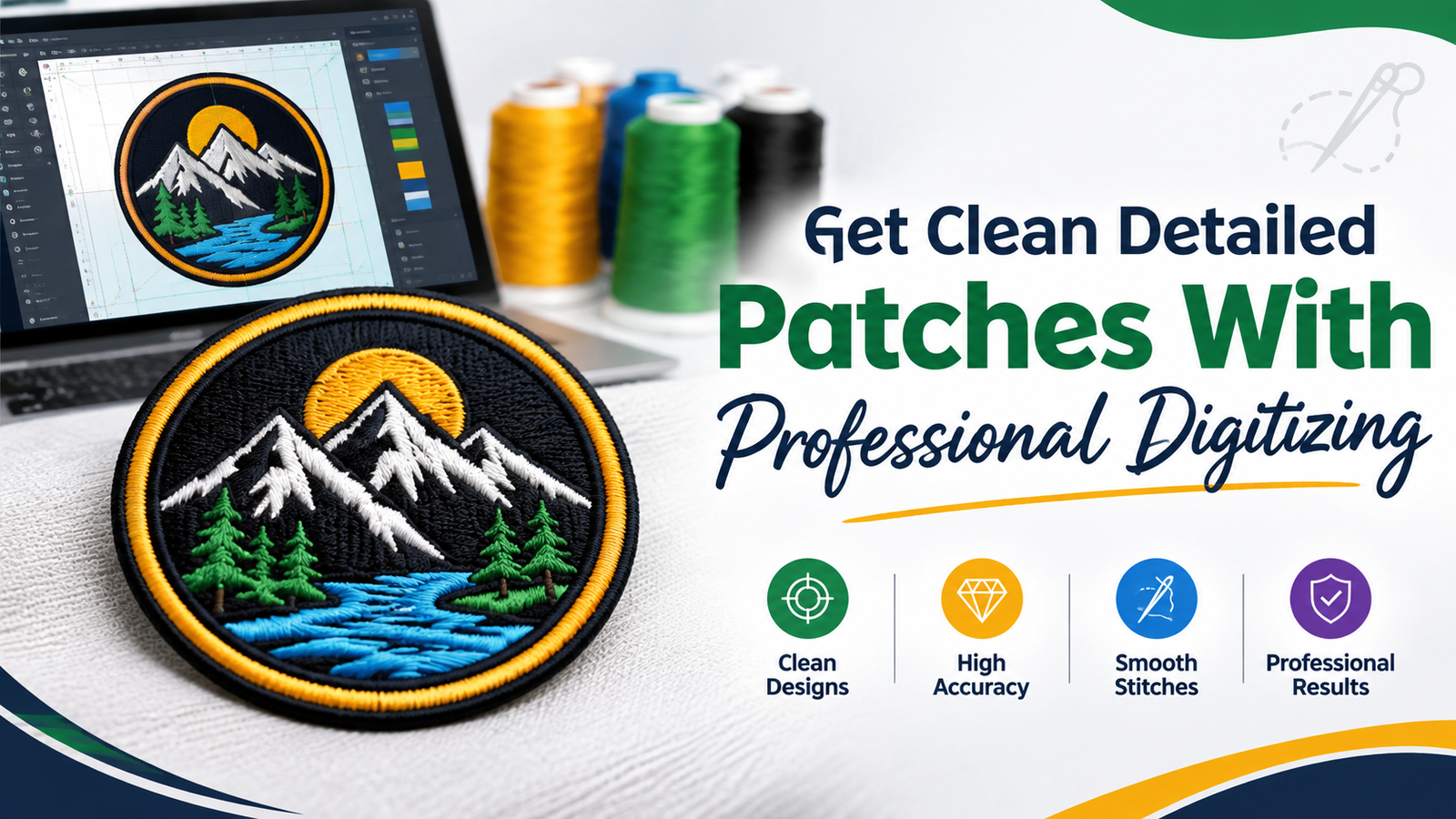
Professional embroidered patches need more than attractive artwork. They need an embroidery file that tells the machine exactly how to build every part of the design. At iDigitize, we use premium patch digitizing services to prepare artwork for embroidery with careful attention to stitch density, borders, underlay, stitch direction, sequencing, and design size. Our goal is to help turn your artwork into a clean, machine-ready embroidery file suited to the final patch.
What Are Patch Digitizing Services?
Patch digitizing services convert digital artwork into an embroidery file that an embroidery machine can read. Instead of treating the artwork like a simple image, we convert its shapes, lettering, outlines, and filled areas into carefully planned stitches.
Patch embroidery requires specific planning because the design will usually have a defined outer shape and border. The digitizing process therefore needs to consider the patch size, fabric, border style, backing, stitch density, and level of detail.
We plan the embroidery structure so that each design element has an appropriate stitch type and direction. This can help create cleaner outlines, better coverage, readable lettering, and a more balanced finished patch.
Why Professional Digitizing Matters for Patch Production
A patch may look simple on screen, but embroidery behaves differently from digital artwork. Thread can pull, fabric can shift, and dense areas can become difficult to stitch if the file is not planned correctly.
Our patch digitizing services focus on the technical details that influence the final embroidery, including:
- Stitch density for different areas
- Underlay for a stable embroidery foundation
- Stitch direction for consistent coverage
- Pull compensation where needed
- Border construction
- Stitch sequencing
- Design sizing
- Small lettering and fine details
- Machine-ready embroidery formats
Good digitizing helps transform artwork into practical embroidery instructions. The objective is not simply to reproduce every pixel of an image. Instead, we plan how the artwork should be represented with thread.
How We Digitize Artwork for Professional Patches
Our approach starts with understanding the artwork and the intended patch requirements. The final embroidery file needs to match the production purpose, so details such as size and patch shape matter.
1. We Review the Artwork
We first examine the artwork to understand its shapes, lettering, outlines, colors, and small details. If the design contains very fine elements, we consider how those elements can be represented with embroidery stitches.
The intended patch size is also important. A design that works well at a large size may need adjustments when reproduced as a smaller patch.
2. We Plan Stitch Types and Directions
Different design areas can require different stitch structures. We determine how filled sections, outlines, lettering, and other elements should be stitched.
Stitch direction also matters because it affects the appearance and texture of the embroidered surface. We plan directions according to the individual parts of the artwork rather than treating the entire design as one uniform area.
3. We Build the Border
A patch border gives the design its finished shape and helps define the outer edge. Border planning is therefore an important part of professional patch digitizing.
The appropriate border can depend on the patch shape and production method. Round, square, and custom-shaped patches may require different border approaches.
4. We Check the Embroidery File
Once the digitizing work is completed, we review the file to identify potential problems with stitch placement, density, sequencing, borders, and design details.
This quality-check stage helps ensure that the embroidery file is prepared for production rather than simply appearing correct as a digital preview.
What Types of Patches Can We Digitize?
Different patch styles can have different embroidery requirements. We work with a variety of patch applications and styles, including:
- Embroidered patches
- Chenille patches
- 3D puff patches
- Applique patches
- Merrowed border patches
- Bullion and metallic thread patches
- Woven patches
We can also work with different patch shapes and sizes. When you provide the intended application and production details, we can use that information while planning the embroidery file.
Why Patch Size and Detail Need Careful Planning
One of the most important considerations in patch production is the relationship between design detail and final size.
Small lettering, thin lines, and tightly packed elements may not translate into embroidery in exactly the same way they appear in artwork. If the design contains too many details for its intended size, the stitches can become crowded and individual elements may lose clarity.
For that reason, we recommend considering the final dimensions before digitizing begins. If the patch will be small, simplifying unnecessary details can make the finished embroidery easier to read.
Lettering deserves particular attention. Text needs enough space between characters and sufficient size for the stitches to reproduce the letter shapes clearly.
Stitch Density and Underlay in Patch Embroidery
Stitch density determines how closely stitches are placed within a particular area. Too much density can create excessive thread coverage, while insufficient density can leave areas looking weak or uneven.
Underlay provides a foundation beneath the visible stitches. It can help stabilize the fabric and support the top stitching.
We consider both factors when creating the embroidery structure. Density should not be treated as a single setting for an entire design because different shapes and materials can require different approaches.
Border and Backing Considerations
The patch border and backing should also be considered during production planning.
Common backing options include:
- Sew-on backing
- Iron-on backing
- Hook-and-loop backing
- Peel-and-stick backing
The right choice depends on how the finished patch will be applied and used. A patch intended to be permanently sewn onto a garment has different application needs from one designed to be removed and replaced.
The border also contributes to the final appearance. A clean, well-planned edge can make the patch look more finished and help separate the embroidered design from the surrounding material.
Which Embroidery File Formats Do We Provide?
The required embroidery format depends on the machine being used for production. We provide commonly used embroidery formats, including DST, PES, EMB, EXP, JEF, VP3, HUS, and XXX.
When ordering, we recommend telling us which embroidery machine or file format you need. Providing this information helps us prepare the appropriate output for your production setup.
If you are uncertain about the correct format, you can provide your machine information and discuss the requirement with us before the file is prepared.
How to Prepare Artwork for Digitizing
You do not need to redesign your artwork before contacting us, but providing clear information can make the digitizing process more straightforward.
We recommend providing:
- The clearest artwork available so we can accurately identify design elements.
- The final patch dimensions so the design can be planned for the intended size.
- The patch shape such as round, square, or custom.
- The desired backing type if already selected.
- The embroidery machine format you require.
- Any important production instructions related to lettering, borders, colors, or other design elements.
The more clearly the production requirements are defined, the easier it is to plan the embroidery file around the finished patch.
Common Problems With Poor Patch Digitizing
Poorly prepared embroidery files can create problems during production. Excessive stitch density may make certain areas unnecessarily heavy. Weak density can result in incomplete coverage. Poor sequencing can also affect how the design stitches.
Small text is another frequent challenge. If lettering is too small or tightly packed, it may lose clarity after embroidery.
We therefore pay attention to stitch structure, density, underlay, borders, sequencing, and design proportions when preparing patch files. Our premium patch digitizing services are designed around the practical requirements of turning artwork into embroidery.
When Should You Use Professional Patch Digitizing?
Professional digitizing can be useful when your artwork contains detailed logos, lettering, multiple shapes, custom borders, or other elements that require careful stitch planning.
It can also be helpful when you need a machine-ready file rather than simply an image of the patch design.
At iDigitize, we focus on preparing embroidery files that reflect the requirements of the intended patch. Providing us with the artwork, final dimensions, machine format, and production details gives us the information needed to plan the file appropriately.
Conclusion
Professional patch production begins with an embroidery file that has been planned for the final application. At iDigitize, we focus on the details that matter during embroidery, including stitch density, underlay, stitch direction, sequencing, borders, sizing, and file format.
The right patch digitizing services can help your artwork translate more effectively from a digital design into a finished embroidered patch. If you have artwork ready for production, provide the design and your patch requirements so we can prepare an embroidery file suited to your project.
FAQs About Patch Digitizing Services
What do patch digitizing services include?
Patch digitizing services convert artwork into an embroidery machine file while planning stitch types, density, direction, sequencing, underlay, borders, and other production details. The process prepares the artwork for embroidery rather than simply converting it into a picture-based file.
Can you digitize detailed patch designs?
Yes. We can work with detailed artwork, but the final patch size must be considered. Very small lettering, thin lines, and crowded details may need adjustments so important elements can be reproduced more clearly with embroidery.
What embroidery formats are available?
We provide several commonly used embroidery formats, including DST, PES, EMB, EXP, JEF, VP3, HUS, and XXX. We recommend providing your embroidery machine information or required format when submitting your artwork.
What information should I provide for patch digitizing?
We recommend providing the artwork, final patch dimensions, patch shape, desired backing, required embroidery format, and any special production instructions. These details help us plan the embroidery file around your specific requirements.
Can patch digitizing include different border styles?
Yes. Border planning is part of the digitizing process, and the appropriate approach can depend on the patch shape and finishing method. We consider the design outline and intended patch construction when planning the border.