
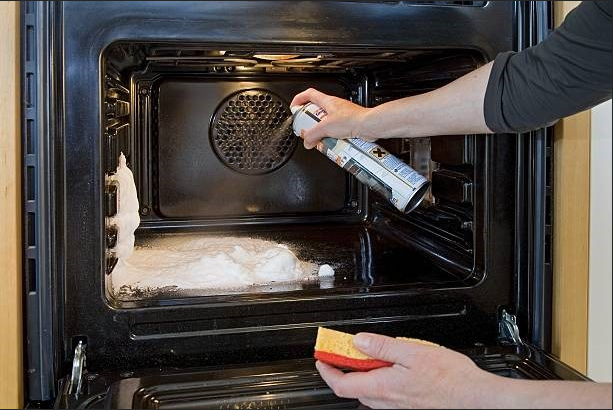
According to Statista, over 70% of U.S. households cook at home multiple times a week, making ovens among the most frequently used kitchen appliances. Roasting, reheating, broiling, and baking throughout the week release grease aerosols, sugary drips, crumbs, and fine food particles that settle onto interior surfaces.
Oven cleaning research shows that this buildup does not remain passive. It interferes with heat distribution, produces smoke when reheated, and leads to uneven baking that becomes noticeable over time. What begins as a thin, invisible layer gradually develops into performance issues that affect both cooking results and indoor air quality.
3 Causes of Oven Smoke Odor and Uneven Baking According to Oven Cleaning Research
1. Grease Buildup
Grease and food spills do not disappear after cooking. They settle onto oven surfaces and harden with repeated heat. From real home use, this buildup often blends into the interior and goes unnoticed at first. The issue appears later when the oven heats again, and that same residue starts to burn, releasing smoke and odor into your kitchen.
This is a common reason ovens begin smoking unexpectedly. GE Appliances guidance confirms that leftover grease and food debris are common causes of smoke and odors during oven use. When these residues are exposed to heat, they can burn and produce noticeable smells. In many cases, the odor comes from previously spilled food or grease being reheated rather than from the food currently being cooked. So, if not regular, move-out cleaning is a must, as it helps prevent this buildup and reduces the risk of recurring smoke or lingering odors.
2. Blocked Airflow
Even baking depends on steady airflow inside the oven. Heat must circulate evenly so food cooks properly from all sides. In everyday use, grease and crumbs can collect near vents or along interior surfaces. Over time, this buildup interferes with heat movement without making the problem obvious right away.
The result shows up during cooking. One side of a dish browns faster, while the other remains undercooked. Many appliance manufacturers explain that airflow disruption can lead to uneven baking results. When airflow is blocked, heat cannot spread evenly. Oven cleaning research shows that removing blockages helps restore circulation and improve consistency, without requiring adjustments to settings or cooking methods.
3. Repeated Heat Cycles Harden Residues
Oven cleaning research shows that repeated heat cycles cause microscopic grease aerosols, sugar vapors, and fine food particles to undergo thermal breakdown and polymerization. Over time, these substances form a hardened, carbonized layer that bonds to oven surfaces, including enamel walls, racks, and the oven floor. This buildup develops gradually and is often invisible in its early stages, which is why it is commonly overlooked during regular use.
As the residue layer thickens, it can absorb and re-radiate heat unevenly, leading to localized hot spots and inconsistent cooking results. When reheated, these deposits may also release volatile compounds, producing burnt odors. This gradual process explains why smoke and uneven baking often appear suddenly after weeks or months of otherwise normal oven use.
3 Ways How Oven Cleaning Fixes the Smoke Odor and Uneven Baking
1. Scrubbing Carbon Deposits Stops Re-Burning During Heating
The goal of every oven cleaning is to remove hardened carbon deposits from the base, walls, and racks. These deposits form when grease and food residue are repeatedly exposed to high heat. During cleaning, scrubbing, or the use of a cleaning solution, this layer is broken down and lifted off the metal surface.
Once these deposits are removed, they can no longer react to heat. This prevents the repeated burning cycle that causes smoke and odor. Instead of reheating old residue, the oven heats clean surfaces. According to GE Appliances, leftover grease and food debris are among the most common causes of oven smoke, which is why removing them directly solves the problem.
2. Clearing Vent Openings Allows Heat to Circulate Evenly Again
Just like office cleaning often includes clearing dust and buildup around air vents, and move-in cleaning focuses on hidden edges, corners, and interior spaces before use, oven cleaning also depends on clearing overlooked areas. Inside an oven, vents, corners, racks, and interior edges help control how heat moves. When grease, crumbs, or debris collect around these spaces, heat flow becomes uneven, even when the oven settings are correct.
Cleaning these areas restores normal heat movement. Once vents and pathways are clear, hot air can circulate evenly throughout the oven cavity. This stabilizes internal temperature and removes hot and cold zones. As a result, food cooks more evenly without needing adjustments, directly addressing the uneven baking many homeowners notice over time.
3. Wiping Residue Film Improves Heat Transfer Across Surfaces
Beyond visible buildup, ovens often develop a thin film of residue on interior surfaces. According to thermal engineering studies and oven cleaning research, this buildup can affect how heat behaves within enclosed heating systems. This layer may not look serious, but it affects how heat transfers inside the oven. During cleaning, wiping down surfaces removes this film and restores direct contact between the heat and the oven’s interior.
With clean surfaces, heat reflects and distributes more efficiently. This improves overall temperature balance and reduces cooking inconsistencies. It also makes it easier to observe how the oven is performing. Once the film is removed, both heat behavior and visibility improve, helping prevent recurring performance issues linked to hidden buildup.
Conclusion
Oven smoke odor and uneven baking usually come from residue that has been left inside the oven for too long. Grease, crumbs, food spills, and hardened carbon deposits can burn during heating, block airflow, and interfere with heat transfer. That is why a dirty oven may smell smoky during preheating or bake food unevenly, even when the temperature setting is correct.
Oven cleaning fixes these problems by removing the buildup that keeps re-burning, clearing airflow paths, and restoring cleaner interior surfaces. According to oven cleaning research, proper and regular cleaning helps distribute heat more evenly, produces fewer odors, and gives homeowners more predictable cooking results.
FAQs
Why does my oven smoke even when it looks clean?
A thin layer of grease or leftover cleaner can still burn during heating. According to GE, even invisible residue can cause smoke and odor.
Can dirty ovens really affect baking results?
Yes. Buildup can block airflow and create uneven heat zones, which leads to inconsistent cooking results.
Should I clean my oven or call professionals?
If smoke or uneven baking continues after cleaning, it may be a mechanical issue. Otherwise, regular deep cleaning—especially during oven cleaning routines—usually fixes the problem.