
Introduction
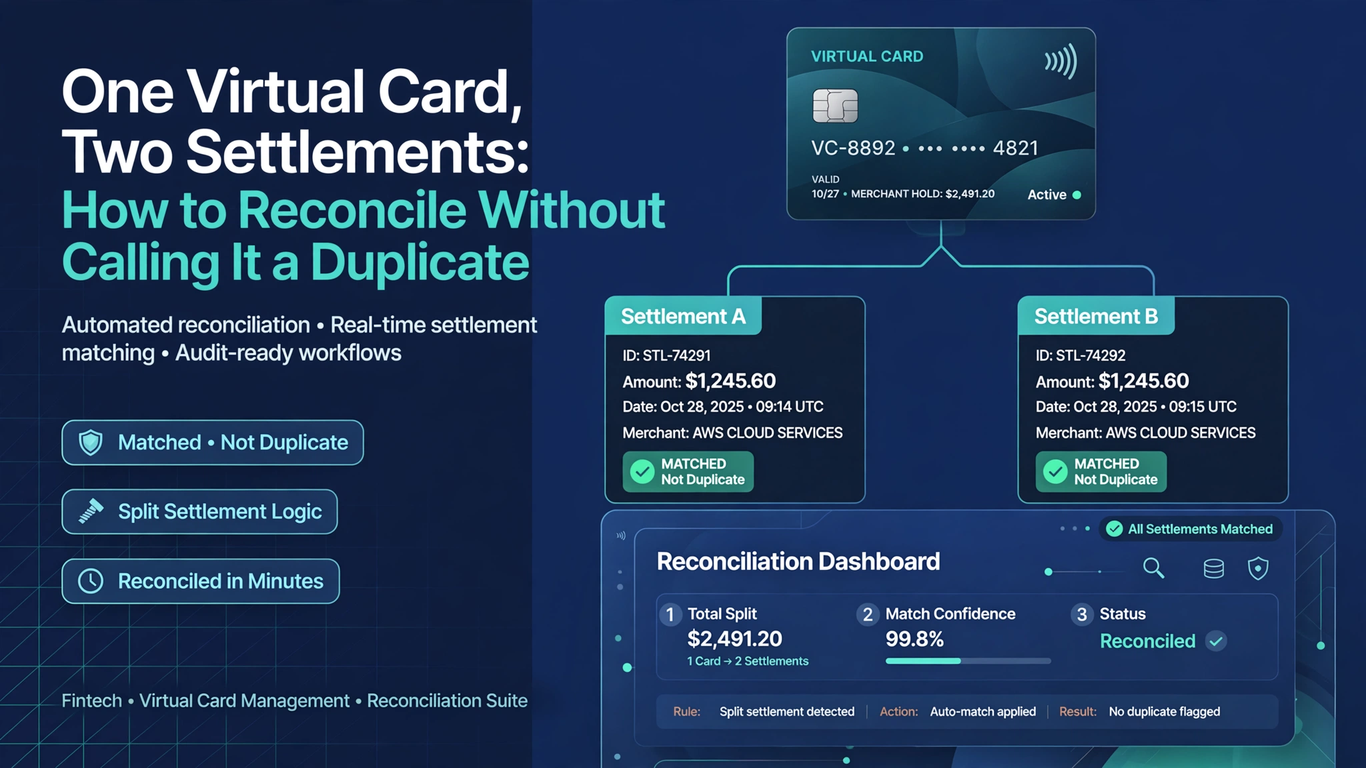
A supplier receives a virtual card for a $12,000 invoice and captures $7,000 at shipment, then $5,000 after final acceptance. At Soft Online Training, we use this case to show how one payment can legitimately settle across two billing cycles under the same reference. The first charge lands before one statement closes, and the second arrives in the next.
A careless review would flag the second line as a duplicate, but a careful one checks the evidence first. That is why this scenario matters in Oracle Fusion Financials Training in Hyderabad: it teaches you to protect the payment without blocking legitimate business.
Start With the Payment, Not the Statement
Before opening any statement line, pin down the payment itself. Pull the approved invoice and its virtual card payment, noting supplier, payment reference, authorized amount, currency, issue date, and expected fulfillment.
Confirm the payment sits under your organization’s integrated virtual card arrangement. The multiple-settlement feature is built around the J.P. Morgan integration, so don’t assume other providers or manual card programs behave the same way.
That payment record is your control total, yet each settlement still deserves its own check.
Then ask whether split capture is expected, and keep the purchase order and acceptance evidence handy. A line can fit the pattern and still be wrong on amount, currency, merchant, or timing.
Keep Every Statement Line as Its Own Record
When card statement lines arrive, the application matches each to the payment reference. Lines tied to the same virtual card payment are stored separately, not flagged as duplicates, for the payment manager to review.
Separate records preserve each settlement’s dates and amounts. Merge them and a real repeated charge could hide; reject repeated references and valid splits break.
Review at two levels: the group view shows whether the payment is fully represented, the line view whether each piece is genuine and recorded once, with a running total against the authorized amount.
In Oracle Fusion Financials Training in Hyderabad, this habit separates a reconciliation that looks right from one that survives audit.
Telling a Split Settlement From a Duplicate
A shared reference proves nothing by itself. Compare the full line evidence with the payment’s settlement history.
Two lines of different amounts that add up to the authorized payment may well be expected. But the arithmetic isn’t proof. Check shipment or acceptance milestones, and talk to the supplier if you need to. Going the other way, two lines with the same amount and date could be valid partial captures, or one could be a replay. Write down why the lines represent separate economic events instead of leaning on how similar they look or on an automatic match.
The best way to practice this is a test pack with deliberate variants:
- two valid partial settlements that total the payment
- a replay of the first statement line
- a third line that pushes the total above the payment amount
- a settlement carrying an unrelated reference
Predict the grouping and status before you import anything. Then confirm that the valid lines stay separate, that the payment only becomes fully reconciled at the right total, and that suspicious or unmatched lines go down your exception route instead of being forced into the valid group.
Carry the Open Balance Across Billing Cycles
After the first $7,000 settlement, the payment is only partly represented on card statements. Record the $5,000 remainder and keep someone responsible for it into the next cycle. Don’t close the investigation just because the first line matched its reference, and never post a manual balancing entry to make the current statement look complete.
The expected second settlement needs an age, an owner, and an escalation point. If it never arrives, treasury or payables should follow up with the bank and supplier through controlled channels.
For this you need a stable carryforward report showing the original payment amount, cumulative settlements, remaining amount, earliest and latest settlement dates, and current review status, all without overwriting the underlying records. Tie the opening carryforward to the prior cycle’s unresolved items, add the current lines, and explain every closure. That way old partial payments don’t vanish the moment attention moves to a new statement. An expected split justifies monitoring, but it never justifies leaving an item with no owner.
Close Only at the Authorized Amount
Once the statement lines tied to the virtual card total the payment amount, the payment is marked fully reconciled for statement purposes. Don’t accept that status on faith. Verify the total yourself and confirm every line belongs to the right payment.
Here, $7,000 plus $5,000 reaches the $12,000 control total. But a combination that hits $12,000 by sneaking in one unrelated line would be arithmetically neat and substantively wrong. Status should follow a valid population, never prove that the population was valid.
At closeout, link the supplier invoice, the virtual card payment, every statement line, and the fulfillment evidence. Confirm each line appears once, the cumulative amount equals the payment, no unexplained remainder is left, and nothing was waved away as a presumed duplicate. Keep the reviewer’s name, review date, exception decisions, and any communications your policy requires, while limiting stored card information to what the secured process allows.
Let Exceptions Sharpen Your Monitoring
Track counts and values separately for single-settlement payments, partially settled multi-settlement payments, fully reconciled multi-settlement payments, over-settlement exceptions, unmatched lines, and aged carryforwards. Each calls for a different action, so don’t fold them into a single reconciliation percentage.
If a supplier regularly delays final capture, change the monitoring ownership or the commercial conversation instead of marking incomplete payments as complete. Trends can improve your control design, but they never decide whether one particular line is valid.
Final Thoughts
Multiple settlements need one payment-level control total and several line-level reviews. Establish the authorized virtual card payment, keep each statement line separate, group them by reference, and use full evidence to tell valid partial captures from duplicates. Carry unresolved balances across billing cycles with a named owner, and close only when valid related lines equal the payment amount.
A well-built exercise in Oracle Fusion Financials Training in Hyderabad should show both sides of this control: a repeated reference can be a legitimate part of a settlement, but matching arithmetic never removes the need to check every line and keep its history.