
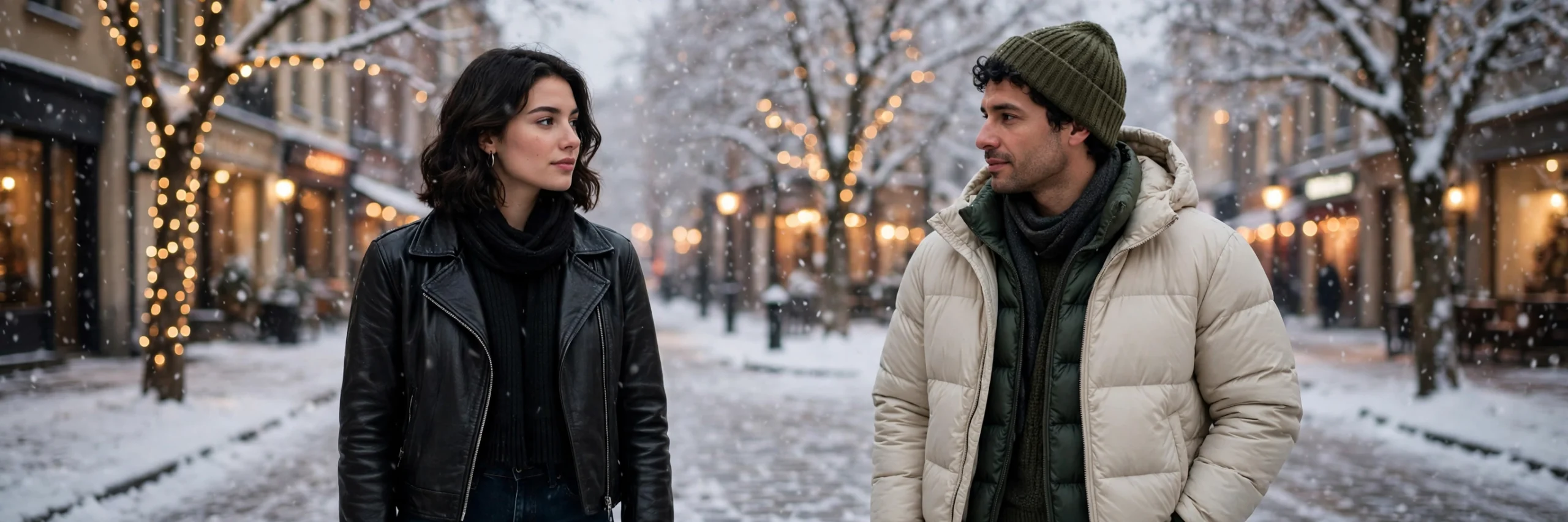
Every November the same argument starts. One friend swears by a puffer because it feels like wearing a sleeping bag. Another says a leather jacket looks better, lasts longer and still keeps the cold out. Both have a point, and that’s exactly why this choice is hard.
So let’s sort it out properly. We’ll look at warmth, wind, rain, weight, style, durability and price, and then you can decide based on how your winter really looks, not on what a trend page tells you.
The Short Answer First
If your winter is brutally cold and mostly dry, a puffer wins on pure warmth. If your winter is cold, windy and you want one jacket that works at the office, on dates and on weekend errands, leather is the smarter pick. Plenty of people end up owning both, and honestly, that isn’t a bad plan.
But the details matter, so keep reading.
How Each Jacket Keeps You Warm
The two jackets work in completely different ways, and that’s the root of most confusion.
A puffer traps warm air inside small pockets of insulation, usually down feathers or a synthetic fill. The more loft the fill has, the more air it holds, and the warmer you feel.
Leather doesn’t trap air the same way. It’s dense, so it blocks wind and holds your body heat in. Most of the warmth comes from the lining and from what you wear underneath.
Here are some numbers that help put this in perspective:
- Down fill power usually runs from about 550 to 900. Anything around 700 or above is generally seen as high quality.
- Fill power measures loft, not weight. A higher number means more warmth for less bulk.
- Synthetic fills are built to copy down, and they keep some insulating ability even when damp.
- A plain leather shell with a thin lining is typically comfortable in cool to cold weather, roughly 40°F to 50°F on its own.
- Add a wool or fleece layer and a quilted or shearling lining, and a leather jacket can comfortably handle temperatures near freezing.
- A well filled puffer is commonly rated for temperatures well below freezing, which is why it’s the go to for deep winter.
Wind Is the Real Enemy
Here’s something people forget. Cold air isn’t the only problem. Moving air strips heat off your body fast, and that’s what makes a 30°F day feel like 20°F.
Leather is naturally excellent here. It’s tightly woven at the fiber level, so wind struggles to get through. A lot of puffers use thin nylon shells, and cheaper ones let cold gusts sneak in through seams and stitching.
So on a windy commute, a leather jacket can feel warmer than its thickness suggests. That surprises people the first time they try it.
A few quick points on wind:
- Leather blocks wind almost completely when the zipper and collar are closed.
- Quilted puffer baffles can leave tiny cold spots where the stitching compresses the fill.
- Taller collars, storm flaps and adjustable cuffs matter more than most buyers expect.
Rain, Snow and Wet Weather
This is where puffers usually score points. Most are coated to shed light snow and drizzle, and synthetic versions handle moisture better than down does.
Leather can handle a little rain, but it’s not a fan of soaking. Water can stain it or leave it stiff if it dries badly. That doesn’t mean you can’t wear leather in winter. It means you need a little common sense.
Some practical numbers worth knowing:
- Wet down loses much of its loft and insulating power until it dries fully.
- A water repellent spray on leather, reapplied once or twice a season, adds a useful layer of protection.
- If a leather jacket does get wet, it should dry naturally at room temperature, away from radiators and direct heat.
Weight, Comfort and Movement
Puffers are light for the warmth they give. You can crush one into a bag, and that’s genuinely handy for travel.
Leather has some weight to it, and it takes a few wears to soften up. After that, it moves with you in a way a puffer never will. It shapes itself to your shoulders and elbows, and that fit is hard to fake.
On the flip side, a puffer can feel bulky when you’re sitting in a car, a train or a cafe. It adds volume across the chest and arms, and some people hate that.
Style and Where You Can Wear Them
Style isn’t everything, but it’s not nothing either. You’ll reach for the jacket you like looking at.
A leather jacket has a sharper silhouette. It works with jeans, chinos, a knit sweater, even a shirt and tie. A moto or bomber cut feels casual, while a clean racer style looks polished enough for dinner.
Puffers lean sporty and relaxed. They’re great for hiking, school runs, long walks and winter travel. Wearing one to a formal event can feel a bit off.
The usual breakdown looks like this:
- Leather: smart casual, evenings, city life, office days, travel.
- Puffer: outdoor activity, extreme cold, casual daytime wear.
- Both: weekend errands, commuting, casual dinners.
Durability and Cost Over Time
Price tags can mislead. A cheaper jacket that you replace every two winters costs more in the end than a better one that sticks around.
A few useful figures for this:
- A well made genuine leather jacket can often last 10 to 20 years, sometimes longer, with basic care.
- Most puffers stay in good shape for around 3 to 7 winters before the fill flattens or the shell wears down.
- Leather develops a natural patina over time. Puffers just age, with fraying cuffs, thinning fabric and clumped fill.
- Cost per wear usually favors leather if you wear it often across several seasons.
That said, a puffer is easier to wash. Leather needs conditioning, careful storage and the occasional visit to a specialist for deep cleaning. Neither is hard, but they’re different habits.
Layering Tips for Both
No matter which jacket you pick, how you layer matters a lot.
For a puffer, keep the base layer thin and breathable. Too many thick layers underneath can crush the insulation and make it less effective.
For leather, build up under it. A merino sweater, a fleece vest or a thermal base layer turns a stylish jacket into a proper cold weather piece. Scarves and gloves finish the job.
Picking a Jacket for the Holidays
December is when many of us shop for gifts, and a jacket is a safe bet if you get the size right. Seasonal looks like red plaid, shearling collars and classic dark leather have a festive feel without being costume like. If you want something with a holiday mood, Christmas jackets in cinematic or seasonal styles make great gifts for movie fans and anyone who enjoys dressing up for the season.
Gift buying tips worth keeping in mind:
- Check the chest and shoulder measurements instead of guessing a size.
- Look for a flexible return or exchange policy.
- Choose a color the person already wears often.
What About Budget?
Winter gets expensive fast. Between boots, gloves, sweaters and heating bills, a jacket can feel like one more hit.
The good news is that you don’t have to pay full price. Watching end of season sales, pre winter promotions and holiday weekends can save a lot. If you’re hunting for discounted winter jackets, compare materials, lining, stitching and return terms before you buy, not just the sticker price.
Simple checks for any deal:
- Look for full grain or top grain leather if you’re buying leather.
- For puffers, check the fill type and fill power, not only the marketing words.
- Make sure zippers feel sturdy and seams are even.
- Read the care instructions before you buy, not after.
So, Which One Should You Choose?
Still stuck? Try this.
Go for a puffer if:
- You live where temperatures drop far below freezing for weeks.
- You spend a lot of time outside, standing still or walking long distances.
- You want something light, packable and easy to wash.
Go for leather if:
- Your winter is cold and windy but not extreme.
- You want one jacket that looks good in many settings.
- You care about long term value and a look that improves with age.
Consider both if:
- You deal with a mix of freezing mornings and mild afternoons.
- You want a work or going out jacket and a separate outdoor one.
Quick Scorecard
Think of this as a snapshot, scored out of 5 for an average winter.
- Warmth in extreme cold: Puffer 5, Leather 3
- Wind protection: Puffer 3, Leather 5
- Rain and snow handling: Puffer 4, Leather 2
- Style range: Puffer 3, Leather 5
- Lifespan: Puffer 3, Leather 5
- Easy care: Puffer 5, Leather 3
- Packability: Puffer 5, Leather 2
These scores are a guide, not a rule. A heavily lined leather coat will beat a thin puffer on warmth, and a premium puffer will beat a cheap leather one on almost everything.
FAQs
Is a leather jacket warm enough for winter?
Yes, in most cold climates, as long as you layer smartly. Leather blocks wind very well. Add a sweater or a lined jacket and it handles temperatures around freezing fine. For deep cold, a puffer or shearling lined coat is a better call.
Which is warmer, a leather jacket or a puffer jacket?
A puffer is generally warmer for its weight because of its insulation. Leather feels warmer in windy conditions because it stops gusts so effectively.
Can I wear a leather jacket in the snow?
Light snow is okay if you treat the jacket with a protector first and let it dry naturally afterward. Heavy, wet snow isn’t ideal.
Do puffer jackets last longer than leather jackets?
Usually not. Good leather tends to outlast most puffers by a wide margin, though it needs more care.
What is the best jacket for extreme cold?
A high fill power down puffer or a heavily insulated parka is the safest choice for very low temperatures.
How should I layer under a leather jacket in winter?
Start with a thermal or cotton base, add a merino or fleece mid layer, and keep the fit comfortable, not tight, so air can still circulate.
Is it worth buying a winter jacket on sale?
Yes, if the materials and construction are solid. Sales are a smart way to get quality for less, but check the return policy first.
Final Thoughts
There’s no single winner here, and anyone who tells you otherwise is probably selling something. A puffer is the practical champion of deep cold. Leather is the stylish, wind blocking, long lasting all rounder.
Think about your climate, your daily routine and how much you’ll wear the jacket. Answer those three honestly and the choice gets easy. Either way, a good jacket bought with a clear head will keep you comfortable, and it’ll still look right when the next winter rolls around.