Organic farming is defined as an agricultural system that uses ecologically based pest controls and biological fertilizers derived largely from animal and plant wastes and nitrogen-fixing cover crops. It is a holistic production management system that promotes and enhances agro-ecosystem health, including biodiversity, biological cycles, and soil biological activity. In the context of the Latin America organic farming market, this practice is becoming a cornerstone of sustainable development, driven by a regional shift toward environmental stewardship and the production of high-quality, chemical-free food and medicinal resources.
What is the Current Size and Growth Forecast for the Latin America Organic Farming Market?
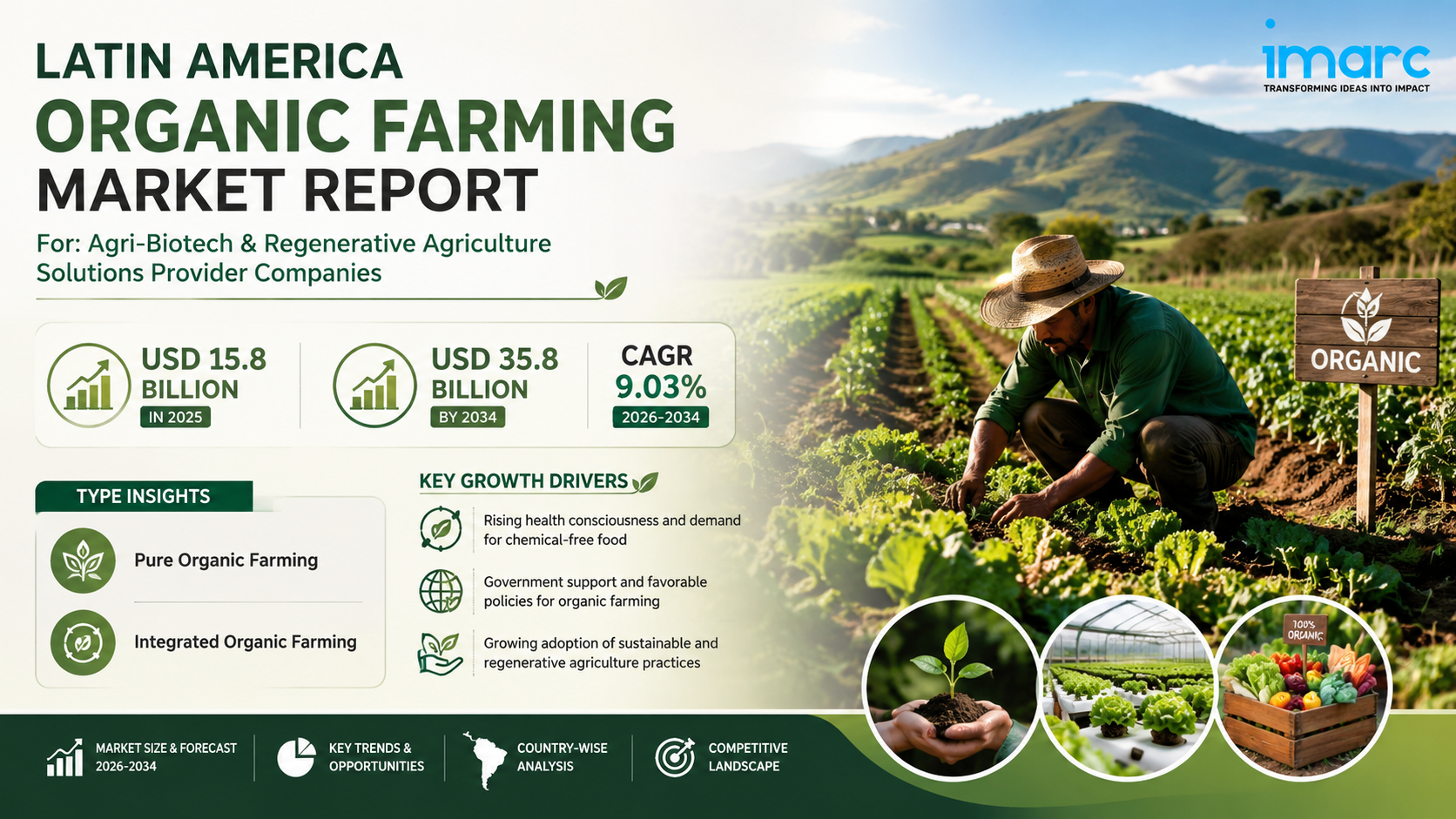
The Latin America organic farming market is currently experiencing a period of robust financial expansion. In 2025, the market reached a significant valuation of USD 15.8 Billion. Industry experts at IMARC Group project that this sector will continue its upward trajectory, reaching an estimated USD 35.8 Billion by 2034.
This growth represents a Compound Annual Growth Rate (CAGR) of 9.03% during the forecast period of 2026-2034. This surge is primarily fueled by a growing middle class with higher disposable income and a collective shift in consumer consciousness regarding the long-term environmental consequences of conventional agricultural practices.
How is the Rising Demand for Herbal Supplements Impacting Organic Herb Cultivation?
For manufacturers and consumers of natural health products, the Latin America organic farming market is a vital source of raw materials. The regional herbal supplements market reached USD 3.1 Billion in 2023, creating a massive “pull effect” for organically grown medicinal plants.
- Medicinal Variety: There is an increasing need for high-quality, toxin-free plants such as aloe vera, echinacea, chamomile, ginseng, turmeric, and valerian root.
- Quality Assurance: Supplement brands prioritize organic raw materials to ensure products are free from synthetic pesticides and GMOs, which motivates farmers to switch from conventional to organic methods.
- Export Opportunities: Latin America is a major agricultural exporter. To meet the strict organic standards of North American and European markets, local farmers are adopting organic practices to secure their place in the global herbal supply chain.
Why are Health-Conscious Consumers Choosing Organic Products Over Conventional Options?
The primary audience driving market demand consists of health-conscious individuals who view organic food as a safer, more nutritious alternative. This demographic is increasingly wary of the synthetic chemicals used in traditional farming.
- Safety and Purity: Consumers are actively seeking foods free of genetically modified organisms (GMOs) and synthetic pesticides.
- Sustainability Concerns: There is a rising awareness of how conventional farming leads to soil degradation, water contamination, and biodiversity loss. Organic farming is seen as a restorative solution that improves soil health and protects local ecosystems.
- Diversifying Palates: The demand has moved beyond simple fruits and vegetables. Consumers are now looking for organic options in dairy, grains, meat, and processed items, encouraging a wider variety of farmers to transition to organic sectors.
What are the Primary Methods Used in Latin American Organic Farming to Ensure Soil Health?
For agricultural companies and independent farmers, the “how” of organic farming is just as important as the “what.” The Latin America organic farming market utilizes several traditional and innovative methods to maintain productivity without chemicals:
- Crop Rotation and Polyculture: These methods prevent soil exhaustion and break pest cycles naturally by varying the types of crops grown in a specific area.
- Mulching and Soil Management: Using organic covers helps retain moisture, suppress weeds, and feed the soil microbiome.
- Composting: This circular approach turns agricultural waste into nutrient-rich fertilizer, reducing the need for external inputs.
- Weed and Pest Management: Instead of synthetic sprays, farmers use biological controls and mechanical weeding to protect their yields.
Sample Request For Your Business
How are Regenerative Agriculture Programs Expanding Organic Farming in Brazil?
Brazil stands out as a dominant force in the regional landscape. In fact, the Brazil organic food market is expected to reach USD 13.8 Billion by 2032. This growth is supported by significant corporate initiatives and regulatory advancements.
- Corporate Expansion: In November 2023, ADM announced an expansion of its regenerative agriculture efforts in Brazil. This program focuses on soil health, biodiversity protection, and increasing farm resilience, directly supporting the organic movement.
- Biological Product Registration: Companies like Staphyt are actively working on the registration of biological products – such as biopesticides and biofertilizers – to provide farmers with the tools needed to scale organic operations.
- Regional Hubs: While Brazil leads the way, countries like Mexico, Argentina, Colombia, Chile, and Peru are also seeing rapid growth as they align their agricultural sectors with global organic trends.
Who are the Main End Users and Stakeholders in the Latin American Organic Ecosystem?
The market is supported by a diverse group of stakeholders, each playing a specific role in the value chain:
- Organic Farms: These are the primary producers who implement sustainable methods on the ground, ranging from small family-owned plots to large-scale organic enterprises.
- Agriculture Companies: Large entities that manage supply chains and provide the infrastructure for exporting organic goods to international markets.
- Health and Wellness Brands: Companies that utilize organic crops for food, beverages, and herbal supplements.
- Regulatory Bodies: Organizations that ensure organic certifications are met, maintaining the integrity of the “organic” label for domestic and international consumers.
Conclusion:
The Latin America organic farming market is more than just a niche sector; it is a critical component of the region’s economic and environmental future. With a projected value of USD 35.8 Billion by 2034, the industry is being propelled by a powerful combination of health-conscious consumer demand and a global need for sustainable herbal ingredients. As countries like Brazil and Mexico lead the charge in regenerative practices, Latin America is securing its position as a global leader in the production of pure, responsible, and high-quality organic goods.