
Bringing a medical product from an idea to a functional device involves several stages of design, testing, and refinement. Early development often determines whether a product moves smoothly toward regulatory approval and market readiness or faces costly delays.
At this stage, selecting the right manufacturing process plays a critical role. Different methods support different objectives, from validating a design concept to producing functional parts for clinical evaluation. As healthcare technology continues to evolve, medical device prototyping remains an essential step in transforming innovative ideas into reliable products.
Understanding available manufacturing methods helps product developers make informed decisions, reduce risk, and improve overall development efficiency.
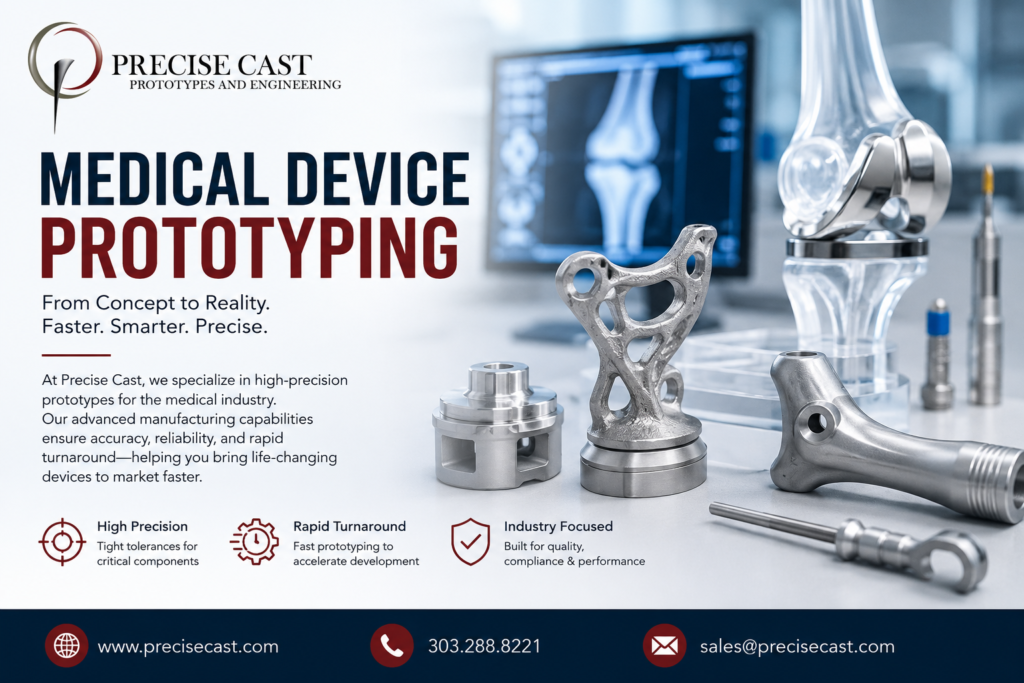
Why Manufacturing Choices Matter in Early Development?
Every medical product begins with a concept. Before production begins, engineers need physical models to evaluate form, fit, functionality, and performance. Manufacturing methods influence not only product quality but also development timelines and budgets.
Early prototypes often undergo multiple design revisions. A manufacturing approach that supports flexibility and rapid iteration helps teams identify issues before they become expensive problems.
At the same time, developers need manufacturing processes that produce accurate parts capable of representing final production components. This requirement becomes particularly important when conducting functional testing or gathering feedback from stakeholders.
Many organizations rely on prototype machining services during this phase because machined parts often provide precision and material properties similar to final production units.
CNC Machining for Precision Prototypes
CNC machining remains one of the most widely used manufacturing methods in medical product development. It produces highly accurate components from solid blocks of material using computer-controlled equipment.
Medical devices often require tight tolerances and complex geometries. CNC machining addresses these requirements while maintaining consistent quality throughout production.
Engineers frequently select CNC machining for:
- Surgical instruments.
- Diagnostic equipment components.
- Implant prototypes.
- Medical housing enclosures.
- Precision mechanical assemblies.
Because CNC machining works with production-grade materials, development teams gain valuable insights into real-world performance. This advantage supports faster validation and more reliable testing results.
Many companies integrate medical device prototyping strategies with CNC machining to create functional models suitable for engineering evaluations and design verification.
Additive Manufacturing for Rapid Design Validation
Additive manufacturing, often referred to as 3D printing, has transformed early-stage product development across healthcare sectors. This process builds parts layer by layer using digital design files.
Speed remains a major advantage. Product teams often produce initial concept models within hours, allowing faster design reviews and stakeholder discussions.
Several medical applications benefit from additive manufacturing, including:
- Anatomical models
- Device housings
- Ergonomic evaluations
- Concept demonstrations
- Custom healthcare solutions
Although additive manufacturing offers exceptional speed, material selection and dimensional accuracy may vary depending on technology and application requirements.
For this reason, development teams often combine additive manufacturing with prototype machining services when moving from conceptual validation to functional testing.
Investment Casting for Complex Metal Components
Certain medical products require durable metal parts with intricate geometries. Investment casting provides an effective solution for creating these components during development and low-volume production stages.
This process begins with a wax pattern that receives a ceramic coating. After the wax melts away, molten metal fills the cavity to create the final component.
Investment casting supports:
- Complex shapes
- Excellent surface finishes
- Reduced material waste
- Near-net-shape manufacturing
Medical device manufacturers frequently use investment casting for surgical instruments, orthopedic components, and specialized equipment parts.
When integrated into a broader medical device prototyping strategy, investment casting helps developers evaluate metal components before transitioning into larger production volumes.
Sand Casting for Large Prototype Components
Some medical equipment requires larger metal components that may not suit other manufacturing methods. Sand casting offers a practical solution for these applications.
The process uses a sand mold to create metal parts with relatively simple tooling requirements. Development teams often choose sand casting when evaluating larger housings, structural supports, or specialized equipment frames.
Benefits include:
- Lower tooling investment.
- Flexible design modifications.
- Compatibility with various metals.
- Efficient low-volume production.
Although surface finishes may require additional processing, sand casting remains a valuable option during early development.
Engineers frequently combine sand casting with prototype machining services to achieve required dimensional accuracy and finish quality.
Sheet Metal Fabrication for Medical Enclosures
Many medical products contain electronic systems housed within sheet metal enclosures. Fabrication methods such as cutting, bending, and forming help create these components quickly.
Sheet metal fabrication supports:
- Equipment housings
- Control panels
- Mounting brackets
- Protective covers
Development teams often appreciate the speed and flexibility associated with fabricated assemblies. Design modifications typically require less investment compared to permanent tooling processes.
During product refinement, fabricated parts may work alongside components produced through medical device prototyping methods to create complete functional assemblies.
Low-Volume Manufacturing for Product Evaluation
Once prototypes perform successfully, development teams often require small production runs for clinical evaluations, pilot programs, or regulatory submissions.
Low-volume manufacturing bridges the gap between prototyping and mass production. This stage helps organizations validate manufacturing processes while collecting real-world product feedback.
Advantages include:
- Reduced production risk.
- Faster market readiness.
- Improved design confidence.
- Controlled manufacturing costs.
Rather than committing to large inventories, companies produce limited quantities that support ongoing development activities.
Many manufacturers utilize prototype machining services alongside casting and fabrication processes to maintain consistency during low-volume production.
Material Selection and Manufacturing Compatibility
Selecting appropriate materials remains just as important as selecting manufacturing methods. Medical products often operate in demanding environments where durability, corrosion resistance, and biocompatibility influence performance.
Common materials include:
- Aluminum alloys
- Stainless steel
- Titanium
- Magnesium alloys
- Engineering plastics
Different manufacturing methods support different material options. CNC machining accommodates a wide range of materials, while casting processes may offer advantages for complex metal geometries.
Successful medical device prototyping depends on aligning material selection with performance objectives, testing requirements, and manufacturing feasibility.
Balancing Speed, Precision, and Cost
No single manufacturing method addresses every development challenge. Product teams often balance three competing priorities:
- Development speed
- Part precision
- Project budget
Rapid design validation may favor additive manufacturing. Functional testing may require CNC machining. Complex metal components may benefit from casting methods.
A thoughtful manufacturing strategy combines multiple processes based on project requirements rather than relying on a single solution.
When development teams evaluate available options early, they reduce delays and improve overall project outcomes. This approach often includes strategically using prototype machining services where precision and repeatability matter most.
Conclusion
Successful medical product development depends on selecting manufacturing methods that align with project goals, timelines, and performance requirements. CNC machining, additive manufacturing, casting processes, sheet metal fabrication, and low-volume production each serve distinct purposes throughout development.
As designs evolve from concept models to functional products, manufacturing decisions influence quality, cost, and speed. Organizations that understand the strengths of each process position themselves for more efficient development cycles and better product outcomes.
Whether creating concept models, validating performance, or preparing for pilot production, medical device prototyping remains a foundational element in bringing innovative healthcare solutions closer to real-world application.