Faded tattoos may look less noticeable than they once did, but remaining pigment can still be clearly visible beneath the skin. When an old or partially faded design no longer feels desirable, laser tattoo removal can help progressively reduce the remaining ink. For people considering Laser Tattoo Removal in Abu Dhabi, faded tattoos can often be suitable for treatment because the laser is designed to target residual tattoo pigment rather than relying on how dark or vivid the design appears on the surface. The treatment response depends on factors such as ink color, pigment depth, density, age, tattoo location, skin tone, and the original tattooing technique.
Why Do Tattoos Fade Over Time?
Tattoo fading can happen naturally as the body and skin change over the years. Exposure to sunlight, changes in the skin, and gradual movement of pigment within the skin can all influence how a tattoo looks.
Some tattoos become noticeably lighter while retaining enough pigment to remain recognizable. Others may fade unevenly, with certain colors becoming less prominent while darker outlines remain clearly visible.
Although a faded tattoo contains less visible pigment than a fresh tattoo, it can still contain particles beneath the skin that laser technology can target.
Can Laser Treatment Work on Faded Tattoos?
Yes, faded tattoos can often be treated with laser tattoo removal. In fact, the reduced pigment density can make the tattoo appear quite different from its original form, but the laser can still identify and target remaining ink particles.
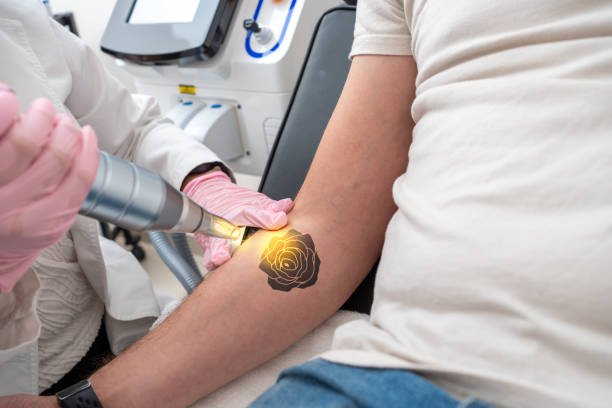
The laser delivers controlled energy to the tattoo pigment, breaking it into smaller fragments. The body then gradually processes these fragments between treatment sessions.
The effectiveness of treatment is not determined simply by how visible the tattoo appears. Pigment depth, color, density, and composition are also important factors.
Are Older Faded Tattoos Easier to Remove?
An older tattoo that has naturally faded may sometimes respond differently from a newer, densely pigmented design. However, age does not automatically mean that removal will be easier.
Some older tattoos retain pigment deep within the skin despite looking faded on the surface. Others may contain colors that respond differently to laser energy.
The condition of the tattoo today is more relevant than its age alone. A professional assessment can examine the remaining pigment and determine an appropriate treatment approach.
Does Faded Ink Respond Differently From Dense Ink?
Yes. A faded tattoo generally contains less visible pigment than a heavily saturated tattoo, which can influence how laser treatment progresses.
Dense tattoos may require a longer treatment course because there is a greater concentration of ink to address. Faded tattoos may have already lost some pigment naturally, but the remaining particles can still vary in depth and composition.
A tattoo that appears lightly colored can therefore still require careful treatment planning. The amount of remaining pigment, rather than surface appearance alone, helps determine the appropriate strategy.
Does Tattoo Color Affect Faded Tattoo Removal?
Tattoo color remains important even when a design has faded. Different pigments absorb different laser wavelengths, so the laser approach can be selected according to the colors that remain.
For example, a tattoo may have originally contained several bright colors, but some may have faded more quickly than others. Black or darker outlines may remain more visible while lighter shades become difficult to see.
Multicolored faded tattoos can therefore respond unevenly. Different portions of the design may require different wavelengths or treatment settings.
Can Faded Black Tattoos Be Removed?
Faded black tattoos can often respond well to laser treatment. Black pigment has broad light-absorption characteristics, making it a common target for laser tattoo removal.
If a black tattoo has already faded naturally, the remaining pigment may be less concentrated than it was originally. However, pigment depth and composition still influence the treatment response.
The laser can progressively target the remaining black ink, while the body processes the fragmented particles between sessions.
Can Faded Colored Tattoos Be Treated?
Yes. Faded colored tattoos can also be considered for laser removal. However, the response varies according to the specific pigments that remain.
Some colors may become lighter relatively quickly, while others can be more persistent. A faded tattoo can therefore contain a mixture of pigment concentrations, with some sections requiring more attention than others.
Modern laser technology offers different wavelengths that can be selected according to tattoo color and individual skin characteristics.
Does Tattoo Depth Still Matter if the Design Is Faded?
Absolutely. Surface fading does not necessarily mean that all the pigment has moved closer to the skin’s surface or disappeared.
Some tattoos fade because the pigment changes over time, while remaining particles can still be distributed at different depths. Laser energy needs to interact with the pigment regardless of how faint the tattoo looks externally.
Depth is therefore evaluated alongside color, density, size, age, location, and skin characteristics when determining the treatment strategy.
Does Skin Tone Influence Treatment of Faded Tattoos?
Skin tone remains an important consideration. Natural melanin can interact with laser energy, so treatment parameters need to be customized according to the individual’s pigmentation.
People with a wide range of skin tones can often be considered for laser tattoo removal. However, darker skin tones may require particularly careful selection of laser wavelength and treatment settings.
The goal is to focus the laser energy on unwanted tattoo pigment while taking natural skin pigmentation into account.
Can Large Faded Tattoos Be Treated?
Large faded tattoos can often be treated with laser technology. Although natural fading may have reduced the visible intensity of the design, a large tattoo can still cover a substantial area and contain considerable residual pigment.
A large design may also contain multiple colors, shading, and sections with different levels of fading. These variations can cause different parts of the tattoo to respond at different rates.
The size of a faded tattoo does not automatically make it unsuitable for laser removal. Instead, its overall characteristics are considered when planning treatment.
How Many Sessions Might a Faded Tattoo Need?
The number of sessions varies significantly between tattoos. A faded tattoo may require fewer sessions than a heavily saturated design in some cases, but this cannot be assumed.
Factors such as ink color, pigment depth, density, composition, tattoo size, location, age, and individual skin characteristics influence the treatment course.
Laser tattoo removal is progressive. Each session targets remaining pigment, while the body processes fragmented ink between treatments. As the tattoo becomes lighter, the treatment approach may be evaluated according to the remaining pigment.
Can Laser Treatment Completely Remove a Faded Tattoo?
Complete removal may be possible for some faded tattoos, but it cannot be guaranteed. Natural fading does not necessarily mean that every remaining particle of ink will respond identically to laser treatment.
The final result depends on the tattoo’s pigment characteristics and the individual’s skin response. Some faded tattoos may become extremely difficult to see, while traces of pigment can remain.
A professional assessment can provide a more realistic expectation based on the specific tattoo rather than its faded appearance alone.
Why Is Professional Assessment Important?
A faded tattoo can sometimes be misleading because its surface appearance does not reveal exactly how much pigment remains beneath the skin.
Professional assessment allows the tattoo’s color, density, depth, size, age, location, and surrounding skin to be considered together. This information helps determine the appropriate laser wavelength and treatment settings.
It also provides an opportunity to establish realistic expectations about progressive fading and the potential final appearance.
What Should You Expect During Faded Tattoo Removal?
Laser removal of a faded tattoo is generally a gradual process. During treatment, the laser targets the remaining pigment and breaks it into smaller particles. The body then progressively processes those particles between sessions.
The tattoo may become increasingly faint over time, although some areas can fade faster than others. This is particularly relevant when the original tattoo contained several colors or varying levels of pigment density.
Patience is therefore important. The final appearance develops through the combined effect of repeated laser treatment and the body’s natural processing of fragmented pigment.
Is Laser Tattoo Removal Effective on Faded Tattoos?
Yes, laser tattoo removal can be effective on many faded tattoos. The laser targets the pigment that remains beneath the skin, so a tattoo does not need to be dark or newly created to be considered for treatment.
Faded tattoos may contain less pigment than their original versions, but the response still depends on ink color, composition, depth, density, size, location, age, and individual skin characteristics.
A professional evaluation can determine whether a particular faded tattoo is suitable for laser treatment and help establish realistic expectations for progressive fading.
Frequently Asked Questions
Is laser tattoo removal effective on faded tattoos?
Yes. Many faded tattoos can be treated with laser technology because the laser targets residual pigment beneath the skin. The degree of fading achieved depends on the tattoo’s specific characteristics.
Are faded tattoos easier to remove than new tattoos?
They may sometimes require a less extensive treatment course because some pigment has already faded naturally, but this is not guaranteed. Ink depth, color, density, and composition remain important factors.
Can faded colored tattoos be removed?
Yes. Many faded colored tattoos can be treated. Different pigments respond to different laser wavelengths, so a multicolored tattoo may require a customized treatment approach.
Can a faded tattoo be completely cleared?
Complete removal may be possible in some cases, but it cannot be guaranteed. Some tattoos can fade substantially while small traces of pigment remain visible.
Does tattoo age affect the removal of a faded tattoo?
Age can influence the tattoo’s current appearance, but it does not determine the outcome by itself. The remaining pigment’s color, depth, density, composition, size, and location are also important.