
Introduction
An intercompany entry can balance to the cent and still describe the wrong relationship between two companies. Soft Online Training sees this often when learners move from arithmetic checks to real entity design, where the provider, receiver, and ledger matter as much as the amounts. Debits may equal credits while the entry names the wrong party.
That is why entity context has to come before accounts and processing options. In Oracle Fusion Financials Training in Chennai, learners start by mapping legal entities, organizations, and ledgers. Balancing accounts, currency choices, and rules then rest on a clear picture of who is transacting with whom.
Why Oracle Fusion Financials Training in Chennai Should Begin With Legal Entity Context
Start with the parties to the event. Which legal entity provides the service, and which receives it? Which organizations act for each side, and which ledgers record the result? Balancing accounts and processing options only make sense once those answers are fixed.
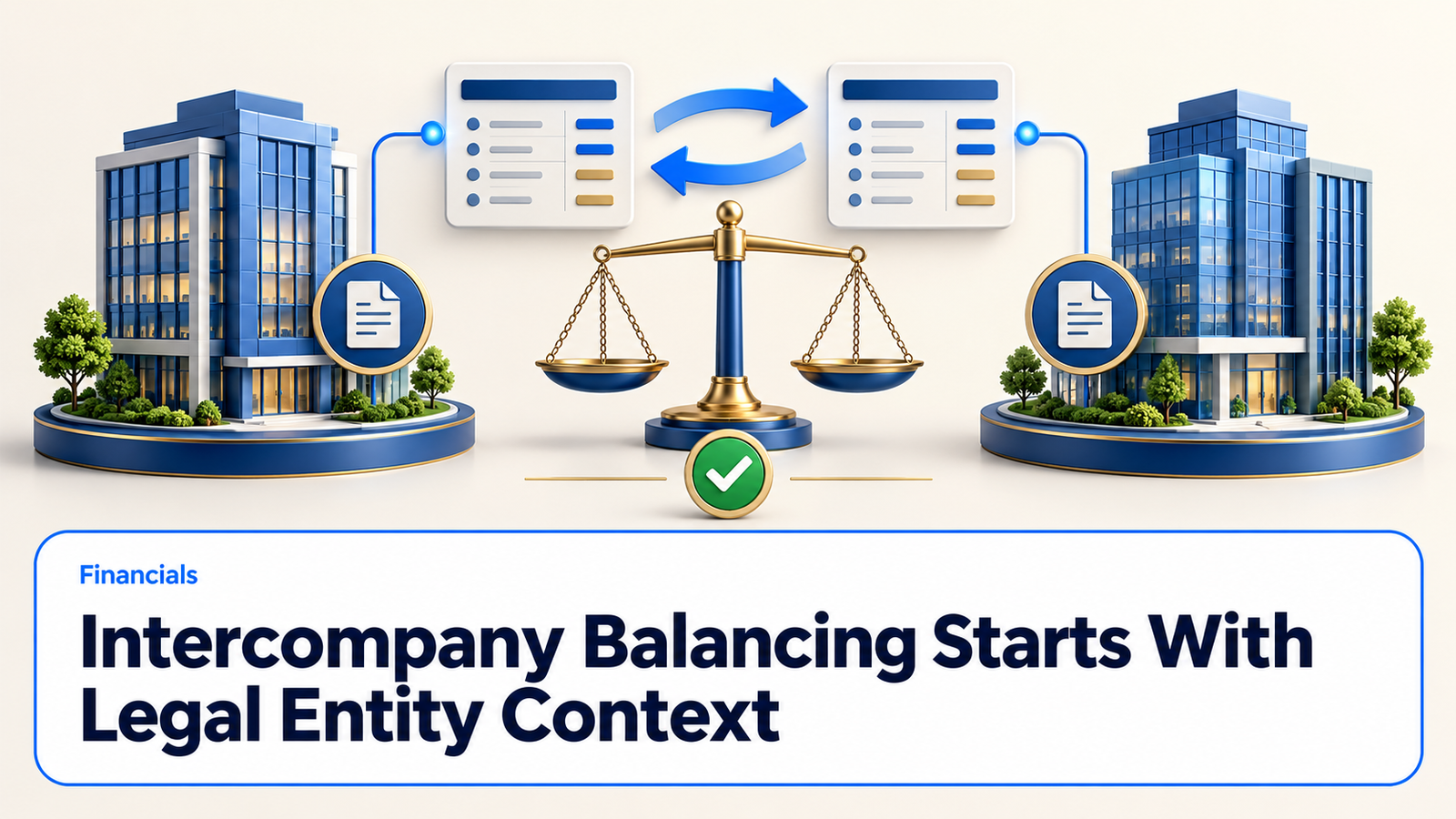
Learners in Oracle Fusion Financials Training in Chennai can build a relationship map that links entities, organizations, ledgers, and responsibilities. It becomes a durable reference for later design work. Starting from account combinations alone invites teams to copy a technically valid setup into contexts with different ownership, currencies, or policies. The real task is to turn an enterprise relationship into consistent accounting boundaries. Rules should then support those boundaries, not try to establish them implicitly.
Map the Transaction as a Relationship
Take a shared-service charge from one company to another. The service description explains the commercial event, but processing also needs a clearly identified provider and receiver. Those parties may work in different ledgers and currencies, and their local teams may have different review duties.
Before configuring anything, write the scenario in plain language:
- Provider legal entity and receiver legal entity
- The organization representing each side
- Ledger context and expected transaction currency
- Accountable finance owners
- Business reason and expected settlement pattern
This narrative exposes assumptions a setup screen cannot. For example, it shows whether two similarly named units are separate legal parties or departments within one entity.
The distinction matters because organizations, legal entities, and ledgers answer different questions. An organization identifies an operational participant. Legal-entity context identifies the companies between which obligations arise. The ledger supplies the accounting environment. They are not interchangeable labels.
Keep a controlled crosswalk of approved relationships and effective ownership. When a reorganization happens, review it before editing any rule. Renaming an organization, adding an entity, or changing ledger usage can change which relationship a broad rule captures. Accounting policy owners and application teams should both be able to read the crosswalk. That way, configuration changes do not quietly redefine who is transacting with whom.
Enterprise Rules Still Need Local Meaning in Oracle Fusion Financials Training in Chennai
Intercompany processing rules are defined at the enterprise level. This supports consistency, but it makes vague scope costly. A choice meant for one relationship can affect another if its conditions are broader than the business rationale.
A rule register helps. It links each rule to the relationships and policy decisions it serves. The Oracle 26C overview of intercompany processing rules lists options such as currency choices, whether a receiver can reject transactions, and a minimum transaction amount. Each option should tie to an explicit operating decision. Configuration can enforce a choice, but it cannot supply the tax, treasury, statutory, or materiality judgment behind it.
Currency deserves its own discussion because “use the transaction currency” can hide several concepts. A service may be priced in one currency while each ledger accounts in another, and settlement practice can add more considerations. Document these points:
- Who selects the relevant currency
- Where any needed rate comes from
- Who owns exceptions
- What evidence supports unusual choices
Do not assume behavior that you have not confirmed in your configuration and the current documentation. Test representative entity and ledger combinations instead. A design review should be able to explain the chosen currency option in business terms, without pointing to the application setting as its own justification.
Rejection and Minimums Define Operating Boundaries
Letting a receiver reject an intercompany transaction changes the operating relationship, because the receiving side can challenge an amount, party, currency, support, or business basis before acceptance. If rejection is enabled, define valid reasons, required comments, response times, amendment ownership, and escalation near close. If it is not enabled, provide another governed dispute route. Track repeated rejections by cause and pair, since concentrated disputes often point to unclear agreements, weak source data, or an outdated organizational map.
A minimum amount is a policy choice too. Decide what happens below it: aggregation, deferral, another process, or approved exclusion. Check whether one value suits all currencies and relationships. Monitor near-threshold amounts for fragmentation, and assign an owner, review frequency, rationale, and exception treatment.
Balancing Accounts and Testing for Oracle Fusion Financials Training in Chennai
Choose balancing accounts by provider-receiver and ledger context, not because they were used before. They must support the due-to and due-from relationship and each company’s reporting needs. Test scenarios should vary parties, organizations, ledgers, currencies, amounts near the minimum, and rejection decisions. Check the accounting from both sides, reconcile the reciprocal positions, and include invalid combinations that should stop visibly instead of defaulting quietly.
Tie rule maintenance to organizational change. Run an impact review when an entity is added, responsibilities shift, ledger relationships or currency policies change, or balancing accounts are replaced. Keep approvals and test evidence. Monitor rejections, unexpected account use, unreconciled balances, near-minimum items, and broad rules. If exceptions keep piling up, the enterprise map may be incomplete.
Conclusion
Balanced lines prove arithmetic, not the identity or intent of the companies behind an intercompany event. Map the provider, receiver, organizations, ledgers, currency responsibility, and balancing-account purpose before defining enterprise rules. Treat receiver rejection and minimum amounts as policy choices with owners and downstream procedures, not isolated switches.
For further practice, check scenarios from Oracle Fusion Financials Training in Chennai against your relationship map as a reference for reciprocal-accounting decisions. Test both sides of representative relationships, including invalid combinations, threshold boundaries, and disputes. Revisit the map whenever organizational or ledger structures change. A dependable process shows which companies transacted, why the chosen treatment applies, and how both sides remain explainable and reconcilable.