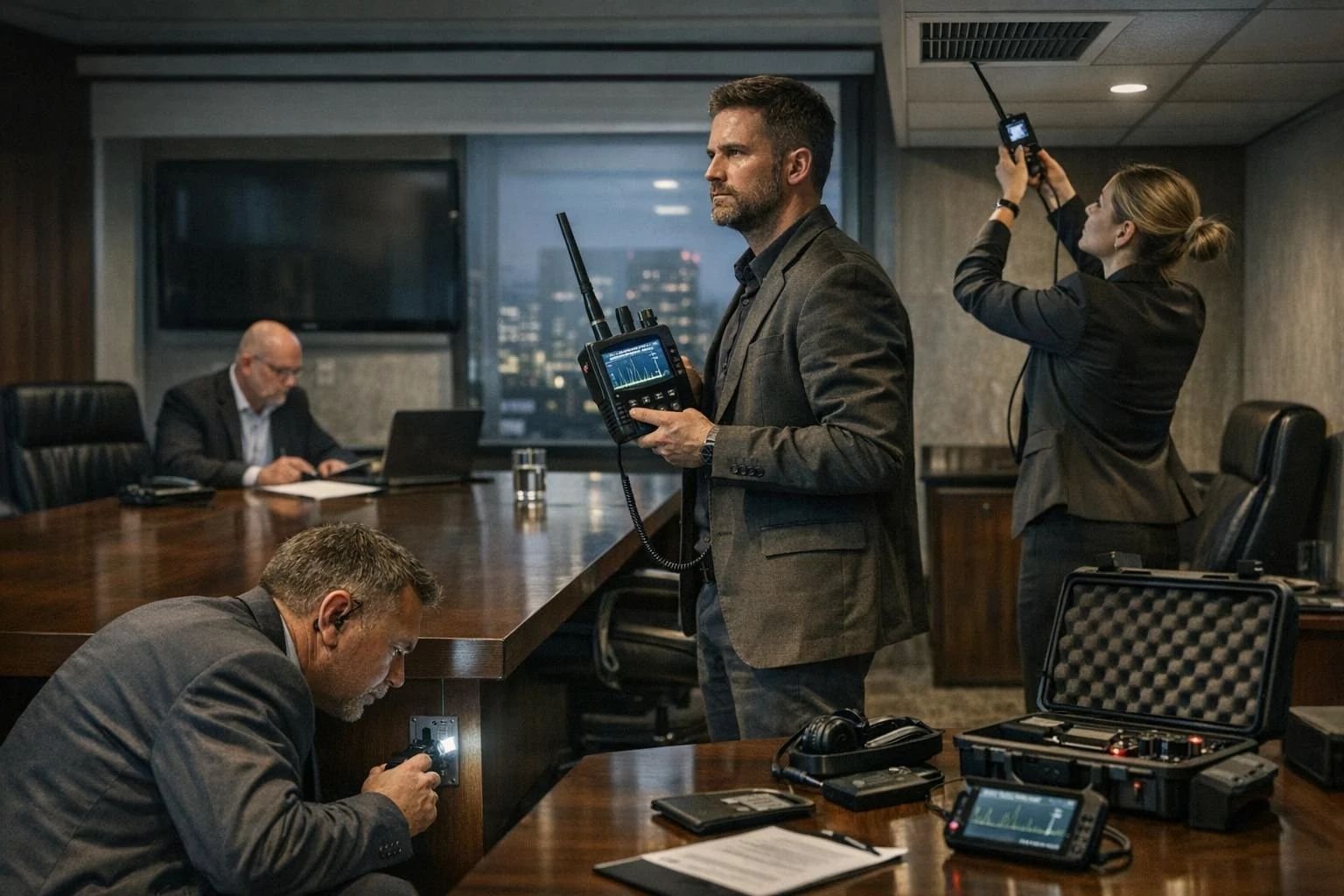
Electronic privacy is an important consideration for businesses, residential properties, hotels, executive offices, and confidential meeting environments. With surveillance technology becoming increasingly compact and sophisticated, identifying unauthorized monitoring equipment may require more than an ordinary visual inspection.
Hidden cameras, listening devices, wireless transmitters, and concealed electronic components can be difficult to recognize without appropriate technical knowledge and specialized detection equipment. This is why professional electronic bug sweeping inspections follow a structured approach that combines physical examination, radio-frequency (RF) analysis, electronic detection, and technical verification.
But what actually happens during a professional bug sweep? Which instruments are used? How do specialists investigate suspicious electronic activity, and why does experience matter?
This article explains the key stages of a professional Technical Surveillance Countermeasures (TSCM) inspection and how a systematic approach can help assess potential electronic surveillance risks.
What Is a Professional Electronic Bug Sweeping Inspection?
A professional electronic bug sweeping inspection is a technical assessment of premises to identify potential hidden surveillance devices, unauthorized electronic monitoring equipment, and suspicious wireless transmissions.
Unlike a basic visual check, a professional inspection considers the physical environment as well as its electronic activity. Depending on the premises and inspection requirements, specialists may examine furniture, fixtures, electrical accessories, communication equipment, and other accessible areas.
The inspection may focus on identifying:
- Concealed cameras and miniature recording devices.
- Hidden microphones and listening equipment.
- Wireless audio and video transmitters.
- Suspicious radio-frequency transmissions.
- Unauthorized electronic components.
- Potentially compromised confidential meeting environments.
Professional inspections commonly use multiple detection methods because different surveillance devices operate in different ways. Some transmit information wirelessly, while others may record locally or use wired connections.
Why Does a Structured TSCM Inspection Matter?
An electronic bug sweep should not depend on a single detection instrument or a quick examination of visible objects. Different devices require different inspection techniques, and ordinary electronic equipment can sometimes produce signals that need further investigation.
A structured TSCM inspection helps professionals organize the assessment, select appropriate equipment, investigate suspicious findings, and document observations.
For corporate organizations, this can be particularly relevant in:
- Boardrooms and executive meeting rooms.
- Senior management offices.
- Conference and negotiation spaces.
- Research and development facilities.
- Locations handling confidential business information.
Residential property owners and individuals may also consider professional inspections when they have specific privacy concerns.
Equipment Used During Professional Bug Sweeping Inspections
The effectiveness of an electronic bug sweeping inspection depends partly on selecting suitable instruments for the environment and potential surveillance technologies being investigated. Professional TSCM inspections may involve several specialized tools, each serving a different purpose.
- RF Spectrum Analyzers
Radio-frequency spectrum analyzers are important instruments in professional electronic surveillance detection.
They help examine activity across relevant frequency ranges and investigate wireless transmissions that may require further examination.
During an inspection, specialists may use RF analysis to:
- Identify unusual or unexplained signal activity.
- Examine wireless transmission patterns.
- Investigate suspicious RF emissions.
- Assess the electronic environment of a room or premises.
- Differentiate relevant signals from ordinary wireless communications.
Since Wi-Fi routers, mobile devices, Bluetooth accessories, and other legitimate electronics also generate RF signals, technical interpretation is essential before identifying any activity as suspicious.
- Non-Linear Junction Detectors (NLJD)
Non-linear junction detectors are specialized instruments designed to identify certain electronic components, including semiconductor junctions.
Unlike conventional RF detectors, NLJD equipment does not depend on a device actively transmitting a wireless signal. It can therefore assist in examining objects and structures that may contain concealed electronic components.
This technology can be particularly useful when investigating devices that are inactive or not transmitting during an inspection.
- Hidden Camera Lens Detectors
Optical lens detection equipment can help identify potential camera lenses concealed within objects or fixtures.
These instruments use optical techniques to reveal reflections associated with camera lenses under suitable inspection conditions.
They may support examinations of:
- Decorative objects and fixtures.
- Electronic accessories.
- Furniture and interior fittings.
- Suspicious openings and concealed locations.
Optical detection is an additional inspection method rather than a guarantee that every hidden camera will be identified.
- Broadband RF Detection Equipment
Broadband RF detectors help examine radio-frequency activity across supported frequency ranges.
Depending on their capabilities, these instruments may assist in identifying signals that warrant closer investigation. Their findings generally need to be assessed alongside other inspection methods to avoid confusing legitimate wireless activity with potential surveillance transmissions.
- Physical Inspection Instruments
Technology alone is not enough. Professional inspections also require suitable tools for examining accessible areas, fixtures, electronic accessories, and suspicious objects.
A detailed physical examination can help identify unusual modifications, concealed components, or objects that require further technical verification.
Step-by-Step Process of a Professional Bug Sweeping Inspection
A professional electronic bug sweep generally follows several stages. The exact procedure depends on the premises, the inspection objectives, and the technologies that may be relevant.
Step 1: Understanding the Client’s Requirements
Every inspection begins with understanding why the assessment is required.
The inspection team gathers relevant information about the premises, its purpose, and any specific privacy concerns.
This may include:
- Property size and layout.
- Number of rooms requiring inspection.
- Areas used for confidential discussions.
- Existing electronic equipment.
- Specific observations or concerns reported by the client.
This stage helps determine the inspection scope and identify suitable detection methods.
Step 2: Preliminary Physical Examination
Once the inspection requirements are understood, specialists examine the premises for unusual objects, suspicious modifications, and potentially concealed electronic equipment.
The examination may include accessible furniture, electrical fittings, decorative items, communication equipment, and other relevant locations.
The purpose is not to assume that unusual objects are surveillance devices but to identify anything that requires closer examination.
Step 3: RF Environment Assessment
The next stage may involve examining the radio-frequency environment using suitable spectrum analyzers and other RF detection instruments.
Specialists assess relevant frequency ranges and investigate unexplained transmissions or unusual signal patterns.
This process requires technical understanding because the presence of an unfamiliar signal does not automatically establish unauthorized surveillance.
Step 4: Electronic Component Detection
Where appropriate, specialized instruments such as non-linear junction detectors may be used to examine objects and structures for concealed electronic components.
This stage can complement physical examination and RF analysis, particularly when investigating devices that may not be actively transmitting.
Step 5: Hidden Camera and Listening Device Examination
Potential camera lenses, microphones, recording equipment, and wireless transmitters may require additional investigation.
Specialists use relevant detection techniques to examine suspicious objects and verify whether they contain electronic components associated with surveillance equipment.
Different technologies may require different inspection approaches, making technical experience an important part of the process.
Step 6: Verification of Suspicious Findings
One of the most important stages is verifying anything identified during the inspection.
Ordinary electronic equipment can sometimes produce signals or physical characteristics that initially appear unusual. Therefore, professionals must investigate relevant findings before reaching conclusions.
A responsible inspection distinguishes between:
- Confirmed surveillance equipment.
- Suspicious electronic components requiring further examination.
- Unexplained signals requiring additional investigation.
- Normal electronic activity.
This distinction helps prevent inaccurate conclusions and unnecessary concern.
Step 7: Technical Reporting and Recommendations
After completing the inspection, findings may be documented in a technical report according to the agreed scope of work.
The report may include relevant observations, identified equipment, inspection limitations, and recommendations for addressing verified concerns.
Clear reporting allows clients to understand the outcome and determine whether any additional action is appropriate.
Why Professional Expertise Matters in Electronic Bug Sweeping
Using advanced detection equipment does not automatically make an inspection reliable. Instruments must be selected, configured, and interpreted correctly.
A professional TSCM inspection requires an understanding of electronic systems, radio-frequency behaviour, surveillance technologies, and the limitations of individual detection methods.
Here are some important factors that distinguish a systematic professional inspection.
- Understanding Different Surveillance Technologies
Surveillance equipment can use wireless transmissions, wired connections, or local storage. Professionals need to understand these differences when selecting appropriate detection techniques.
- Correct Equipment Selection
Not every inspection requires the same instruments. The choice of equipment should reflect the premises, the inspection objectives, and the potential technologies involved.
- Technical Interpretation
RF signals and electronic components must be evaluated carefully. Incorrect interpretation can result in false alarms or overlooked findings.
- Comprehensive Inspection Methodology
Combining physical examination, RF analysis, optical detection, and other suitable techniques provides a broader assessment than relying on a single instrument.
- Confidentiality and Professional Conduct
Inspections may take place in private residences, corporate offices, and sensitive business environments. Discretion, responsible handling of information, and clear communication are essential.
Common Mistakes to Avoid When Arranging a Bug Sweep
Individuals and organisations sometimes underestimate the technical requirements of electronic surveillance detection.
Consider avoiding these common mistakes:
- Depending only on inexpensive detectors: Basic consumer devices may have limited capabilities and cannot replace a professional TSCM inspection.
- Assuming every RF signal is suspicious: Everyday electronic equipment generates legitimate wireless activity.
- Ignoring non-transmitting devices: Some surveillance equipment may record information locally without transmitting signals.
- Relying exclusively on visual examination: Small electronic components may be concealed within ordinary objects.
- Choosing a provider based only on price: Equipment, technical expertise, inspection methodology, and reporting standards also matter.
- Expecting absolute guarantees: No single inspection method can establish that every possible surveillance risk has been eliminated.
A properly scoped inspection should explain its methods, findings, and limitations clearly.
Which Locations Can Benefit from Professional Bug Sweeping?
Electronic surveillance inspections may be relevant across different environments depending on confidentiality requirements and individual privacy concerns.
Corporate Offices and Boardrooms
Assess confidential meeting spaces, executive cabins, and business environments where sensitive discussions take place.
Residential Properties
Examine private living spaces when homeowners have specific concerns about potential unauthorised monitoring.
Hotels and Serviced Apartments
Assess private accommodation areas for potential concealed recording equipment.
Executive and Management Offices
Consider specialised inspections for locations handling confidential corporate information and sensitive negotiations.
Research and Commercial Facilities
Assess selected areas where proprietary information, business processes, and confidential operational discussions require privacy considerations.
Professional TSCM and Electronic Bug Sweeping Services by Trace Point India
When privacy concerns involve potentially concealed surveillance equipment, selecting an experienced inspection provider is an important decision.
Trace Point India provides specialised TSCM debugging and electronic bug sweeping services for residential, corporate, and commercial environments. The inspection approach focuses on assessing potential electronic surveillance risks through relevant technical procedures, physical examination, RF analysis, and specialised detection equipment.
The scope of an inspection may include:
- Hidden camera and listening device detection.
- Wireless transmitter identification.
- RF spectrum analysis.
- Non-Linear Junction Detection (NLJD), where appropriate.
- Physical examination of suspicious electronic equipment.
- Corporate office and boardroom inspections.
- Residential and commercial premises assessments.
Each assignment is evaluated according to the client’s requirements and the characteristics of the premises. This helps establish an appropriate inspection scope rather than relying on a one-size-fits-all approach.
Whether you are responsible for a corporate office, managing confidential meeting spaces, or addressing specific privacy concerns at a residential property, professional technical assessment can help you make informed decisions.
Looking for Professional Electronic Bug Sweeping Services?
Understand your premises’ inspection requirements with specialised TSCM expertise from Trace Point India.
Frequently Asked Questions (FAQs)
- What happens during a professional electronic bug sweeping inspection?
A professional inspection may involve preliminary assessment, physical examination, RF signal monitoring, electronic component detection, verification of suspicious findings, and technical reporting.
- Which equipment is used for TSCM inspections?
Depending on the inspection requirements, specialists may use RF spectrum analysers, broadband RF detectors, Non-Linear Junction Detectors, optical lens detectors, and specialised physical inspection instruments.
- Can professional bug sweeping detect devices that are switched off?
Some specialised techniques, including NLJD, can help identify certain electronic components without requiring an active wireless transmission. However, detection capabilities depend on the device, its construction, concealment, and inspection conditions.
- How long does a professional bug sweep take?
The duration depends on the premises’ size, number of rooms, electronic environment, inspection scope, and technical requirements. A provider can estimate the inspection time after an initial assessment.
- Is RF analysis sufficient to identify hidden surveillance devices?
No. RF analysis is useful for investigating wireless transmissions, but it cannot identify every wired or locally recording device. A comprehensive inspection may require several complementary detection techniques.
- Should corporate offices conduct periodic TSCM inspections?
Organisations handling confidential discussions, proprietary information, and sensitive business activities may consider periodic inspections based on their risk assessments and operational requirements.
- What should clients expect after a professional bug sweeping inspection?
Depending on the agreed scope, clients may receive documented findings, details of verified suspicious equipment, relevant observations, inspection limitations, and recommendations for further action.
Conclusion
A professional electronic bug sweeping inspection involves considerably more than checking a room for unusual objects. It requires a combination of specialised equipment, technical expertise, systematic examination, and careful interpretation of electronic activity.
From RF spectrum analysis and physical examination to NLJD and hidden camera detection, each technique contributes to assessing different aspects of potential electronic surveillance. Equally important are the experience of the inspection team and the ability to distinguish genuine concerns from ordinary electronic activity.
For individuals and organisations seeking a professional assessment, Trace Point India offers specialised TSCM debugging and electronic bug sweeping services across different environments.
Take an informed approach to electronic privacy. Explore professional TSCM inspection services with Trace Point India and enquire about an assessment for your premises.