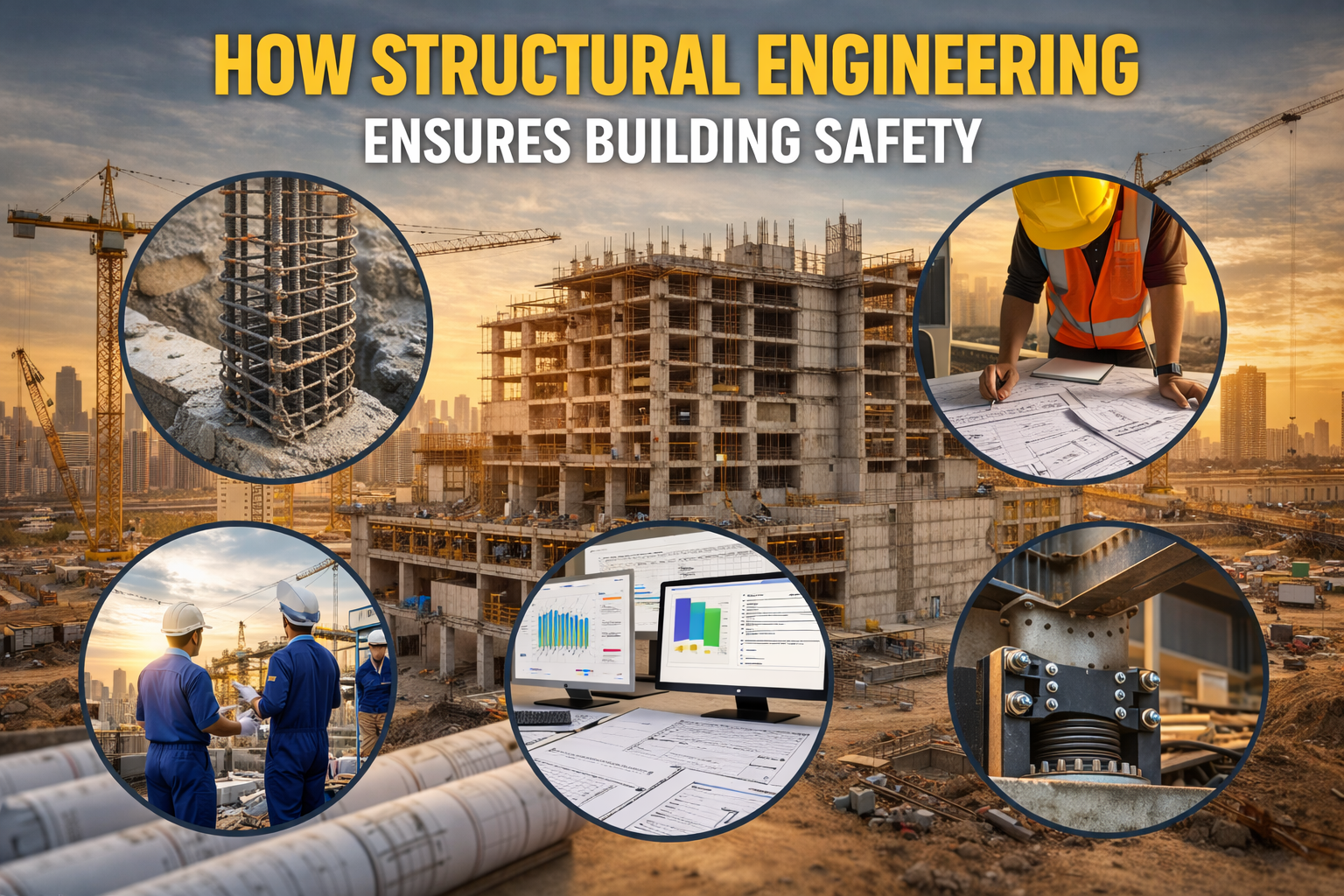
Structural engineering is the backbone of modern construction, ensuring that buildings and infrastructure remain safe, stable, and functional throughout their lifespan. While architectural design often gets the most attention, it is the structural system that determines whether a building can actually withstand the forces acting on it. From residential homes to high-rise towers, every structure depends on a well-planned system that distributes loads efficiently and maintains stability under various conditions.
What Are Structural Systems?
A structural system is the framework that supports and transfers loads within a building. It consists of components such as beams, columns, slabs, and foundations, all working together to carry forces safely to the ground. The effectiveness of a structural system depends on how well these elements are connected and how efficiently they share the load.
Different types of structural systems are used depending on the building’s purpose and design. For example, load-bearing structures rely on walls to carry weight, while framed structures use beams and columns to create open spaces. In high-rise construction, more advanced systems like core structures and braced frames are often used to handle both vertical and lateral forces.
How Loads Affect Structural Design
Every structure is subjected to different types of loads. Dead loads include the weight of the building itself, while live loads come from occupants, furniture, and usage. Environmental forces such as wind and earthquakes introduce lateral loads, which can cause horizontal movement.
Structural engineers must carefully calculate these loads to ensure that the building can handle them without excessive stress or deformation. The goal is to create a design that is strong enough to resist forces but also efficient in terms of material use.
Importance of Load Distribution
One of the key aspects of structural engineering services is ensuring proper load distribution. Forces must travel through a continuous path from the top of the structure down to the foundation. If this path is disrupted, it can lead to stress concentrations and potential failure.
For example, if a beam is not properly supported by a column, the load it carries may not be transferred correctly. This can result in bending, cracking, or even collapse in extreme cases. Proper alignment and connection between structural elements are essential to avoid such issues.
Role of Materials in Structural Performance
Material selection plays a crucial role in how a structure behaves. Reinforced concrete is widely used for its strength and durability, while steel is valued for its flexibility and high load-bearing capacity. In many projects, a combination of materials is used to achieve the best performance.
Engineers must also consider factors such as corrosion, temperature changes, and long-term wear. Choosing the right material is not just about strength—it’s about ensuring that the structure performs well over time under real-world conditions.
Impact of Design on Stability and Efficiency
The shape and layout of a building have a significant impact on its structural performance. Simple and symmetrical designs tend to distribute forces evenly, making them more stable and easier to construct. Complex or irregular shapes may require additional reinforcement to maintain stability.
Efficiency is another important factor. A well-designed structure uses materials effectively, reducing waste and cost without compromising safety. This balance between strength and efficiency is what defines good structural engineering.
Challenges Faced by Structural Engineers
Structural engineers often face challenges such as changing design requirements, budget constraints, and site limitations. Coordination with architects and contractors is essential to ensure that the structural design aligns with the overall project goals.
Environmental considerations are also becoming increasingly important. Engineers must design structures that can withstand extreme weather conditions while minimizing environmental impact. This requires innovative approaches and continuous adaptation to new technologies.
Modern Tools and Advancements
Advancements in technology have significantly improved structural engineering practices. Software tools allow engineers to model and analyze structures under different conditions, making it easier to identify potential issues before construction begins.
Building Information Modeling (BIM) has also enhanced collaboration between different disciplines, reducing errors and improving project efficiency. These tools help engineers create safer and more reliable designs.
Conclusion
Structural systems are fundamental to the safety and performance of any building. They ensure that loads are properly managed, materials are used efficiently, and the structure remains stable under various conditions. While they may not always be visible, their importance cannot be overstated.
As construction continues to evolve, structural engineering will play an even greater role in shaping safe, efficient, and sustainable built environments. A well-designed structural system is not just about supporting a building—it’s about ensuring its long-term success.