Introduction
Modern gas and steam turbines depend on highly precise control systems to ensure safe, stable, and efficient operation. These systems continuously balance mechanical output, fuel input, and environmental conditions using a combination of sensors, controllers, and field devices. A critical enabler of this interaction is digital-to-analog conversion, which allows digital control decisions to be translated into physical actions within the turbine system.
Control Loops in Turbine Automation
Turbine control is built around closed-loop feedback systems. Sensors measure key operating parameters such as temperature, pressure, speed, and vibration. This data is processed by a digital controller, which determines the corrective actions needed to maintain optimal performance.
While the controller operates in digital form, many turbine components—such as fuel valves, hydraulic actuators, and servo mechanisms—require analog input signals to function. This difference between digital decision-making and analog actuation makes signal conversion essential.
What Digital-to-Analog Conversion Does
Digital-to-analog conversion (DAC) serves as the bridge between control logic and physical equipment. It transforms discrete digital instructions into continuous analog signals, typically in standard industrial formats like 4–20 mA or voltage outputs.
Key functions include:
- Translating controller outputs into proportional analog signals
- Ensuring smooth and linear actuator movement
- Supporting real-time response in rapidly changing load conditions
- Maintaining signal accuracy in electrically noisy turbine environments
Without reliable conversion, turbine control loops would become unstable, leading to poor performance and potential safety risks.
Output Modules in GE Turbine Control Systems
In industrial power generation, GE-based turbine control systems are widely recognized for their modular and robust architecture. These systems use dedicated output modules to manage analog signal generation for field devices.
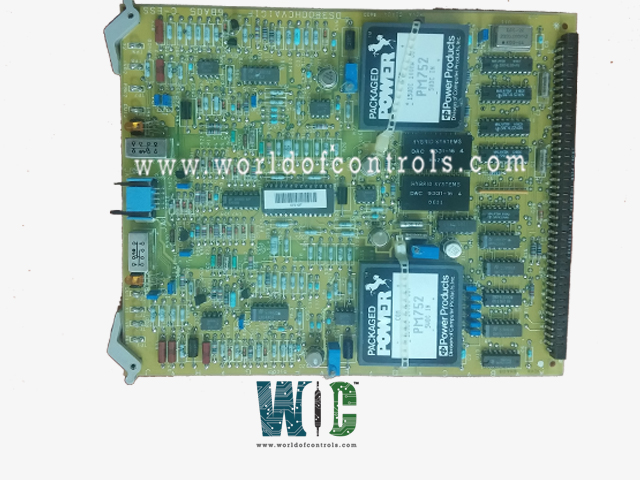
A typical GE analog output card is responsible for receiving processed digital commands from the control processor and converting them into precise analog signals. These signals are then used to control critical turbine functions such as fuel regulation, inlet guide vanes, and hydraulic actuator positioning.
Within this architecture, the analog output module plays a direct role in ensuring that digital decisions are accurately executed in the physical turbine environment.
Significance in Turbine Performance and Safety
Accurate digital-to-analog conversion is essential for maintaining turbine performance and operational safety. Even minor deviations in output signals can affect combustion stability, turbine speed regulation, and load handling.
The benefits include:
- Stable operation: Smooth signal conversion prevents sudden mechanical stress
- Higher efficiency: Accurate control of fuel and air improves combustion performance
- Safety assurance: Reliable outputs support protective shutdown and limit functions
- Reduced wear and tear: Controlled actuation reduces mechanical fatigue
These factors are especially important in continuous-duty power generation plants where reliability is critical.
Harsh Industrial Operating Conditions
Turbine environments are challenging, with high temperatures, vibration, and electromagnetic interference. Analog output modules must therefore be designed for durability and precision under stress.
Regular maintenance practices such as calibration checks, signal validation, and module diagnostics help ensure long-term reliability. Engineers also monitor output stability to detect early signs of drift or degradation, which can impact control loop performance if left unaddressed.
Role of Advanced GE Output Modules
Advanced GE analog output modules, such as those used in turbine control systems, are engineered to provide high-resolution signal conversion and robust performance. These modules ensure that digital instructions from the turbine controller are accurately reflected in field device behavior, enabling precise regulation of turbine operations.
Their role is particularly important in maintaining coordination between multiple subsystems, including fuel control, speed regulation, and load balancing.
Conclusion
Digital-to-analog conversion is a fundamental part of turbine control loops, enabling seamless interaction between digital controllers and physical equipment. In GE turbine control systems, specialized analog output modules ensure that control commands are executed with precision and reliability. As turbine technology continues to advance, the importance of accurate signal conversion will remain central to achieving efficient, safe, and high-performance power generation.