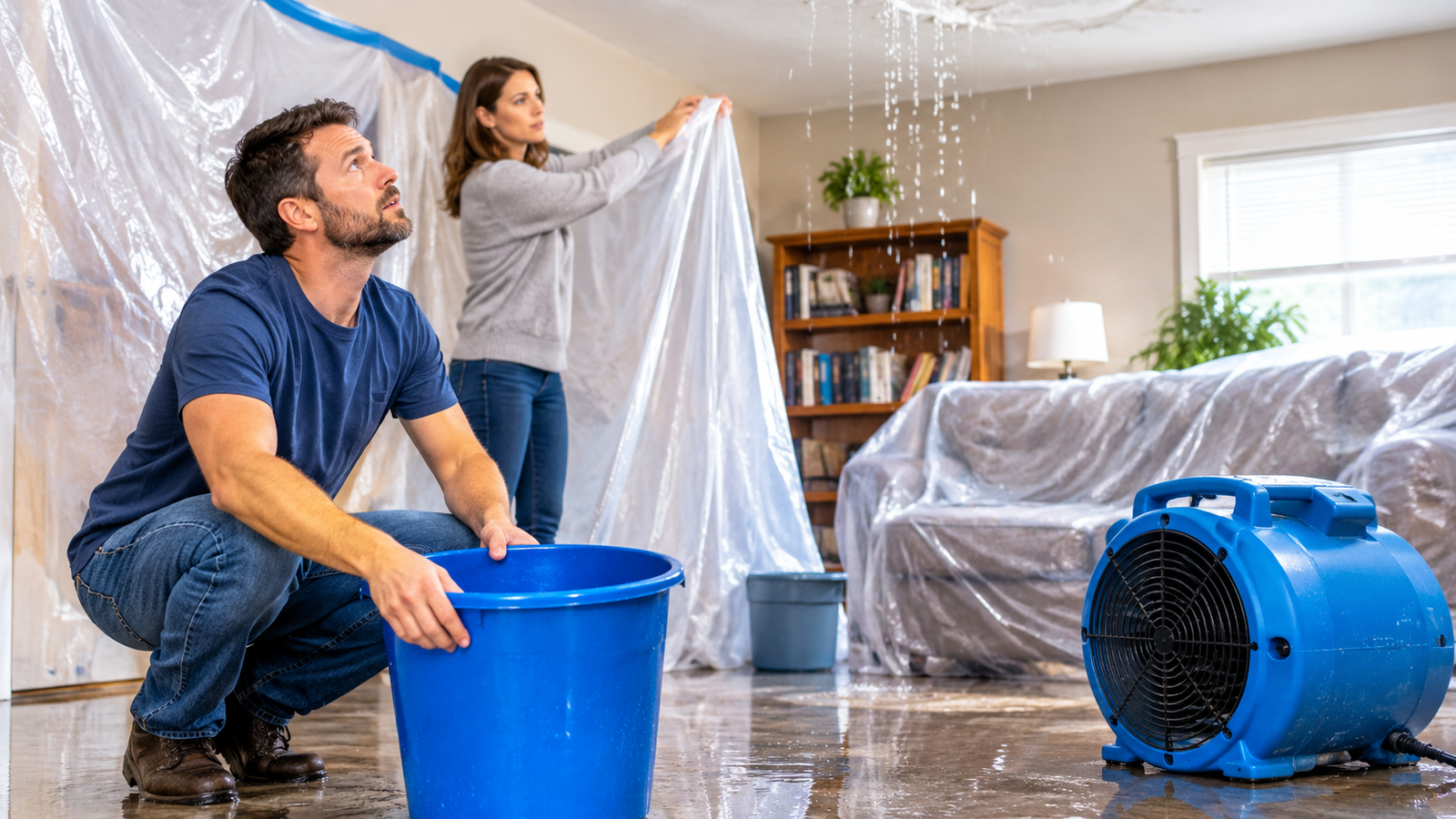
While you wait for emergency water removal, shut off the water source, cut power to the wet area only if you can do it safely, photograph everything, lift belongings off wet floors, and keep people and pets out of the water. That’s the short list. The rest of this article covers the order, and what to leave alone until the crew gets there.
The short answer before the full breakdown
1. What your job is and what it isn’t
A crew might be twenty minutes away or two hours. Either way, you can’t dry the house. What you can do is stop the damage from growing and keep everyone safe until the people with the pumps arrive.
2. The order that matters
Safety first, then the source, then photos, then belongings, then air. Skip around and you’ll end up photographing a room after you’ve already mopped it, or dragging a couch through a puddle near a live outlet. The crew’s job is water extraction. Yours is to hold the line.
The first ten minutes: safety and the source
1. Shut off the water
If a pipe or appliance is the source, close the main valve or the one at the fixture. If it’s rain or storm water, there’s no valve, so move on to the next step. Grab a flashlight if the power’s out. It isn’t glamorous.
2. Deal with the power
Water and electricity don’t mix, and that’s the one rule in this article with no wiggle room. If water is near outlets, cords or appliances, switch off that area’s breaker, but only if the panel is dry and you’re standing on a dry floor. If the panel sits in the wet area, stay out and call your utility or an electrician.
Water that isn’t clean
Sewage, storm flooding and anything that came up through a drain counts as contaminated. Don’t wade through it, keep kids and pets out, and tell the dispatcher when you call, because contaminated water changes the protective gear and equipment the crew brings.
3. Look up
A ceiling that sags or bulges can be holding gallons of water. Don’t stand under it. Mention it on the phone, because crews handle a loaded ceiling differently from a puddle on the floor.
Document it before you touch it
1. Photos and video
Take wide shots of each room, then close shots of the water line, the source and anything damaged. Insurance companies want to see the damage as it was, and once you’ve moved things around it’s hard to reconstruct.
2. A few lines of notes
Write down when you noticed the water, where it came from and what you did. Three or four lines in your phone is plenty. Memory gets fuzzy by the time a claim gets argued over.
3. Call your insurer
Report the loss and ask what they need from you. Many policies expect you to take reasonable steps to prevent further damage, so keep receipts for anything you buy while you wait.
Protecting belongings and surfaces
1. Lift what you can
Move electronics, boxes and small furniture to dry ground. For heavy furniture you can’t budge, slide aluminum foil or plastic under the legs so the wood doesn’t bleed stain into wet carpet. Cardboard boxes act like wicks, so get stored papers and photos out of them first.
2. Rugs and carpet
Pull up small area rugs and drape them over a rail. Leave wall-to-wall carpet alone and stay off it when you can, since every step squeezes water down into the padding.
3. Wet papers and books
Bag wet books, photos and documents and put them in the freezer. It won’t rescue everything, but it freezes the damage in place until someone has time to dry them properly.
Moving the air without making things worse
1. Fans, AC and windows
If the power is safe and the water is clean, a couple of box fans help. If it’s dry outside, crack a window or two. In a humid St. Louis July there’s no clean answer on windows, since the outside air can be wetter than the inside air. If it feels thick out there, keep them shut and run the AC. Skip the central system entirely if water reached the ducts or equipment, or if the water was sewage.
2. What to leave alone
Don’t use a household vacuum on water. Don’t switch on ceiling fixtures under a wet ceiling. Don’t turn on appliances that got wet, and don’t aim space heaters at damp carpet. And don’t tear out drywall before the crew has looked at it, even though every instinct says to. The readings they take before demo are what keep you from replacing walls that could have dried.
3. Small spills versus real water
For a thin layer, towels and a wet-dry vacuum made for liquids are fine, plugged into a circuit away from the wet area. For anything deeper, or water that has already soaked carpet and padding, real water extraction takes pumps and extractors that household tools can’t match.
What to tell the person who answers the emergency water removal call
1. Have this ready
Your address. Where the water came from and whether it’s stopped. Which rooms are wet and roughly how deep. Whether the power is off. Whether the water might be sewage. Your insurance company’s name. A dispatcher who gets all of that can send the right crew with the right equipment on the first trip.
2. Who to call
Gateway Water and Mold offers emergency water removal around the clock, takes moisture readings before anything gets torn out, and writes up the documentation insurance carriers ask for. Ask whoever you call how soon they can get there and what they’ll do first. A vague answer is a bad sign.
3. What happens when the crew shows up
First comes water extraction, with pumps and extractors pulling water out of floors and carpet. Then moisture readings map how far the water traveled, and air movers and dehumidifiers dry what’s left. The EPA’s mold cleanup guidance says to dry wet materials within 24 to 48 hours to head off mold, and that’s the clock the crew is racing.
Conclusion
Put the dispatcher’s checklist on a sticky note by the phone now, before you need it. Address, source, rooms, power, insurance. The next time you’re searching for emergency water removal at 2 a.m., you’ll already have done the hardest part.
Frequently asked questions
1. Should I start cleaning before the emergency water removal crew arrives?
Do the safe parts: stop the source, take photos, lift belongings and mop up thin layers of clean water. Leave tearing out drywall, carpet and flooring to the crew.
2. Is it safe to turn off the power myself?
Only if the breaker panel is dry and you’re standing on a dry floor. If the panel is in the wet area, stay out and call your utility or an electrician.
3. Can I use my regular vacuum to remove water?
No. Household vacuums aren’t built for liquids and can shock you or burn out. Use a wet-dry vacuum made for water, on a circuit away from the wet area.
4. How fast can mold start growing after a flood or leak?
Mold can start within 24 to 48 hours if materials stay wet, which is why fast drying matters.
5. What does water extraction involve, and how is it different from mopping?
Water extraction uses pumps and extractors to pull water out of carpet, padding and flooring, which mopping can’t reach. Crews follow it with moisture readings and drying equipment to remove what’s left inside the materials.