Summary
An armored courier service can help businesses transport valuable or sensitive assets through controlled collection, secure vehicles, trained personnel and documented delivery procedures. However, not every provider offers the same level of protection, insurance, operational transparency or shipment visibility. Businesses should assess the provider’s experience, security protocols, insurance terms, vehicle standards, tracking capabilities and emergency procedures before making a decision. UNIVAL Logistics highlights the essential questions companies should ask, explains common service considerations and outlines how to plan secure transportation for valuable business shipments across the United States.
Overview
Businesses frequently need to move assets that require additional protection during transportation. These may include cash deposits, jewelry, precious metals, luxury watches, confidential business documents, financial instruments, sensitive equipment and other high-value consignments. Standard parcel delivery may not provide the controlled handling and security arrangements required for these shipments.
An armored courier service is designed for transportation situations where security and accountability are especially important. Depending on the provider and service agreement, it may involve specially equipped vehicles, authorized personnel, controlled collection procedures, secure storage and documented handovers.
Choosing a provider should involve more than comparing delivery prices. A business must understand exactly what protection is included, which services are available for its shipment type and whether the provider can meet its collection, delivery and insurance requirements. UNIVAL Logistics encourages businesses to evaluate these factors before arranging transportation.
Key Takeaways
- Identify the type, value and security requirements of the shipment before requesting a service.
- Verify the provider’s operating credentials, relevant experience and security procedures.
- Review insurance coverage, exclusions, limits and claims requirements carefully.
- Ask about vehicle standards, personnel training and shipment tracking.
- Confirm collection procedures, delivery verification and emergency response arrangements.
- Compare complete service costs rather than choosing solely on the lowest quoted price.
- Work with a logistics partner that communicates clearly and supports appropriate shipping arrangements.
Quick Answer: Choose an armored courier service by checking its security procedures, insurance terms, trained personnel, vehicle standards, tracking capabilities, delivery controls and total service costs before booking.
Why Businesses Need an Armored Courier Service
Businesses that handle valuable assets face transportation risks that ordinary delivery arrangements may not adequately address. Cash movements, valuable merchandise and sensitive commercial materials can require additional security controls, particularly when shipments travel between offices, financial institutions, warehouses, retail locations or business customers.
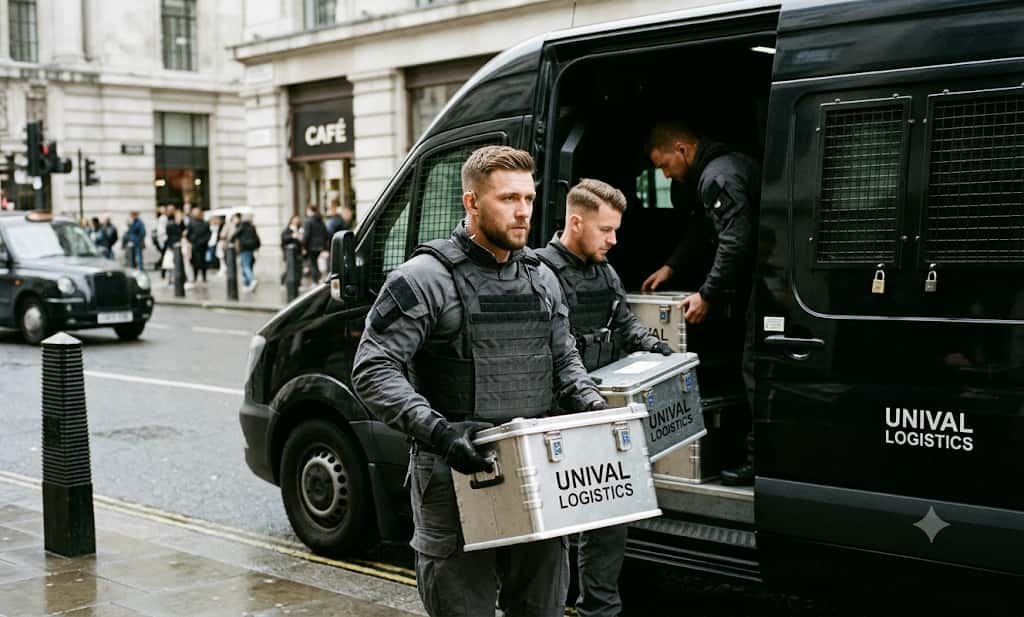
An armored courier service may provide a more controlled transportation process through security-focused vehicles, authorized staff, documented custody transfers and specific collection and delivery procedures. The exact protection depends on the provider’s operating model and the contract.
For example, a jewelry retailer moving high-value inventory between locations may need secure collection, restricted shipment access and confirmation of delivery. A financial business transporting cash may require a service specifically authorized and equipped for cash-in-transit operations. A company shipping sensitive equipment may need specialist handling and a transportation plan that protects the goods from damage, loss or unauthorized access.
UNIVAL Logistics recognizes that every shipment has different requirements. Businesses should select transportation arrangements according to the nature of the goods, their declared value, the route and the level of protection needed.
1. Identify Your Business Shipping Requirements
Before contacting providers, define what you need to transport. The shipment type determines which security measures, insurance arrangements and transportation services are appropriate.
Understand the Type of Goods
Start by identifying whether the consignment contains cash, jewelry, watches, precious metals, confidential documents, electronics, medical equipment or other valuable assets. Different goods may require different handling procedures. For example, fragile equipment needs suitable protective packaging, while cash transportation may require a specialized and appropriately authorized cash-in-transit provider.
Establish Shipment Value and Frequency
Determine the approximate value of each shipment and how frequently your business needs transportation. A company arranging occasional high-value deliveries may need a different service agreement from a retailer or financial organization that requires scheduled collections.
Also consider the shipment’s dimensions, weight, packaging requirements, collection location and final destination. These details help providers determine whether they can accept the consignment and what security arrangements are necessary.
Define the Required Service Area
Confirm whether your shipments are local, regional or interstate. Ask whether the provider supports the required routes, operating hours, collection schedules and delivery locations. For nationwide business operations, consistent service standards and clear communication between locations can be particularly important.
2. Evaluate Security Procedures and Operational Standards
Security is one of the most important considerations when selecting an armored courier service. Businesses should request a clear explanation of how the provider protects shipments throughout transportation.
Vehicle Security and Suitability
Ask what type of vehicles are used and whether their security features are suitable for the goods being transported. Providers may use specialized armored vehicles for particular services, but businesses should not assume that every shipment or route receives the same vehicle or protection level.
Confirm whether the vehicle arrangements meet the service requirements, whether maintenance procedures are documented and whether appropriate contingency arrangements exist if a vehicle becomes unavailable.
Personnel Training and Authorization
The people handling valuable consignments are an important part of the security process. Ask about employee screening, training, authorization, supervision and procedures for handling sensitive shipments.
For services involving cash or regulated transportation activities, verify that the provider holds the licenses, registrations and permissions required for the relevant jurisdiction and service. Requirements can differ depending on the state, shipment type and operational activity.
Collection and Delivery Controls
A professional provider should explain how shipments are accepted, recorded, transferred and delivered. Ask whether collection requires identity verification, whether custody transfers are documented and how the recipient confirms receipt.
A clear chain of custody reduces uncertainty and gives businesses a record of who was responsible for the shipment at important stages.
3. Review Insurance Coverage and Liability Protection
Security procedures help reduce transportation risks, but businesses should also understand their financial protection if a shipment is lost, stolen or damaged.
An armored courier service does not automatically guarantee full insurance coverage for every item. Some providers offer limited contractual liability, while separate shipping insurance may be available through an insurer or specialist arrangement. These are not necessarily equivalent.
Understand the Difference Between Liability and Insurance
Carrier liability is the responsibility a transportation provider may have under its contract or applicable law. It can be limited by declared-value rules, exclusions, service terms or other conditions.
Shipping insurance is a separate form of financial protection that may cover specified losses or damage, subject to the policy wording. Businesses should obtain confirmation of whether the policy covers the full declared value and whether the shipment type, route and handling method are eligible.
Check Policy Limits and Exclusions
Before dispatch, review the following:
- Coverage limit: Confirm the maximum amount payable for an individual shipment and any annual or aggregate limits.
- Covered risks: Check whether theft, loss, accidental damage and other relevant events are included.
- Exclusions: Review restrictions relating to packaging, unattended shipments, prohibited goods, improper declarations or specific routes.
- Deductibles: Understand the amount your business may need to pay before insurance responds.
- Claims requirements: Confirm the reporting deadline, documentation and evidence required to submit a claim.
Businesses transporting jewelry, precious metals, cash or other restricted valuables should obtain written confirmation that the goods are eligible for the proposed service and insurance arrangement.
UNIVAL Logistics encourages businesses to review insurance conditions before collection rather than relying on general statements about shipment protection.
4. Check Tracking, Documentation and Shipment Visibility
Shipment visibility is essential when transporting valuable business assets. A reliable logistics arrangement should provide appropriate information about collection, transportation progress and final delivery.
Ask whether the provider offers real-time or milestone-based tracking, shipment reference numbers, collection confirmation and delivery notifications. The available tracking detail may depend on the service and security requirements.
Request Documented Proof of Delivery
Proof of delivery provides evidence that the shipment reached its intended recipient. Depending on the service, documentation may include the recipient’s name, delivery time, signature, identity verification or another approved confirmation method.
For business shipments, these records can support internal audits, inventory reconciliation and financial controls.
Understand Communication Procedures
Ask how the provider communicates delays, route disruptions, unsuccessful delivery attempts or security incidents. Your business should know whom to contact and how urgent issues are escalated.
UNIVAL Logistics emphasizes the importance of clear shipment communication because timely information helps businesses manage operations and respond to unexpected changes.
5. Assess Experience with Your Industry and Shipment Type
A provider’s experience should match the requirements of your business. General transportation experience does not necessarily mean a company is qualified to handle every type of valuable shipment.
For example, a provider experienced in retail inventory transportation may not be authorized to transport cash. Similarly, a company that handles confidential documents may not have the specialist procedures required for precious metals or regulated materials.
Ask for Relevant Experience
Request information about the provider’s experience with similar shipment categories, transportation routes and business requirements. Ask how it handles special collection instructions, restricted-access locations and unusual delivery conditions.
Verify References and Service Standards
Where appropriate, request business references, service documentation and evidence of relevant credentials. Review the provider’s complaint-handling process and ask how it measures delivery performance.
Avoid relying only on promotional statements. A professional provider should be able to explain its operating procedures and provide clear information about what is and is not included.
6. Compare Service Options, Pricing and Contract Terms
Pricing matters, but the lowest quotation is not necessarily the most cost-effective choice. Businesses should compare the complete service offering, including security arrangements, insurance, collection requirements, delivery procedures and additional charges.
Understand the Main Cost Factors
The price of an armored courier service can vary according to shipment value, distance, route complexity, vehicle requirements, personnel, service frequency and handling needs. Some providers may quote per collection, per route, per delivery or under a recurring business agreement.
Important cost factors may include:
- Collection and delivery fees: Charges for pickup, destination handling and scheduled service requirements.
- Distance and route complexity: Costs influenced by mileage, travel time, access restrictions and route planning.
- Security requirements: Additional resources required for specialist vehicles, authorized personnel or enhanced handling.
- Insurance costs: Premiums or service charges associated with eligible coverage and declared shipment values.
- Additional services: Charges for waiting time, special delivery instructions, repeat attempts or other agreed requirements.
Because service arrangements differ considerably, businesses should request an itemized quotation based on their actual shipment details rather than relying on generic online price estimates.
Review the Contract Before Booking
Read the service agreement carefully. Confirm the provider’s responsibilities, shipment acceptance conditions, insurance arrangements, liability limits, cancellation rules, delivery commitments and procedures for disputes or claims.
Also check whether the quotation includes taxes, surcharges and any recurring account fees. Written terms make it easier to compare providers and avoid unexpected costs.
Important Disclaimer: All cost information and quotations should be treated as baseline estimates until confirmed by the service provider. Actual prices may change due to market fluctuations, supplier changes, route conditions, security requirements and variable logistics fees. For the latest and most accurate prices, please contact UNIVAL Logistics for professional guidance.
7. Confirm Emergency Response and Contingency Planning
Even well-managed transportation operations can experience unexpected disruptions. Vehicle problems, severe weather, road closures, access restrictions and delivery delays can affect a shipment.
Ask the provider what happens when the planned route cannot be completed. A suitable contingency plan should explain how the shipment is protected, who makes operational decisions and how your business receives updates.
For high-value shipments, it is also important to understand the provider’s incident reporting procedure. Ask how suspected loss, theft, damage or unauthorized access is handled, which parties are notified and what documentation is produced.
Businesses should maintain their own internal escalation contacts and shipment records. This helps coordinate a response if an incident occurs.
8. Consider Location, Routes and Service Availability Across the USA
Businesses operating across the United States should verify that their selected provider can support the locations and routes required by their operations. Availability, licensing requirements, vehicle arrangements and service conditions can vary by state and shipment type.
In major commercial markets such as Los Angeles, New York, Miami, Chicago, Dallas, Houston, Philadelphia, Atlanta, Las Vegas, San Francisco, Boston, Newark and Northern New Jersey, businesses may have different transportation needs depending on their industry, shipment frequency and destination.
For example, a retailer moving valuable inventory between stores may require scheduled collections, while a company transporting sensitive equipment may need specialist packaging and careful delivery coordination. Financial organizations may require a provider specifically authorized for cash-in-transit operations.
Before signing an agreement, confirm the exact service area, collection windows, destination coverage and any restrictions that apply to your shipment. UNIVAL Logistics can help businesses consider their shipping requirements and coordinate suitable logistics arrangements based on the nature and destination of their consignments.
9. Common Mistakes to Avoid When Selecting a Provider
Businesses can expose themselves to unnecessary risks when they select a transportation provider without checking the details.
One common mistake is assuming that an armored vehicle automatically means every shipment is fully insured. Vehicle security and financial coverage are separate considerations, and both should be confirmed in writing.
Another mistake is choosing a provider based only on price. A low quotation may exclude important services, insurance or additional handling requirements. Businesses should compare the complete service scope before making a decision.
Companies should also avoid overlooking shipment restrictions. Certain goods may require specialist authorization, specific packaging or additional documentation. Confirm acceptance before preparing or dispatching the shipment.
Finally, do not neglect delivery records and communication procedures. Without clear custody documentation and proof of delivery, it may be difficult to investigate a delay, discrepancy or claim.
10. How UNIVAL Logistics Supports Secure Shipping Decisions
Selecting transportation for valuable business assets requires careful planning. Companies need to understand their shipment requirements, identify appropriate service providers and confirm that security, insurance and delivery arrangements match their operational needs.
UNIVAL Logistics supports businesses by helping them consider important logistics factors, including shipment type, declared value, packaging, transportation requirements, insurance considerations and destination planning. This approach helps companies make more informed decisions before arranging the movement of valuable consignments.
Whether a business is shipping high-value products, sensitive equipment, commercial materials or other goods requiring additional care, the right transportation plan should be based on clear requirements and verified service capabilities.
Businesses should always confirm that any specialist armored or cash-in-transit service is provided by an appropriately authorized operator. UNIVAL Logistics can help coordinate suitable logistics arrangements where available and support a more organized approach to secure shipping.
Final Thoughts
Choosing the right armored courier service is an important part of protecting business assets during transportation. Companies should evaluate security procedures, vehicle suitability, personnel qualifications, insurance coverage, shipment tracking, delivery documentation and total costs before selecting a provider.
The best decision is not simply the provider offering the lowest quotation. It is the arrangement that meets the shipment’s security requirements, provides transparent terms and supports reliable communication throughout the transportation process.
By assessing these factors in advance and working with an experienced logistics partner such as UNIVAL Logistics, businesses can make better-informed shipping decisions and improve the way they manage valuable consignments.
Frequently Asked Questions
1. What is an armored courier service?
An armored courier service is a specialized transportation arrangement designed to move valuable or sensitive goods using additional security procedures. Depending on the provider, it may include armored vehicles, trained personnel, controlled collection and delivery, shipment documentation and specific custody procedures.
2. Which businesses may need armored courier services?
Financial institutions, jewelry retailers, luxury goods companies, precious metals businesses and organizations handling valuable or sensitive assets may require specialized secure transportation. The appropriate service depends on the shipment type, value, route and applicable regulations.
3. How do I choose a reliable armored courier provider?
Check the provider’s operating credentials, relevant experience, vehicle standards, employee training, security procedures, insurance arrangements, tracking capabilities and delivery documentation. Request written service terms and confirm that the provider can accept your specific shipment.
4. Does an armored courier service include shipping insurance?
Not necessarily. Some providers may offer limited liability or access to separate insurance arrangements, but an armored vehicle does not automatically mean a shipment is fully insured. Confirm the policy, coverage limit, exclusions, deductible and claims process in writing.
5. What goods can an armored courier transport?
Depending on its authorization and service capabilities, a provider may transport cash, jewelry, watches, precious metals, financial documents and other valuable assets. Some goods are subject to additional restrictions, so businesses should confirm acceptance before booking.
6. Is an armored courier service suitable for small businesses?
Yes, it may be suitable for small businesses that periodically transport valuable inventory, cash or sensitive assets. The business should compare service availability, minimum charges, collection requirements and insurance options to determine whether the arrangement is practical.
7. How much does an armored courier service cost?
Costs depend on shipment value, distance, route complexity, vehicle requirements, personnel, frequency, insurance and additional handling. Request an itemized quotation based on the actual shipment rather than relying on a general estimate. Contact UNIVAL Logistics for professional guidance on shipping requirements and cost considerations.
8. What is the difference between an armored courier and a standard courier?
A standard courier generally focuses on parcel collection and delivery, while an armored courier service is designed for shipments requiring additional security controls. Depending on the provider, these may include specialized vehicles, authorized personnel, controlled access and documented custody procedures.
9. Can armored courier services transport cash between business locations?
Some providers offer cash-in-transit services for eligible business customers. However, cash transportation may involve specific licensing, authorization, insurance and operational requirements. Businesses should verify that the provider is qualified to perform the requested service.
10. Why should businesses work with UNIVAL Logistics?
UNIVAL Logistics helps businesses understand shipping requirements and consider suitable logistics arrangements for valuable consignments. By focusing on shipment planning, handling requirements, insurance considerations and clear coordination, businesses can make more informed decisions about secure transportation.