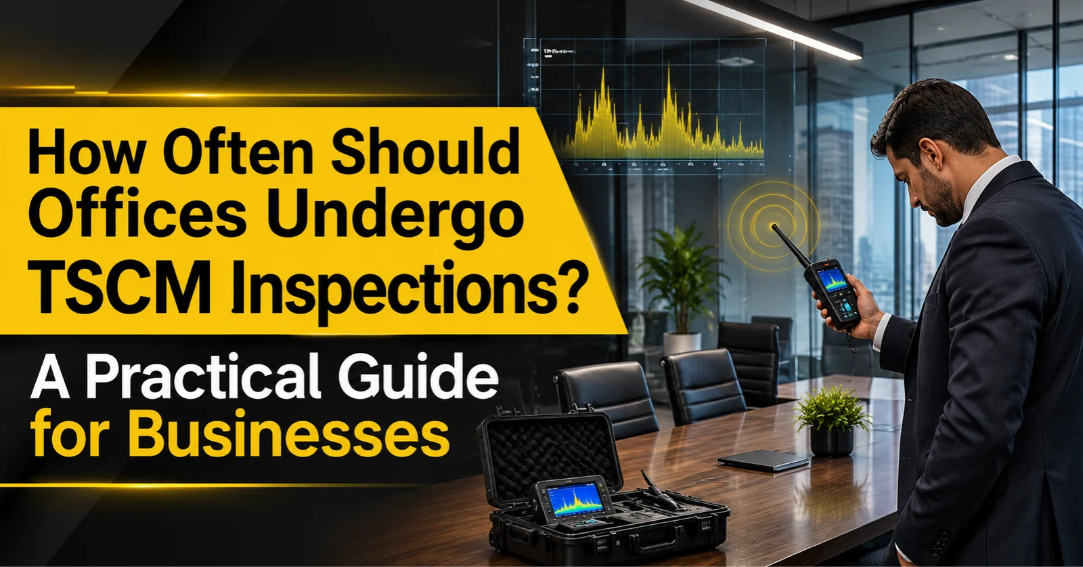
In today’s business environment, confidential conversations, strategic planning, financial discussions, and sensitive negotiations are part of everyday operations. While organizations invest in cybersecurity, access control, and information protection, the physical privacy of offices and meeting spaces also deserves attention.
Technical Surveillance Counter-Measures inspections, commonly known as professional bug sweeping, help organizations assess their premises for potential electronic surveillance devices and suspicious wireless activity.
However, one important question often arises: How frequently should an office undergo a professional TSCM inspection?
There is no universal inspection schedule that suits every organization. The appropriate frequency depends on the nature of business activities, confidentiality requirements, workplace arrangements, and specific security concerns. A company handling highly sensitive commercial information may require a different inspection approach than an organization with relatively routine office operations.
This guide explains the factors businesses should consider when developing a practical TSCM inspection schedule.
What Is a TSCM Inspection?
Technical Surveillance Counter-Measures (TSCM) refers to a specialized process used to identify and investigate potential electronic surveillance threats within physical environments.
Professional TSCM inspections may involve:
- Radio frequency (RF) spectrum analysis.
- Physical examination of office spaces and fixtures.
- Inspection of electronic equipment and communication devices.
- Identification and assessment of suspicious wireless transmissions.
- Examination of potential concealed electronic surveillance devices.
- Technical evaluation of findings and relevant observations.
These inspections are particularly relevant to executive offices, boardrooms, conference rooms, private meeting areas, and locations where confidential information is regularly discussed.
A professional inspection is not simply a matter of scanning a room with a detection gadget. It involves a structured technical assessment using appropriate equipment and inspection methodologies.
Why Should Businesses Consider Regular TSCM Inspections?
Electronic surveillance risks are not necessarily constant. Office environments change, new equipment is introduced, maintenance work takes place, and different individuals may gain access to sensitive areas.
Periodic TSCM inspections can help organizations evaluate potential vulnerabilities and maintain awareness of their physical information environment.
Some important reasons to consider professional inspections include:
1. Protection of Confidential Business Discussions
Board meetings, merger negotiations, financial planning, acquisition discussions, and strategic decisions may involve commercially sensitive information. Organizations handling such discussions may consider periodic inspections of designated meeting spaces.
2. Changes in Office Infrastructure
Renovations, electrical work, furniture installations, equipment replacement, and maintenance activities can introduce unfamiliar devices or alter the physical environment. Such changes may justify an additional technical assessment.
3. Access by External Personnel
Offices regularly receive maintenance contractors, vendors, service technicians, and other external visitors. Reviewing access arrangements and assessing sensitive spaces after significant changes can form part of a broader privacy management strategy.
4. Specific Privacy Concerns
Unusual electronic activity, unexplained devices, or credible concerns regarding unauthorized surveillance may warrant a professional technical assessment rather than relying on assumptions or consumer detection applications.
How Often Should Different Office Areas Undergo TSCM Inspections?
Inspection frequency should be determined through a risk-based assessment rather than following an arbitrary timetable.
The following framework can help businesses establish an appropriate schedule.
Executive Offices
Consider periodic inspections, particularly when confidential business decisions, financial matters, or sensitive negotiations take place regularly.
Risk-based periodic assessment
Boardrooms and Conference Rooms
These spaces may warrant more frequent attention because sensitive discussions and strategic meetings are regularly conducted here.
Regular assessment
Research and Development Areas
Organizations handling proprietary research, product designs, intellectual property, or confidential technical information may consider inspections based on their risk exposure.
Higher-priority assessment
Private Meeting Rooms
Inspection requirements depend on the sensitivity of discussions, access arrangements, and how frequently the rooms are used for confidential conversations.
Usage-dependent assessment
These are planning considerations, not mandatory industry inspection intervals. The appropriate schedule should be established after evaluating the organization’s specific circumstances.
Situations That May Require an Additional TSCM Inspection
Apart from scheduled assessments, certain workplace developments may justify an additional inspection.
Consider professional technical assessment when:
- Office renovation has been completed: Changes to walls, ceilings, electrical fittings, and furniture may warrant reviewing the affected environment.
- New electronic equipment has been installed: Unfamiliar devices or unexplained equipment should be examined appropriately.
- Sensitive negotiations are approaching: Businesses may consider inspecting designated meeting spaces before particularly confidential discussions.
- Unauthorized access is suspected: Unusual access to restricted office areas may justify reviewing physical security and conducting a technical assessment where appropriate.
- A credible surveillance concern arises: Specific findings or circumstances should be evaluated professionally rather than relying on speculation.
- An office has relocated: Newly occupied premises may benefit from an initial technical privacy assessment.
An additional inspection should be based on the circumstances rather than automatically assuming that every workplace change indicates surveillance.
What Factors Determine the Right Inspection Frequency?
Before creating a TSCM inspection schedule, organizations should evaluate several important factors.
1. Nature of Business Operations
Different industries handle different levels of confidential information. Financial institutions, legal practices, research organizations, technology companies, and businesses involved in mergers and acquisitions may have particular reasons to assess their physical privacy arrangements.
2. Confidentiality Requirements
The sensitivity of information discussed within an office should influence inspection priorities. Spaces used for executive decisions or commercially sensitive negotiations may require greater attention than general administrative areas.
3. Office Access and Visitor Management
Organizations with frequent external visitors, contractors, maintenance personnel, or shared office facilities should consider how access arrangements influence their physical privacy assessments.
4. Previous Inspection Findings
Previous inspection observations can help organizations identify areas requiring further attention. Any suspicious finding should be evaluated, documented, and addressed appropriately before deciding on subsequent inspection requirements.
5. Changes in Technology and Infrastructure
Modern workplaces contain numerous wireless devices, communication systems, connected equipment, and electronic installations. Changes to this environment may create a reason to review the technical privacy of sensitive spaces.
Why Professional TSCM Equipment and Expertise Matter
One common misconception is that a smartphone application or inexpensive RF detector is sufficient to identify every type of electronic surveillance device.
In reality, detection capabilities vary considerably depending on the equipment, transmission method, operating conditions, and inspection environment.
Professional TSCM inspections may involve specialized equipment such as
- Spectrum Analyzers: Used to examine radio frequency activity across relevant frequency ranges.
- Non-Linear Junction Detectors (NLJD): Used to investigate electronic components, including certain devices that may not be actively transmitting.
- RF Detection Equipment: Used to investigate suspicious radio frequency emissions.
- Physical Inspection Tools: Used to examine fixtures, furniture, electronic installations, and other relevant areas.
- Technical Monitoring Equipment: Used to support the assessment of suspicious electronic activity.
The selection of equipment depends on the inspection objectives and the suspected surveillance methods.
Equally important is the ability to interpret technical findings. Ordinary wireless activity from Wi-Fi routers, Bluetooth devices, mobile phones, and other electronics can sometimes be mistaken for suspicious signals. Professional assessment helps place these observations in the correct context.
Creating a Practical TSCM Inspection Schedule for Your Organization
Businesses can develop a more structured approach by incorporating technical privacy assessments into their wider risk management practices.
A practical framework may include:
- Identify sensitive areas: List executive offices, boardrooms, meeting rooms, and other locations where confidential information is regularly discussed.
- Evaluate existing risks: Review access arrangements, office infrastructure, previous concerns, and the sensitivity of business activities.
- Establish inspection priorities: Allocate greater attention to spaces with higher confidentiality requirements.
- Schedule periodic assessments: Determine inspection intervals based on the organisation’s risk profile and operational requirements.
- Review after significant changes: Consider additional assessments following renovations, relocation, or credible surveillance concerns.
- Maintain inspection records: Document findings, recommendations, and any corrective measures taken.
- Review the schedule periodically: Update inspection priorities as business operations and workplace arrangements evolve.
This approach helps businesses avoid treating TSCM inspections as isolated activities and instead incorporate them into a broader workplace privacy assessment strategy.
TSCM Inspections for Businesses in Delhi
Delhi is home to corporate offices, professional service firms, financial organisations, technology businesses, and institutions that regularly handle confidential information.
For organisations operating in such environments, assessing physical privacy can be an important consideration alongside cybersecurity and conventional workplace security measures.
Professional TSCM and bug sweeping inspections can help investigate potential electronic surveillance devices and suspicious wireless activity in executive offices, conference rooms, corporate premises, and other sensitive locations.
Trace Point India Pvt. Ltd. provides specialised TSCM debugging and bug sweeping services, including RF analysis, technical surveillance detection, and professional inspection of sensitive environments.
Businesses considering a technical privacy assessment should evaluate their specific requirements, inspection objectives, and the appropriate scope of work before scheduling an inspection.
Frequently Asked Questions (FAQs)
1. How often should a corporate office undergo TSCM inspection?
There is no universally prescribed inspection frequency. It depends on business operations, confidentiality requirements, physical access arrangements, and the organisation’s risk assessment.
2. Should conference rooms be inspected more frequently than regular offices?
They may warrant greater attention when regularly used for confidential negotiations, board meetings, financial discussions, or strategic planning.
3. Is one TSCM inspection enough for an office?
An inspection provides an assessment of the environment at a particular time. Subsequent changes, new concerns, or changes in access arrangements may justify further inspections.
4. Can ordinary RF detectors identify all hidden surveillance devices?
No. Different devices operate using different technologies, and some may not transmit continuously. Professional inspections use multiple assessment methods depending on the circumstances.
5. Should businesses conduct TSCM inspections after office renovation?
An additional inspection may be appropriate, particularly when renovation involves sensitive areas, electrical installations, ceilings, furniture, or restricted-access spaces.
6. Can TSCM inspections be conducted in operating corporate offices?
Yes. Inspections can generally be planned around business operations, although certain technical procedures may require controlled conditions or temporary restrictions on wireless equipment.
Conclusion: Make TSCM Inspections Part of Your Workplace Privacy Strategy
Determining how often an office should undergo TSCM inspections requires more than selecting a fixed date on the calendar. Businesses should consider the sensitivity of their operations, the nature of confidential discussions, workplace changes, and specific privacy concerns.
Regular, risk-based technical assessments can help organisations maintain awareness of their physical environments and investigate potential electronic surveillance threats when necessary.
Rather than waiting for a specific concern to escalate, businesses can take a proactive approach by developing a suitable inspection schedule of Trace Point India for their most sensitive workspaces.
Develop a more informed approach to workplace privacy assessments with professional TSCM guidance from Trace Point India.